
Moth Orchid Identification Guide
Identify the Moth Orchid (Phalaenopsis) by its broad fleshy leaves, thick aerial roots, and arching sprays of flat, moth-like flowers.
Read the full Moth Orchid encyclopedia entry →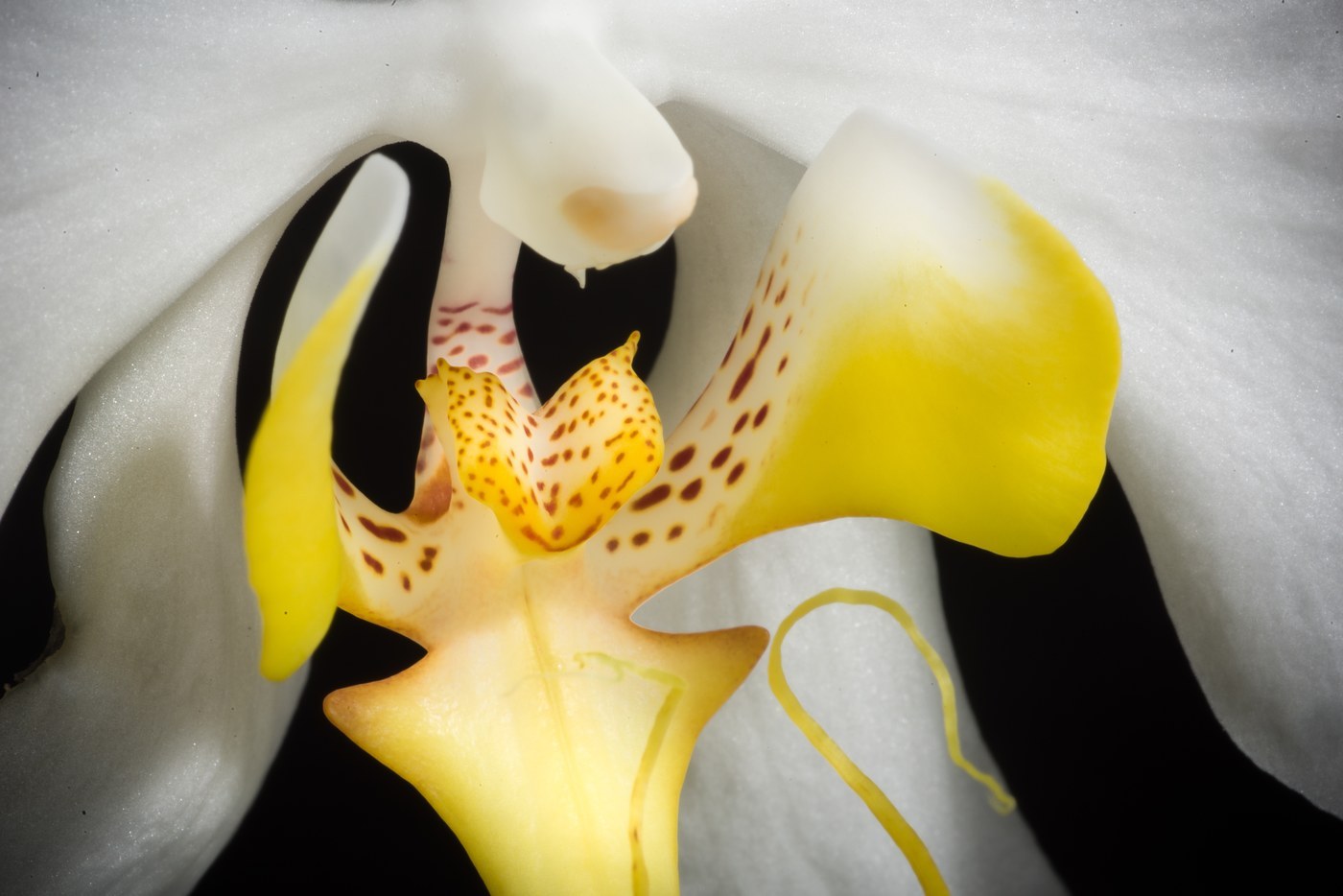
Key Identifying Features
The Moth Orchid (Phalaenopsis) is the most common orchid sold worldwide, recognized by its arching spray of broad, flat, rounded flowers that resemble moths in flight. It is a monopodial epiphyte with a few thick leaves and prominent aerial roots.
- Flat, rounded flowers along a long arching stem
- Few broad, thick, glossy leaves in two ranks
- Thick, silvery-green aerial roots
Leaves & Stems
Even out of bloom, the growth form is diagnostic:
- Leaves are broad, oval, thick, and leathery, deep green and arranged in opposite rows from a central crown (no pseudobulbs)
- The plant grows from a single upright point (monopodial) rather than spreading sideways
- Thick, flattened, silvery-green aerial roots with green growing tips emerge from the base and sprawl over the pot rim
- The flower spike is a slender arching stem that emerges from between the leaves
Flowers & Fruit
The blooms are the highlight and last for months:
- Flat, rounded, moth-like flowers with three sepals, two broad petals, and a small ornate lip (labellum) in the center
- Colors include white, pink, purple, yellow, and spotted or striped patterns
- Borne in a graceful arching raceme of several to many flowers
- Individual blooms last weeks to months — a key trait, as few houseplants flower so long
- Fruit is a seed capsule, rarely formed indoors
How to Tell It Apart from Look-Alikes
- Dendrobium / Cattleya orchids: have pseudobulbs (swollen stem bases) and clustered cane-like growth; Phalaenopsis has no pseudobulbs and broad flat leaves.
- Oncidium: has many small flowers and thin leaves; Phalaenopsis flowers are larger and flatter.
- The moth orchid signature is broad flat leaves + thick aerial roots + long-lasting flat round flowers on an arching spike.
Where You'll Find It
The Moth Orchid is the ubiquitous gift and windowsill orchid, sold in supermarkets and garden centers everywhere. In the wild it grows as an epiphyte on tree trunks in the warm, humid lowland forests of Southeast Asia, the Philippines, and northern Australia.
Quick ID Checklist
- Flat, rounded, moth-like flowers on an arching spike
- Broad, thick, leathery leaves in two rows, no pseudobulbs
- Thick silvery aerial roots
- Blooms last weeks to months
- Single upright (monopodial) growth
Broad flat leaves, fat aerial roots, and long-lasting flat flowers confirm a Phalaenopsis Moth Orchid.
Frequently asked questions
Why is it called the Moth Orchid?
The flat, rounded flowers spaced along an arching stem resemble a group of moths in flight, which is also reflected in the genus name Phalaenopsis. This flower shape is the easiest way to identify it.
What are the thick gray roots growing over the pot?
Those are aerial roots, a normal feature of this epiphytic orchid. They are silvery-green with green growing tips and absorb moisture from the air, and their presence helps confirm a Phalaenopsis.
How do I tell a Moth Orchid from other orchids?
Moth orchids have broad, flat, leathery leaves and no pseudobulbs (swollen stem bases), unlike Cattleya or Dendrobium. Combined with their long-lasting flat round flowers, this makes them easy to distinguish.
How long do the flowers last?
Unusually long for a houseplant. Individual Phalaenopsis blooms can last from several weeks up to a few months, and a single spike may stay in flower for much of the year, which is itself a clue to the plant's identity.