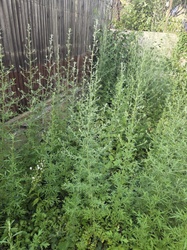
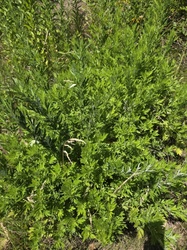
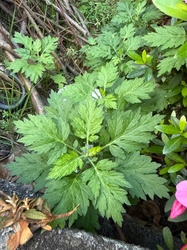
Mugwort Identification Guide
How to identify mugwort (Artemisia vulgaris) by its deeply lobed dark-green leaves with silvery-white undersides, ribbed reddish stems, and aromatic foliage.
Read the full Mugwort encyclopedia entry →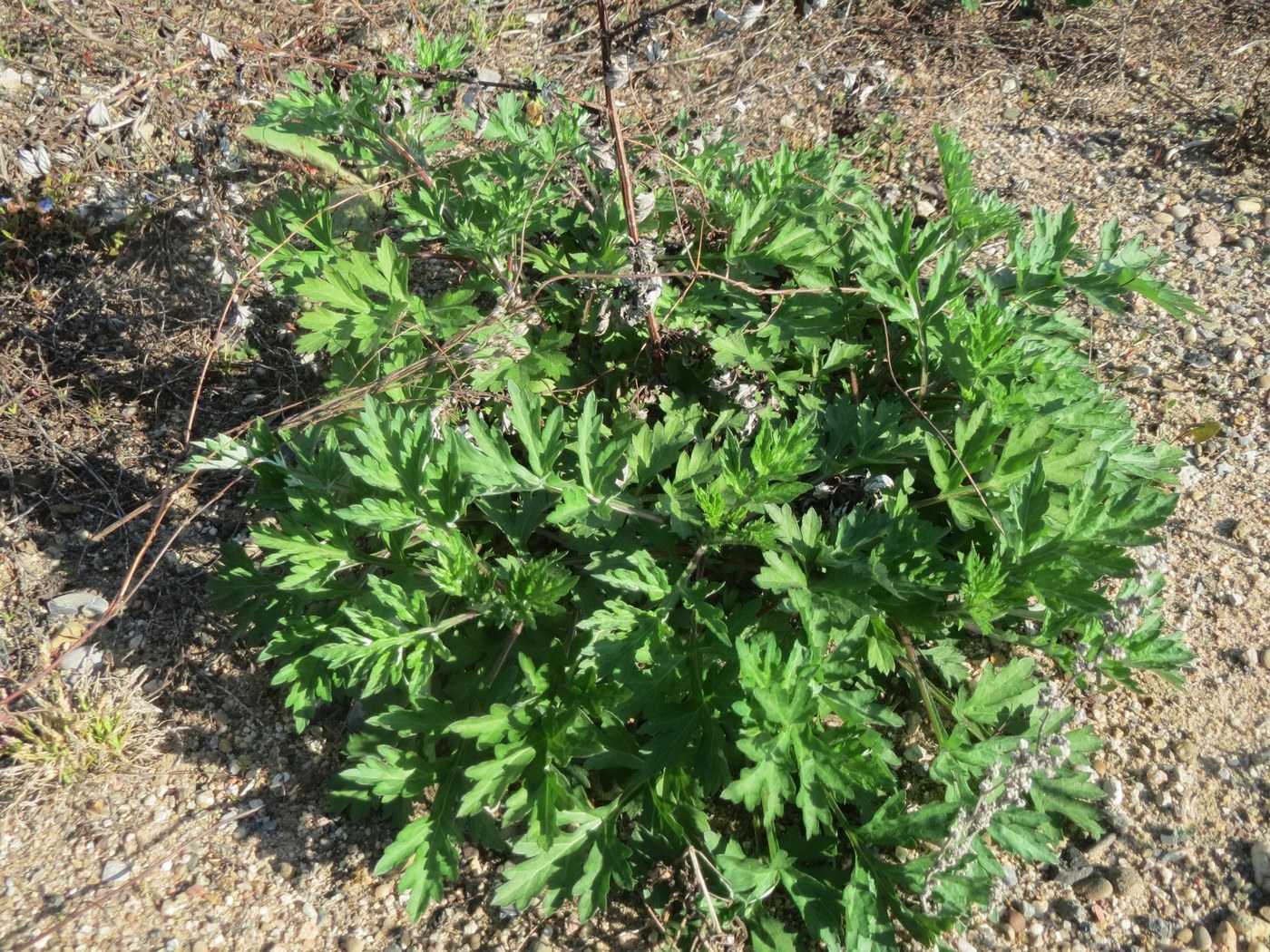
Key Identifying Features
Mugwort (Artemisia vulgaris) is a tall aromatic perennial weed found across temperate regions. The most reliable clue is the two-toned leaf: dark green on top, silvery-white and woolly underneath. Other hallmarks:
- Tall, ribbed, often reddish-purple stems, typically 0.7–1.8 m (2–6 ft).
- Deeply pinnately lobed leaves with pointed segments.
- A sage-like or bitter aroma when crushed.
- Spreading habit forming colonies via rhizomes.
Leaves & Stems
Leaves are alternate, 5–10 cm long, and deeply cut into pointed lobes (pinnatifid). The upper surface is dark green and nearly hairless, while the underside is densely covered with white-to-silvery felt-like hairs — flip a leaf to check this key trait. Lower leaves are broader and more divided; upper leaves become narrower and less lobed toward the flower stalks. Stems are angular and grooved (ribbed), frequently flushed reddish or purple, and woody at the base in older plants. Crushed foliage smells aromatic and somewhat bitter.
Flowers & Fruit
From mid-summer to autumn, mugwort produces tall, branched flower spikes (panicles) of tiny, inconspicuous flower heads. Each head is a small oval cluster, 2–4 mm, of greenish to reddish-brown disc florets with no showy petals — wind-pollinated and easy to overlook. The plant can release copious pollen (a known allergen). Seeds are tiny and numerous.
How to Tell It Apart from Look-Alikes
- Common ragweed (Ambrosia): similar lobed leaves, but ragweed leaves are green on both sides (no silver underside) and softer.
- Chrysanthemum / feverfew / other Artemisia: feverfew and wormwood smell strongly; wormwood (A. absinthium) is silvery on both surfaces, while mugwort is silver only underneath.
- Motherwort or other mints: square stems and minty smell — mugwort's stem is ribbed/round, not square.
- The combination of green-top/silver-bottom leaves + ribbed reddish stem + aromatic foliage is diagnostic.
Where You'll Find It
Mugwort is a classic plant of disturbed ground: roadsides, waste lots, railway edges, riverbanks, fence lines, and neglected gardens. It tolerates poor soils and full sun, and is widespread across Europe, Asia, and naturalized throughout North America, often in dense stands.
Quick ID Checklist
- Leaves dark green above, silvery-white and woolly beneath
- Deeply pinnately lobed, pointed leaf segments
- Tall ribbed stems, often reddish-purple
- Aromatic, slightly bitter scent when crushed
- Tiny greenish-brown flower heads in late-summer spikes
Flip a leaf — the silver underside plus ribbed stem confirms mugwort.
Frequently asked questions
What's the easiest way to identify mugwort?
Turn over a leaf. Mugwort leaves are dark green on top but distinctly silvery-white and felted underneath. Combined with tall ribbed reddish stems and an aromatic scent, that confirms it.
How is mugwort different from ragweed?
Both have deeply lobed leaves, but ragweed is green on both leaf surfaces, while mugwort has a silver underside. Mugwort is also typically taller with reddish ribbed stems.
Does mugwort have showy flowers?
No. Its flowers are tiny, greenish-to-reddish-brown clusters borne in tall spikes from mid-summer to autumn. They're wind-pollinated and easy to overlook.
How do I tell mugwort from wormwood?
Wormwood (Artemisia absinthium) is silvery on both leaf surfaces and has a stronger scent, while mugwort is silver only on the underside and green on top.
Mugwort identified by the community
Recent Mugwort specimens identified with Plant Identifier.