
Nectarine Tree Identification Guide
How to identify a nectarine tree (Prunus persica var. nucipersica) by its lance-shaped leaves, pink spring blossoms, and smooth-skinned stone fruit.
Read the full Nectarine Tree encyclopedia entry →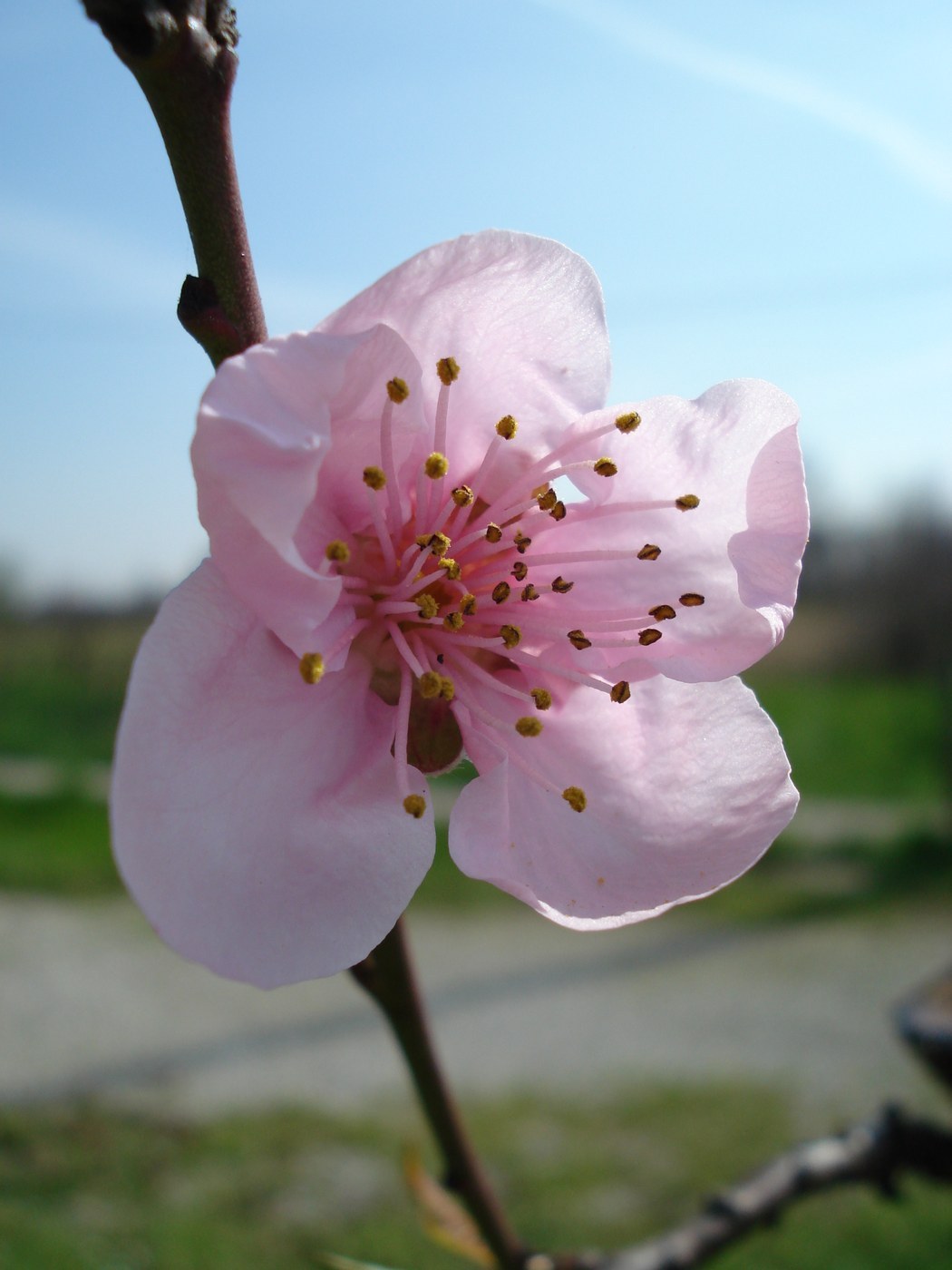
Key Identifying Features
The nectarine is a fuzzless variety of the peach (Prunus persica var. nucipersica), differing from a peach only by a single recessive gene that produces smooth skin. It is a small deciduous tree, typically 4-8 m (13-25 ft), with a low, spreading crown. The diagnostic combination is long narrow leaves, showy pink spring flowers, and a smooth (hairless) orange-red drupe with a hard, deeply pitted stone.
Leaves & Stems
- Leaves are lanceolate (long and narrow), 7-16 cm long and 2-3 cm wide, tapering to a fine point.
- Margins are finely serrate, and the blade often folds slightly along the midrib like a shallow keel.
- Foliage is bright glossy green, paler beneath; the petiole frequently bears small kidney-shaped or round glands.
- Twigs are slender and reddish on the sun-exposed side.
Flowers & Fruit
- Blossoms open in early to mid spring with or just before the leaves, are 2-3.5 cm wide, and have five rounded deep-pink petals (some ornamental forms are showier).
- Flowers are nearly stalkless, borne singly along the twigs.
- Fruit is a smooth-skinned drupe, 5-8 cm, yellow to red-blushed, with firm yellow or white flesh.
- The stone is hard, wrinkled, and deeply furrowed; it may be freestone or clingstone by variety.
How to Tell It Apart from Look-Alikes
- Peach (Prunus persica): essentially identical tree and flowers, but peach fruit is fuzzy while nectarine fruit is smooth. You often cannot separate them until fruit forms.
- Apricot (Prunus armeniaca): apricot has round leaves and fuzzy fruit; nectarine has narrow leaves and smooth fruit.
- Plum (Prunus domestica): plum fruit is smooth too, but plum leaves are broader/oval and the stone is smoother and flatter than a nectarine's pitted stone.
Where You'll Find It
Nectarines grow in the same warm-temperate, summer-warm climates as peaches, needing winter chill to set fruit but blooming after the worst frosts in many regions. Look for them in home gardens, backyard orchards, and commercial stone-fruit groves, often grafted onto peach or plum rootstock. They thrive in full sun with well-drained soil.
Quick ID Checklist
- Small tree, low spreading crown
- Long, narrow, finely toothed glossy leaves
- Glands on the leaf stalk
- Deep-pink, nearly stalkless spring blossoms
- Smooth (fuzzless) orange-red fruit with a deeply pitted stone
Frequently asked questions
How is a nectarine tree different from a peach tree?
Genetically they are the same species; the only reliable difference is the fruit skin. Nectarines have smooth, hairless skin while peaches are fuzzy. The leaves, flowers, and growth habit are virtually identical.
What shape are nectarine leaves?
They are long and lance-shaped (lanceolate), 7-16 cm long and only a few centimeters wide, with finely toothed margins and often small glands on the leaf stalk.
When does a nectarine tree flower?
In early to mid spring, producing five-petaled deep-pink flowers about 2-3.5 cm wide that sit nearly stalkless along the branches, opening with or just before the leaves.
Can a single tree grow both peaches and nectarines?
It can happen: because the smooth-skin trait is a single recessive mutation, a nectarine tree can occasionally produce a fuzzy peach branch, and peach trees can sport nectarine fruit.