Nectarine Tree
Prunus persica var. nucipersica
A smooth-skinned variety of peach, the nectarine produces juicy fruit on a compact deciduous tree. It is genetically nearly identical to the peach, differing mainly in its fuzz-free skin.
- Light
- Full sun
- Water
- Regular deep watering during fruiting
- Difficulty
- Moderate
Got a plant like this?
Identify any plant from a photo, free.
Overview
The nectarine is not a separate species but a smooth-skinned cultivar group of the common peach (Prunus persica). A single recessive gene gives the fruit its glossy, fuzzless skin; nectarines and peaches can even appear on the same tree as bud mutations.
Nectarines are grown in the same climates as peaches and share their early-spring pink blossoms and stone-fruit structure. They tend to be slightly smaller and firmer than peaches.
How to identify it
Key identifying features:
- Size & habit: Small deciduous tree, 4-7 m tall, with a low, spreading canopy
- Leaves: Long, lance-shaped (lanceolate), 7-15 cm, glossy green, often folded along the midrib
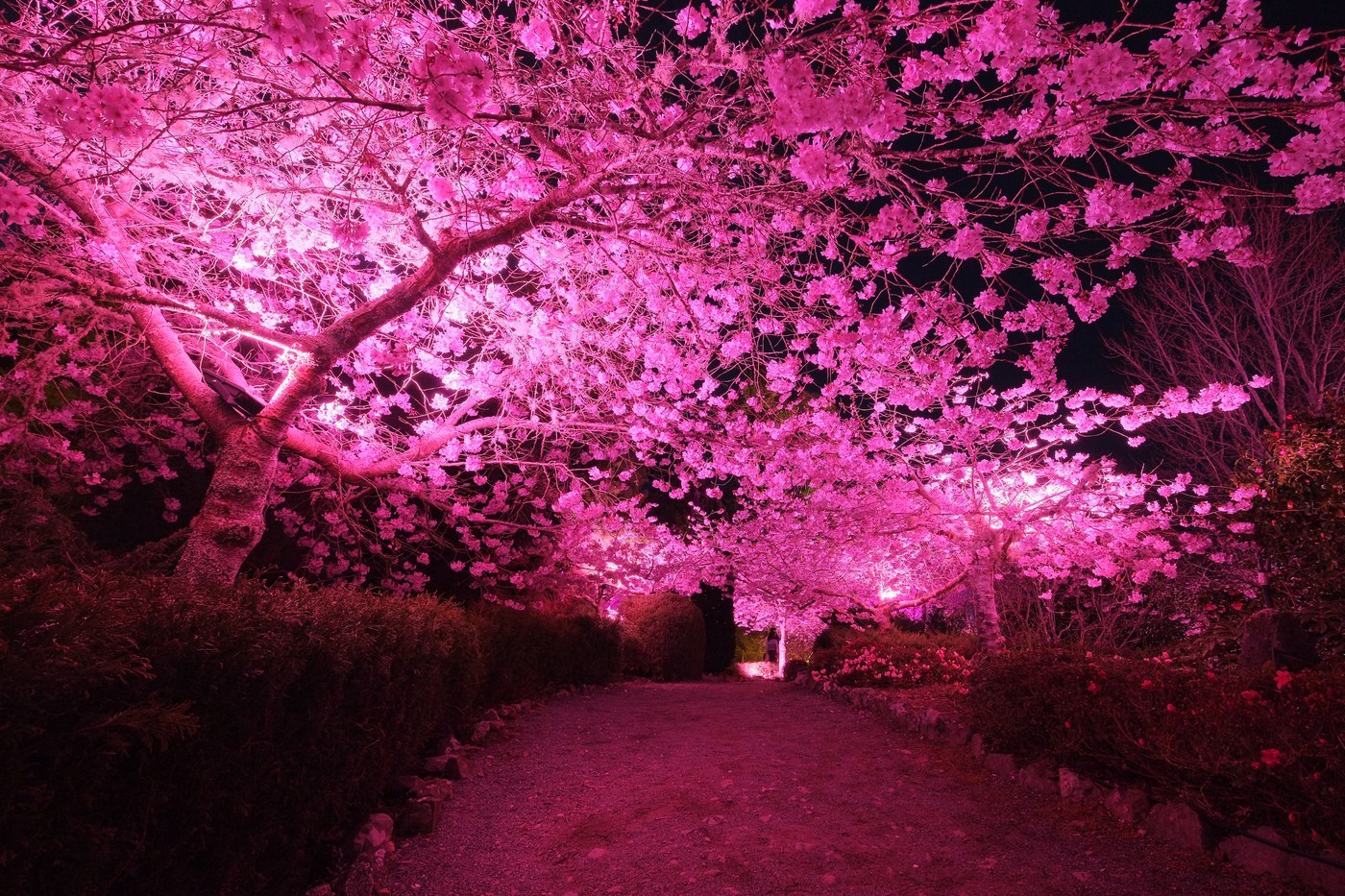
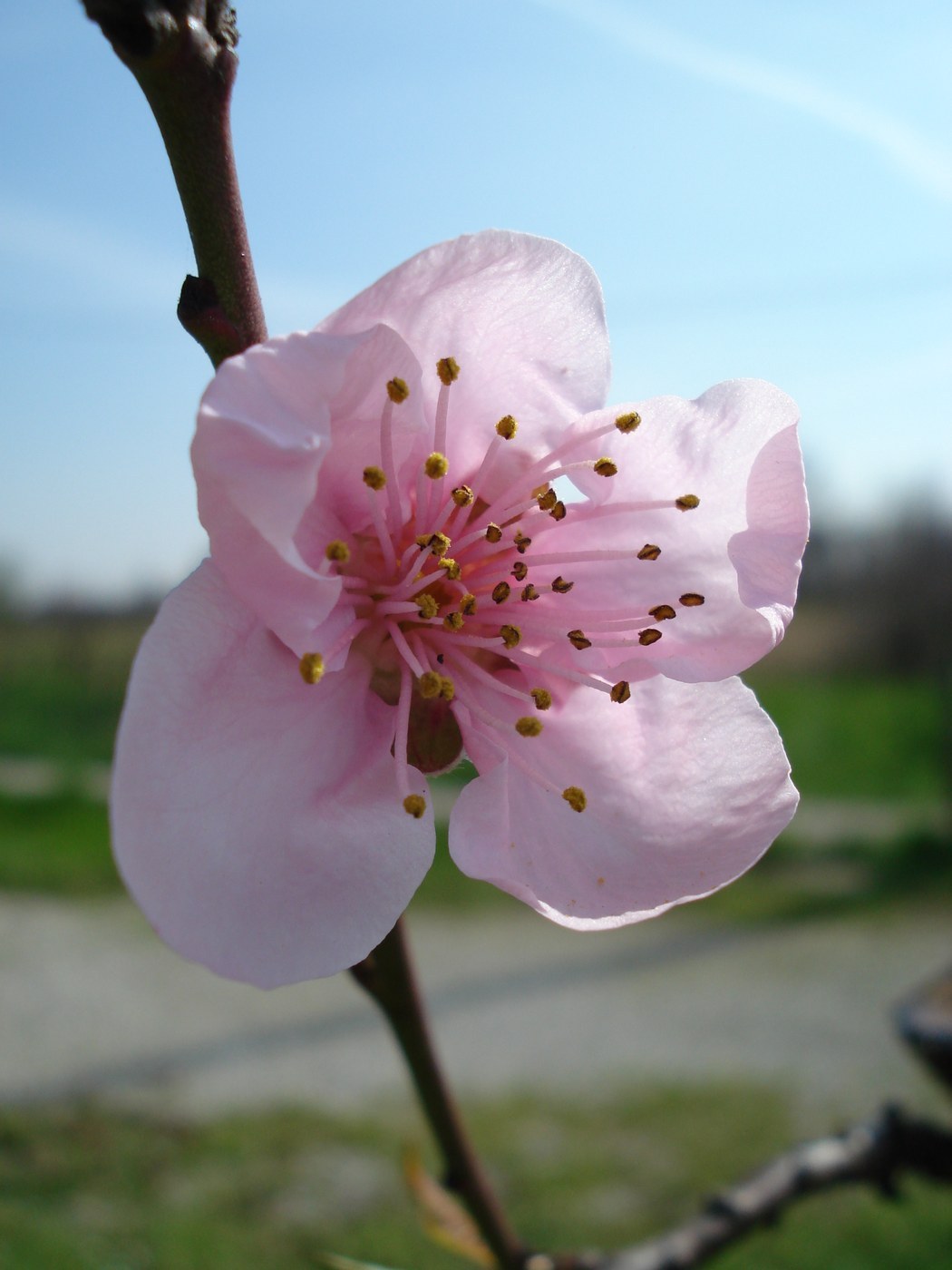
- Flowers: Showy pink five-petaled blossoms appearing before leaves in early spring
- Fruit: Round drupe with smooth, fuzz-free skin in yellow-red tones; juicy flesh surrounding a deeply pitted hard stone
- Habit difference from peach: Identical except for the smooth skin
Care & growing
Light: Full sun is essential for good fruit and disease resistance.
Water: Keep soil evenly moist during flowering and fruit development; reduce in dormancy. Avoid wetting foliage to limit fungal disease.
Soil: Deep, well-drained sandy loam, pH 6.0-7.0.
Temperature: Requires winter chill (typically 400-800 hours); hardy in USDA zones 5-9. More frost-sensitive blossoms than apples.
Feeding: Feed with balanced fertilizer in spring; mulch to conserve moisture.
Propagation: Propagated by grafting onto peach rootstock. Annual pruning to an open-center (vase) shape improves light and air flow; thin fruit for size.
Habitat & origin
Like the peach, the nectarine originated in China, where peaches have been cultivated for over 4,000 years, and spread along trade routes to Persia and the Mediterranean.
Nectarines are now grown commercially in California, Italy, Spain, Greece, China, and Chile, thriving in warm temperate regions with cold winters and hot summers.
Frequently asked questions
What is the difference between a nectarine and a peach?
Genetically they are the same species; nectarines simply lack the fuzzy skin due to a recessive gene. Nectarines are usually smaller and firmer.
Can a peach tree grow nectarines?
Yes. Because of the single-gene difference, peach trees occasionally produce nectarine bud sports, and vice versa.
Do nectarine trees need a pollinator?
Most nectarines are self-fertile, so one tree will fruit, but bee activity improves fruit set.
Why are my nectarine leaves curling and reddening?
This is usually peach leaf curl, a fungal disease. Apply a dormant-season copper fungicide and remove infected leaves.
Nectarine Tree guides
In-depth guides for identifying, growing, and caring for Nectarine Tree.
How to Care for Nectarine Tree
Grow a healthy nectarine tree with full sun, deep watering, annual pruning, and diligent care through the seasons.
Nectarine Tree Identification Guide
How to identify a nectarine tree (Prunus persica var. nucipersica) by its lance-shaped leaves, pink spring blossoms, and smooth-skinned stone fruit.