
Nerve Plant Identification Guide
Identify the Nerve Plant (Fittonia) by its small oval leaves laced with a dense network of white or pink veins on a low, spreading mat.
Read the full Nerve Plant encyclopedia entry →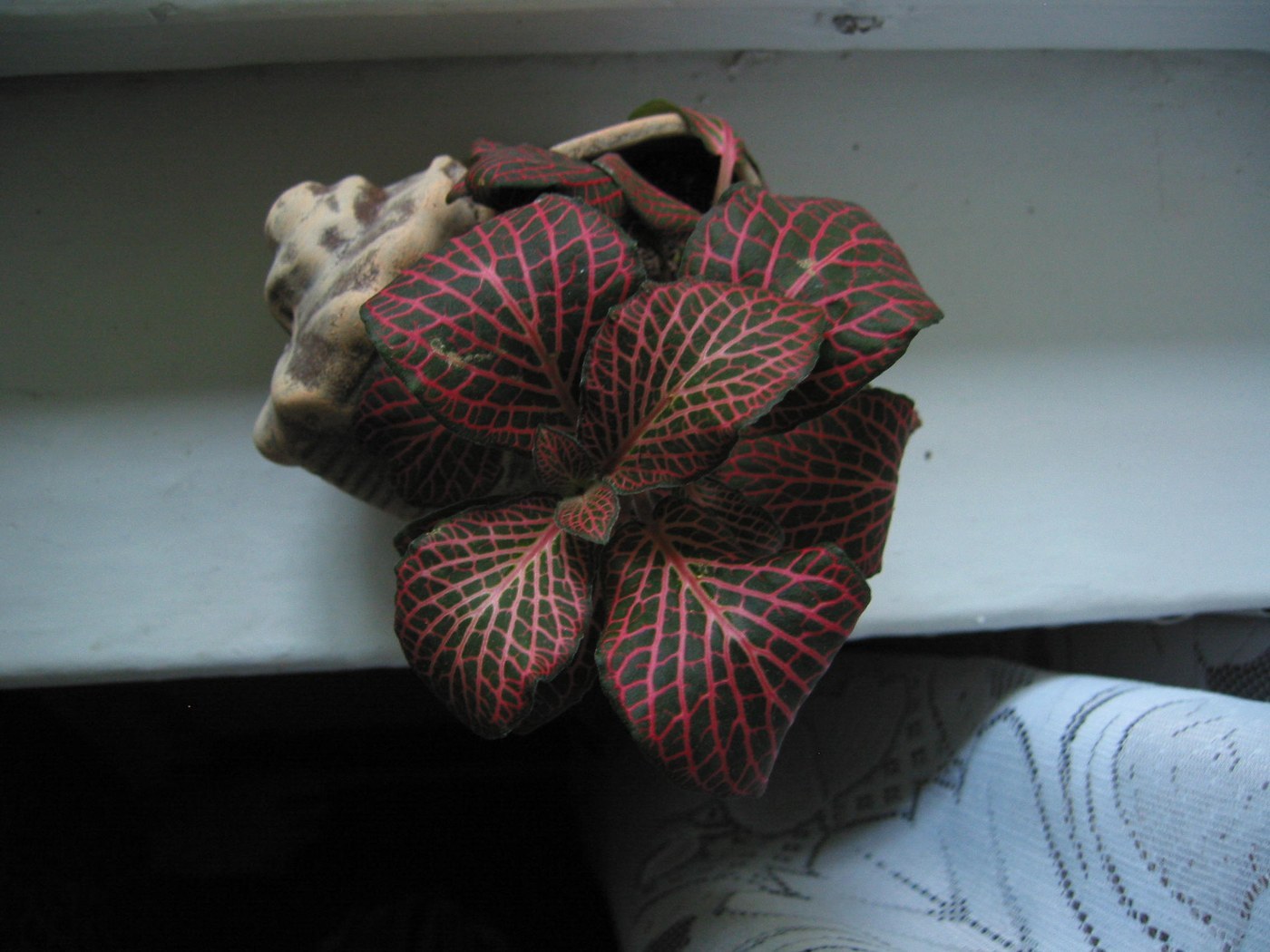
Key Identifying Features
The Nerve Plant (Fittonia albivenis), also called mosaic plant or painted-net leaf, is a low, creeping tropical plant grown for its intricately veined foliage. The name comes from the fine, branching network of white, pink, or red veins that webs across each leaf like a nervous system.
- Small oval leaves densely laced with contrasting veins
- Low, spreading/trailing mat-forming habit
- Veins in white, silver, pink, or red against a deep green blade
Leaves & Stems
The leaf veining is by far the best ID clue:
- Leaves are oval to elliptical, 2.5-7 cm long, soft and slightly fuzzy
- A dense, finely branched vein network in white or pink covers the surface (the 'mosaic' look)
- Leaves grow in opposite pairs along creeping, fuzzy green stems that root where they touch soil
- The plant stays low (under 15 cm / 6 in) and spreads outward, making it ideal for terrariums
- Leaves wilt dramatically when dry and revive quickly when watered — a behavioral ID clue
Flowers & Fruit
Flowers are insignificant and rarely the point:
- Small spikes of tiny white to pale-yellow tubular flowers poke up among the leaves
- Flowers are partly hidden by green bracts and easy to overlook
- Fruit is a small capsule, rarely seen on houseplants
How to Tell It Apart from Look-Alikes
- Zebra plant (Aphelandra): has much larger leaves with bold parallel white veins and a yellow flower cone; Fittonia is tiny and trailing with a finer web.
- Prayer plant (Maranta/Calathea): larger leaves that fold at night and show banded, not net-like, patterns.
- Fittonia's hallmark is the small, soft leaves with a fine, all-over vein web on a low creeping mat.
Where You'll Find It
A favorite terrarium and tabletop houseplant, the Nerve Plant loves the high humidity of enclosed glass containers. Native to the rainforests of Peru and northern South America, it grows as a groundcover on the shaded, moist forest floor.
Quick ID Checklist
- Small oval leaves with a fine network of white/pink/red veins
- Low, creeping, mat-forming habit
- Leaves in opposite pairs on fuzzy stems
- Wilts fast when dry, revives when watered
- Tiny, insignificant flowers
A carpet of small leaves webbed with bright veins is the classic Fittonia Nerve Plant.
Frequently asked questions
Why is it called the Nerve Plant?
Each leaf is covered in a fine, branching network of contrasting veins that resembles a system of nerves. This dense vein web in white, pink, or red is the plant's defining identification feature.
How do I tell a Nerve Plant from a Zebra Plant?
Nerve Plant (Fittonia) has small, soft leaves with a fine all-over vein web and a low trailing habit, while Zebra Plant (Aphelandra) has large stiff leaves with bold parallel white veins and grows upright.
Why does my Nerve Plant keep collapsing?
Fittonia wilts dramatically the moment its soil dries out, then perks back up quickly after watering. This fainting behavior is harmless and is actually a helpful clue for identifying the plant.
Does the Nerve Plant flower?
It can produce small spikes of insignificant white to pale-yellow flowers tucked among green bracts, but they are easily missed. The plant is grown for its veined foliage, not its blooms.