
Nettle Identification Guide
How to recognize stinging nettle (Urtica dioica) by its stinging hairs, opposite serrated leaves, and dangling green flower tassels, and how to separate it from harmless look-alikes.
Read the full Nettle encyclopedia entry →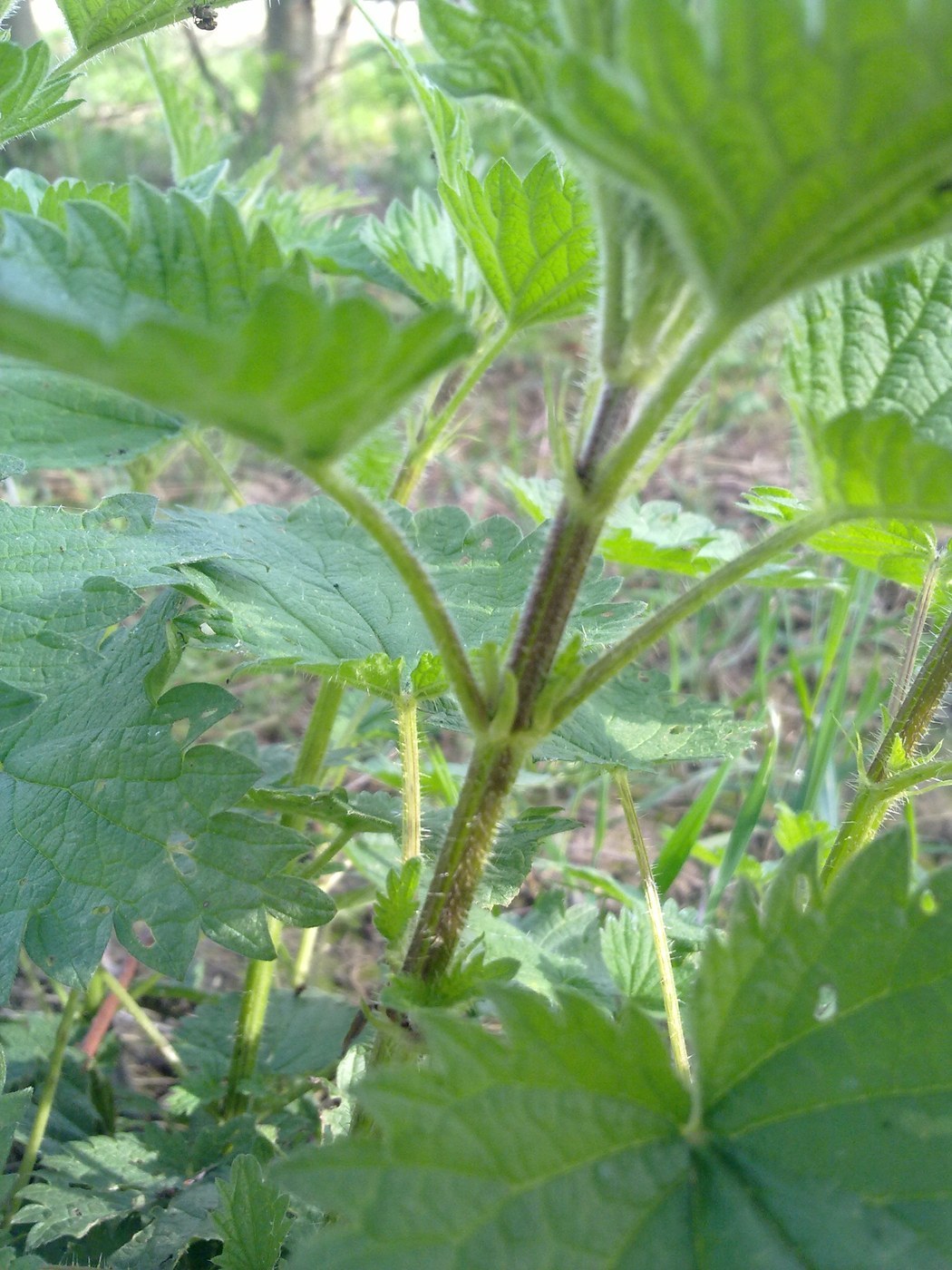
Key Identifying Features
Stinging nettle (Urtica dioica) is best known for the burning sting it delivers when touched. Look for these traits together:
- Stinging hairs (trichomes) covering the stems and undersides of leaves — fine, almost glassy bristles that break off and inject formic acid, histamine, and acetylcholine.
- Square, grooved stems that are upright and often unbranched, typically 0.6–2 m (2–6 ft) tall.
- Opposite leaves arranged in pairs along the stem.
- A tendency to grow in dense colonies via spreading yellow rhizomes.
Leaves & Stems
Leaves are heart-shaped to lance-shaped, 3–15 cm long, tapering to a pointed tip. The margins are coarsely and sharply toothed (serrated), and the surface has a slightly puckered, deeply veined texture. Both leaf surfaces and the stem carry stinging hairs plus shorter non-stinging hairs. Crushed foliage has a faint green, vegetal smell. The stem is distinctly four-angled (square) in cross-section — a useful confirming check.
Flowers & Fruit
Nettle is usually dioecious (separate male and female plants). From late spring through autumn it produces tiny, petalless greenish flowers clustered in branched, drooping catkin-like tassels that emerge from the leaf axils. Female clusters look slightly fuzzier and droop more; male clusters are more spreading. The seeds are minute. The flowers are wind-pollinated and not showy.
How to Tell It Apart from Look-Alikes
- White dead-nettle / henbit (Lamium spp.): superficially similar toothed, opposite leaves and square stems, but they do not sting and bear conspicuous tubular white or purple flowers. Run a gloved finger lightly over the stem — no bristles means it isn't true nettle.
- Wood nettle (Laportea canadensis): also stings, but has alternate leaves (at least toward the top) rather than strictly opposite.
- Clearweed (Pilea): similar toothed leaves but translucent, succulent stems and no sting.
- Mint family plants: square stems too, but aromatic when crushed and never stinging.
The combination of square stem + opposite serrated leaves + a genuine sting is essentially diagnostic for Urtica.
Where You'll Find It
Nettle thrives in nitrogen-rich, moist soils — riverbanks, woodland edges, ditches, hedgerows, old farmyards, compost-disturbed ground, and neglected gardens. It favors partial shade to full sun and is common across Europe, Asia, and North America, often forming large stands.
Quick ID Checklist
- Stinging bristles on stem and leaf undersides
- Square, grooved, upright stem
- Opposite, heart-to-lance-shaped, sharply toothed leaves
- Drooping greenish flower tassels from leaf axils
- Growing in dense patches on rich, moist soil
If all five line up — especially the sting plus square stem — you have stinging nettle.
Frequently asked questions
How can I confirm a plant is nettle without getting stung?
Use a gloved hand or a leaf to gently rub the stem; you'll see fine bristly hairs. Combined with a square stem and opposite, sharply toothed leaves, that confirms nettle. The sting itself is the surest test if you're willing to risk a brief rash.
What's the difference between stinging nettle and dead-nettle?
Dead-nettles (Lamium) look similar but have no stinging hairs and produce showy tubular white or purple flowers. True nettle stings and has inconspicuous greenish flower tassels.
Does nettle always sting?
Mature plants almost always sting, though sting intensity varies by population and season. A few cultivated or subspecies forms have reduced stinging hairs, but wild Urtica dioica typically stings readily.
When does nettle flower?
Greenish, drooping flower clusters appear from late spring through autumn, peaking in summer. The plant is most easily identified by foliage and sting year-round during the growing season.