How to Care for New England Aster
New England Aster crowns the fall garden with masses of purple daisy blooms. An easy, sun-loving native perennial for pollinator borders.
Read the full New England Aster encyclopedia entry →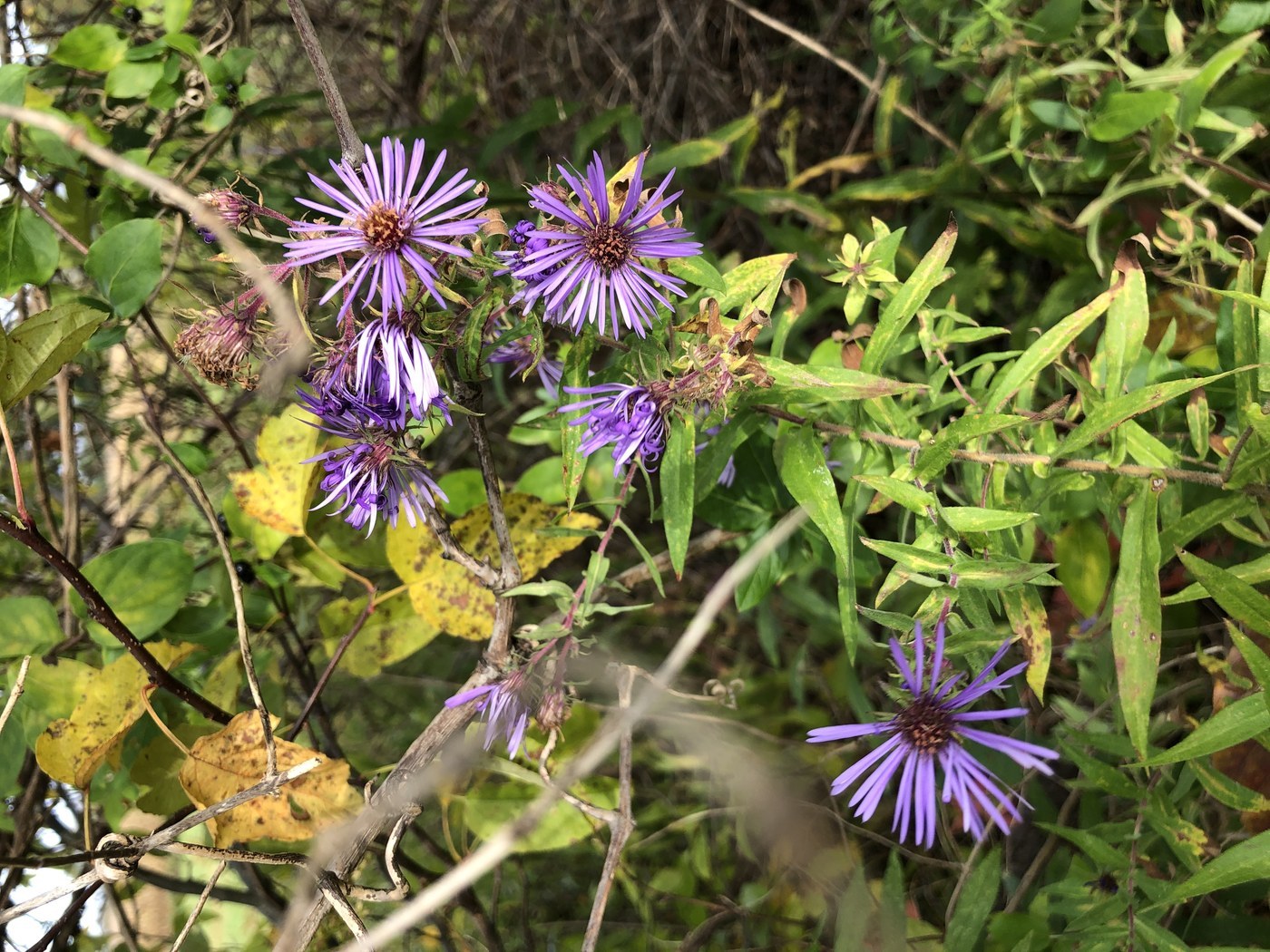
New England Aster (Symphyotrichum novae-angliae) is a robust native perennial that erupts in late summer and autumn with dense clusters of daisy-like flowers in rich purple, violet, pink, and magenta around golden centers. Tall and bushy, it is one of the most dependable and spectacular fall bloomers for a sunny border or meadow planting.
Light
Grow New England Aster in full sun for the most compact, sturdy, flower-packed plants. It will grow in a little afternoon shade but responds by stretching taller, flowering less, and becoming more prone to flopping and mildew, so aim for at least six hours of direct sun.
Water
This aster likes moderate, steady moisture and tolerates damp soils better than most perennials, making it useful in low, moist spots and rain gardens. Water regularly during establishment and through dry summer stretches; drought stress causes lower leaves to brown and drop and reduces the fall flower display.
Soil & Potting
Plant in fertile, moisture-retentive soil rich in organic matter, with a neutral to slightly acidic pH. It tolerates clay and heavy soils well as long as they are not bone-dry in summer. Mulch to conserve moisture and keep the roots cool, which improves lower-foliage retention.
Humidity & Temperature
New England Aster is very cold-hardy and thrives across temperate climates. It enjoys warm summers for lush growth and blooms as nights cool in autumn. No humidity control is needed, though good airflow between plants reduces the mildew this species is prone to.
Feeding
Moderate feeders, these asters appreciate a spring topdressing of compost or a balanced slow-release fertilizer. Do not overfeed with nitrogen, which promotes tall, weak, floppy growth at the expense of flowers and worsens disease. Lean-to-average fertility with good moisture gives the best results.
Propagation
Divide clumps every two to three years in spring to maintain vigor, control size, and multiply your plants; discard the woody center and replant the vigorous outer sections. It also grows from softwood cuttings in early summer and from seed, though named color forms are best kept true by division or cuttings.
Repotting / Pruning
The key maintenance task is the "Chelsea chop": cut stems back by a third to half in late spring to early summer. This produces bushier, shorter, self-supporting plants smothered in more flowers and far less likely to flop. Cut spent stems to the ground in late fall or leave them for winter structure and trim in spring. Divide crowded clumps to keep them healthy.
Common Problems & Pests
Powdery mildew is the signature problem, whitening lower leaves in late summer, especially on dry, crowded, or shaded plants; prevent it with full sun, good spacing, steady moisture, and the summer cutback. Lower-leaf browning from drought is common, so keep plants watered. Aphids and lace bugs may appear but are rarely serious and can be hosed off.
Seasonal Care Tips
In spring, divide and topdress with compost as growth resumes. In early summer, pinch or cut plants back by a third to a half for sturdier, more floriferous growth. Through summer, water consistently and watch for mildew. In fall, enjoy the peak bloom, then cut back after frost or leave seed heads for winter interest and birds.
Frequently asked questions
How do I keep New England Aster from getting tall and floppy?
Cut the stems back by a third to a half in late spring or early summer (the 'Chelsea chop'). This forces bushier, shorter, self-supporting growth covered in more blooms. Full sun and avoiding excess nitrogen also keep plants compact.
Why do the lower leaves turn brown and drop?
This is usually drought stress or powdery mildew, both common on this species. Keep the soil evenly moist, mulch the roots, space plants for airflow, and give full sun. The summer cutback also refreshes lower growth and reduces leaf loss.
When does New England Aster bloom?
It is a star of the late-season garden, flowering from late summer through autumn as nights cool. Its purple, violet, pink, and magenta daisies provide one of the last major bursts of color before frost.
How often should I divide it?
Every two to three years in spring. Lift the clump, discard the woody, less-productive center, and replant the vigorous outer sections. Regular division keeps the plant healthy, controls its size, and gives you free plants.
New England Aster identified by the community
Recent New England Aster specimens identified with Plant Identifier.