
Ninebark Identification Guide
How to identify ninebark by its peeling, papery bark, maple-like lobed leaves, and rounded white-to-pink flower clusters.
Read the full Ninebark encyclopedia entry →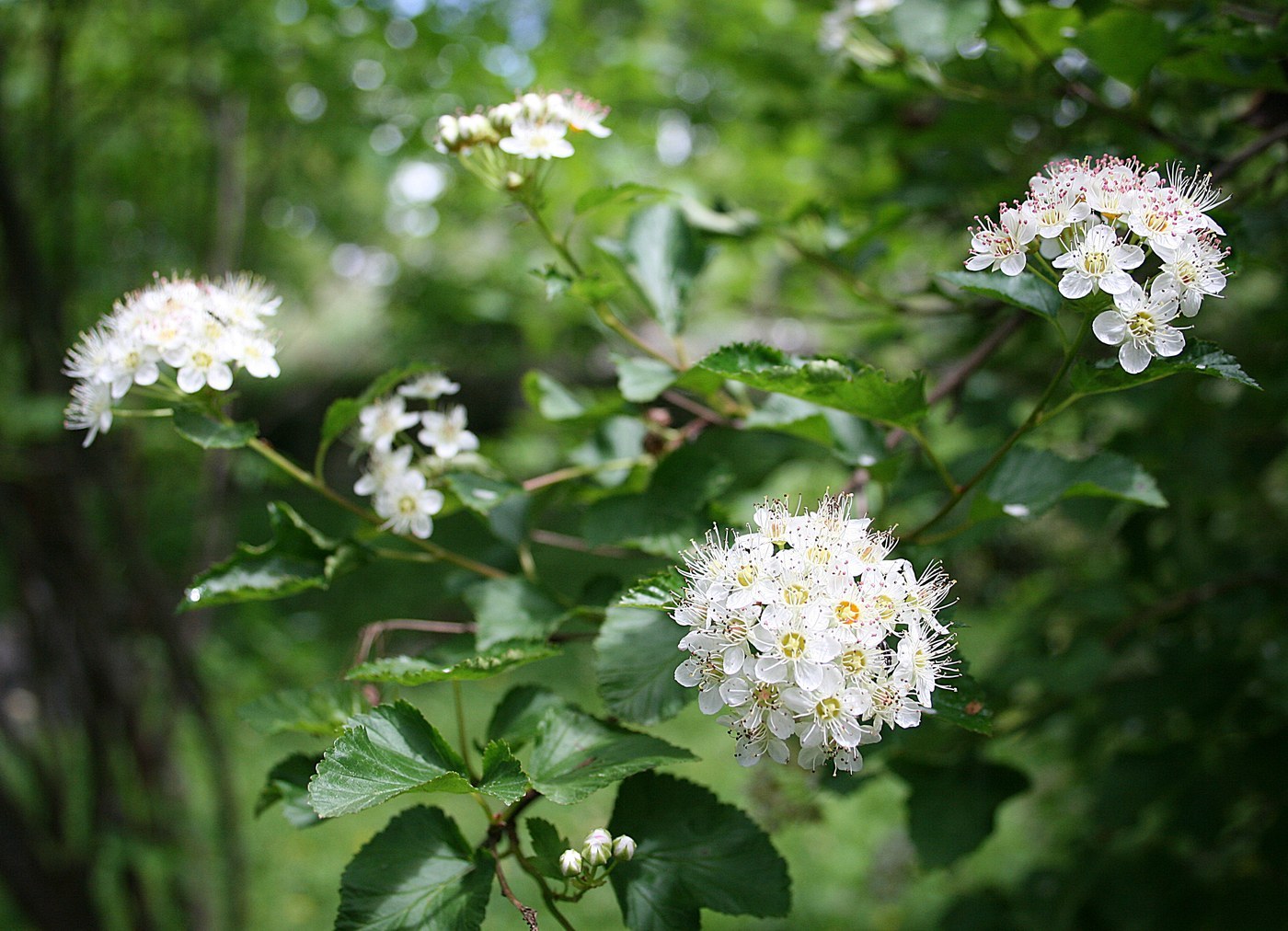
Key Identifying Features
Ninebark (Physocarpus opulifolius) is a tough, deciduous, arching shrub in the rose family, named for its exfoliating bark that peels in thin papery layers—supposedly 'nine' layers. It typically grows 5-10 feet tall with fountaining stems. The standout traits are the shredding bark, three-lobed maple-like leaves, and clusters of small white-to-pink flowers that turn into puffy reddish seed pods.
- Peeling, papery, reddish-brown bark on older stems
- Alternate, 3-5 lobed leaves resembling small maple or currant leaves
- Rounded clusters of white/pink five-petaled flowers
- Inflated reddish follicle fruits in clusters
Leaves & Stems
Leaves are alternate, 1-3 inches long, with 3 to 5 shallow lobes and toothed margins, looking much like a maple or currant leaf. Many garden cultivars have striking foliage—deep burgundy ('Diabolo'), gold ('Dart's Gold'), or coppery-orange ('Coppertina')—which is a major landscape ID clue. Stems arch outward and, on older wood, the bark strips away in thin curls revealing lighter inner bark, the genus's signature feature most visible in winter.
Flowers & Fruit
In late spring to early summer, ninebark bears dense, rounded clusters (corymbs) about 1-2 inches across of small five-petaled flowers, white or pink-tinged, with showy clusters of stamens giving a fuzzy look. These mature into clusters of inflated, papery seed pods (follicles) that flush red to bronze, adding ornamental color into fall. The puffy reddish fruit clusters are very characteristic.
How to Tell It Apart from Look-Alikes
- Spirea: related and similar flat/rounded flower clusters, but spirea has simple unlobed leaves and does not have peeling bark.
- Currants/gooseberries (Ribes): similar lobed leaves but produce true berries, and many have spines; no exfoliating bark.
- Maples: opposite leaves and winged samaras, while ninebark is alternate with pods.
- Hydrangea: opposite leaves and dry capsules, no shredding bark.
The alternate lobed leaves + peeling papery bark + puffy red pods combination is diagnostic.
Where You'll Find It
Native to eastern and central North America, ninebark grows along stream banks, rocky slopes, and moist thickets. It is widely planted in gardens for its colorful-leaved cultivars and is very adaptable to sun, part shade, and a range of soils, tolerating both wet and dry conditions.
Quick ID Checklist
- Arching deciduous shrub, 5-10 ft
- Bark peels in thin papery strips (best seen in winter)
- Alternate, 3-5 lobed, toothed maple-like leaves (often colored cultivars)
- Rounded white/pink flower clusters in early summer
- Inflated red-bronze seed pods
Frequently asked questions
Why is it called ninebark?
The common name refers to the bark on mature stems, which peels away in multiple thin papery layers as if it had nine layers. This exfoliating bark is one of the easiest ways to identify the plant in winter.
How do I tell ninebark from spirea?
Both are rose-family shrubs with clustered flowers, but ninebark has lobed, maple-like leaves and distinctive peeling bark, while spirea has simple unlobed leaves and smooth non-peeling stems.
Are the dark purple-leaved shrubs ninebark?
Often yes. Popular cultivars like 'Diabolo' and 'Coppertina' have deep burgundy to copper foliage. Confirm by checking for the lobed leaves, peeling bark, and clusters of pink-white flowers with puffy red seed pods.
Does ninebark have berries?
No true berries. The fruits are small, inflated, papery pods (follicles) that turn reddish and split open to release seeds, not fleshy berries.