
Norway Maple Identification Guide
Identify Norway maple by the milky sap in its leaf stalks, broad five-lobed leaves, and wide-spread paired samaras. Covers leaves, flowers, look-alikes, and habitat.
Read the full Norway Maple encyclopedia entry →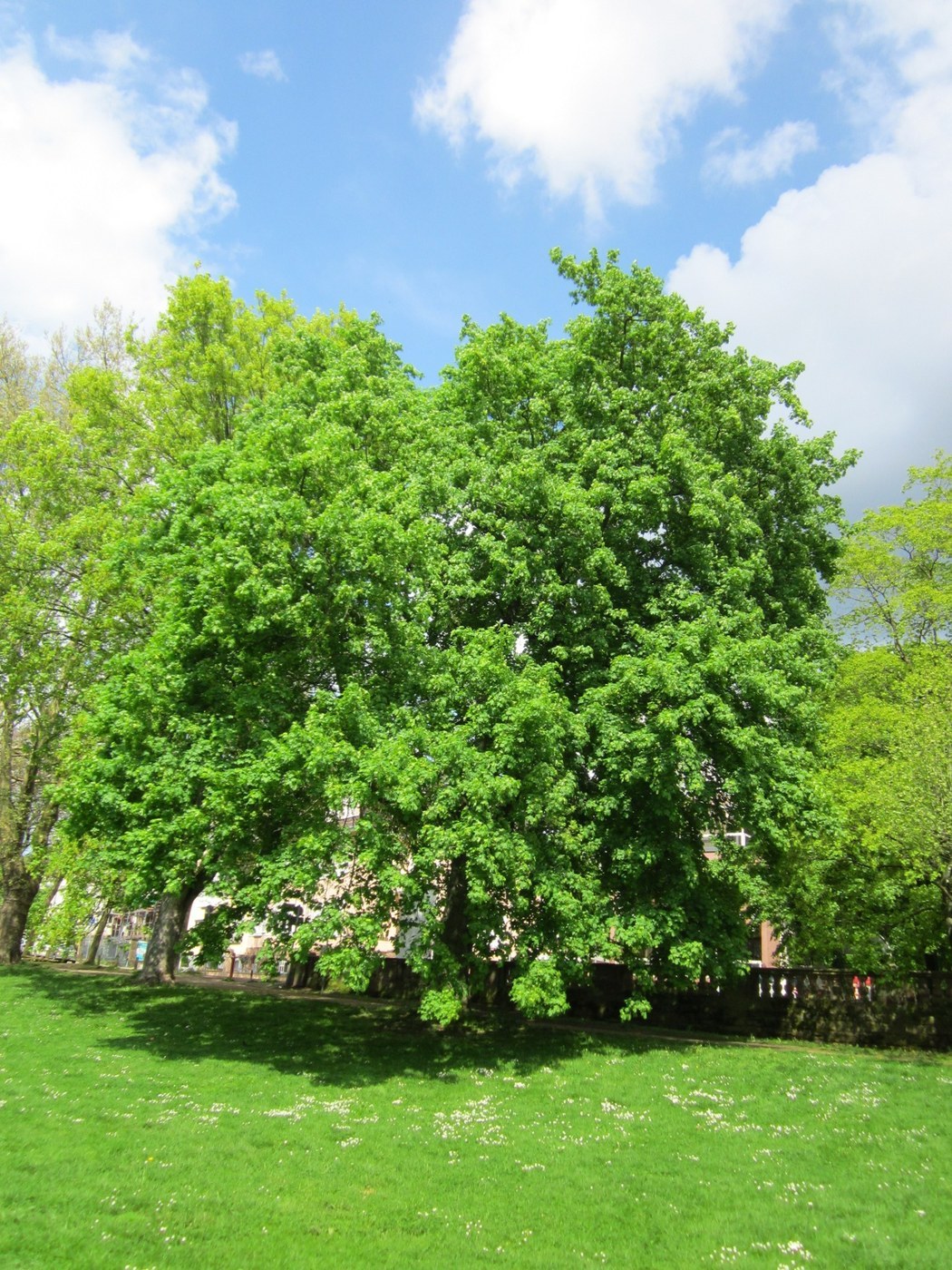
Key Identifying Features
Norway maple (Acer platanoides) is a large, dense shade tree native to Europe and widely planted — and now invasive — across North America. Its single most reliable field mark is the milky white sap that oozes from a broken leaf stalk. It has broad, sharply lobed leaves and produces seeds with widely spread, nearly horizontal wings. Mature trees reach 40-60 feet with a rounded, heavily shaded crown.
Leaves & Stems
- Leaves are broad, palmate, with 5 (sometimes 7) lobes and a few large pointed teeth — wider than they are long, often 4-7 inches across.
- The petiole (leaf stalk) exudes milky white sap when snapped — the definitive test that separates it from native maples.
- Foliage is dark green in summer, turning yellow (occasionally red) in fall; a common cultivar ('Crimson King') has dark purple leaves all season.
- Twigs are smooth and brown; buds are large, plump, rounded, and reddish to greenish, not sharply pointed.
Flowers & Fruit
- In early spring, before or with the leaves, it produces showy upright clusters of yellow-green flowers that make the bare crown glow chartreuse.
- Fruits are paired samaras (helicopters) whose wings spread out to nearly 180 degrees, lying almost in a straight line — a strong ID clue.
Bark
Bark is gray with regular, shallow, interlacing ridges, tighter and more orderly than the shaggier sugar maple bark.
How to Tell It Apart from Look-Alikes
- Sugar maple (Acer saccharum) has clear (not milky) sap, more rounded U-shaped sinuses, fewer teeth, and samaras whose wings form a narrow horseshoe; fall color is orange-red.
- Red maple (Acer rubrum) has smaller, more toothed leaves with clear sap and red twigs.
- Sycamore maple has thicker, doughier leaves and clear sap.
Where You'll Find It
Norway maple is planted heavily as a street and lawn tree and has escaped into forests across the northeastern US and southern Canada, where its dense shade and shallow roots crowd out native seedlings. Look for it in city parks, parkway strips, and disturbed woodland edges.
Quick ID Checklist
- Milky sap from a broken leaf stalk (the clincher)
- Broad, 5-lobed leaves wider than long with a few large teeth
- Samaras with widely spread, near-horizontal wings
- Large, blunt, rounded reddish buds
- Showy upright yellow-green spring flowers
- Common as a planted street tree
When a maple leaf stalk bleeds white and the helicopters spread flat, you have Norway maple.
Frequently asked questions
What is the single best test for Norway maple?
Snap a leaf stalk: Norway maple oozes milky white sap, while native maples like sugar and red maple have clear sap.
How do Norway maple seeds differ from sugar maple seeds?
Norway maple samaras spread their wings out to nearly 180 degrees in almost a straight line, whereas sugar maple wings form a narrow, near-parallel horseshoe.
Is the purple-leaved tree in many yards a Norway maple?
Often yes; 'Crimson King' is a popular Norway maple cultivar with deep purple leaves all summer, and its stalk still bleeds milky sap.
Why is Norway maple considered invasive?
Its dense canopy and shallow root mat cast heavy shade and outcompete native tree seedlings and wildflowers, allowing it to spread aggressively into forests.