
Obedient Plant Identification Guide
How to identify Obedient Plant (Physostegia virginiana) by its square stems, toothed opposite leaves, and dense spikes of pink tubular flowers that stay put when pushed sideways.
Read the full Obedient Plant encyclopedia entry →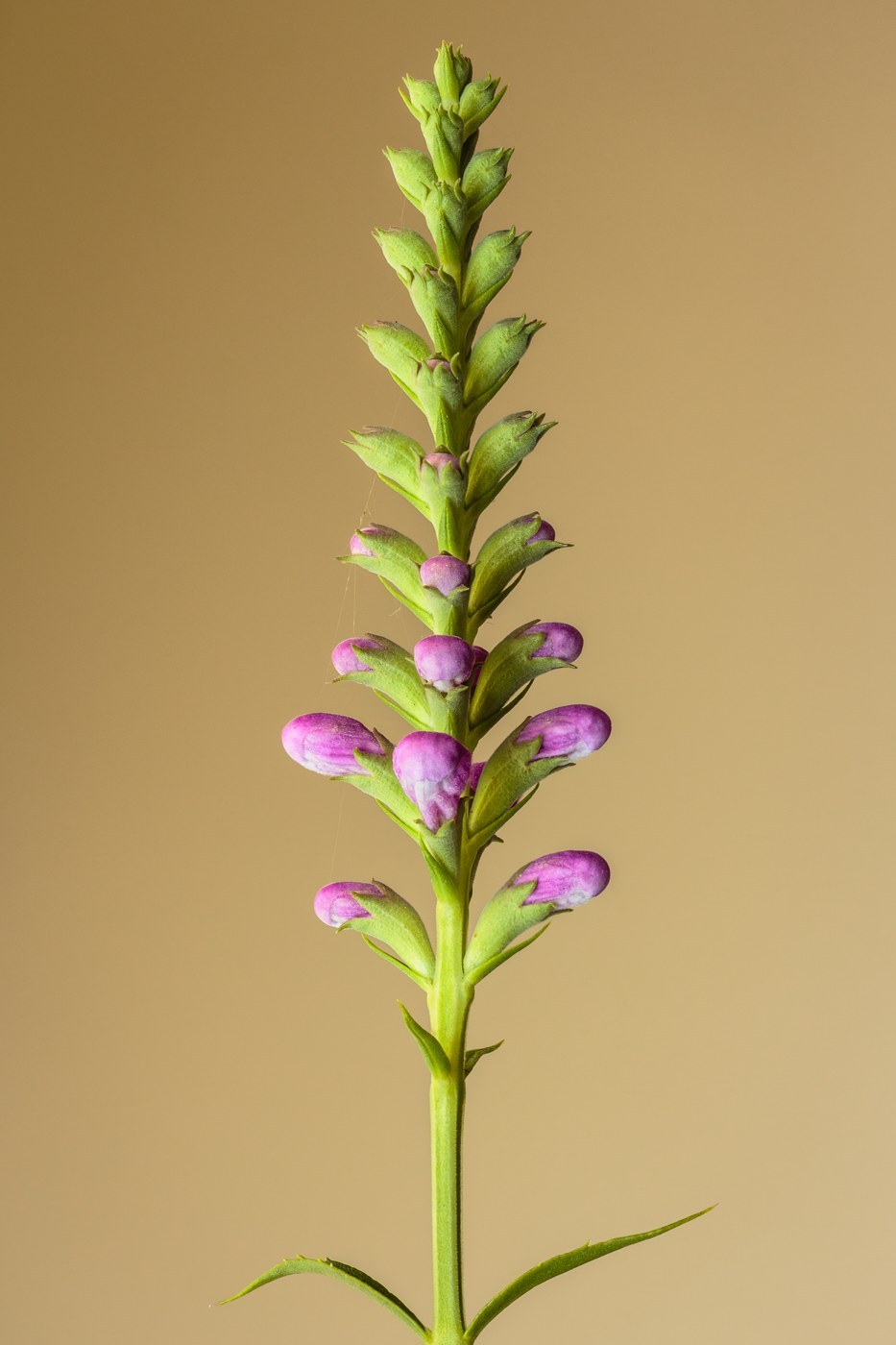
Key Identifying Features
Obedient Plant (Physostegia virginiana), also called false dragonhead, is a tall native perennial in the mint family. Its odd common name comes from a quirky trait: push an individual flower sideways and it stays in the new position, as if obedient. Look for dense vertical spikes of pink, snapdragon-like tubular flowers over square stems.
- Erect spikes of pink to lavender (sometimes white) tubular flowers
- Grows 2-4 feet tall, often in colonies
- Square stems and opposite, toothed leaves (mint family)
- Flowers stay put when nudged sideways
Leaves & Stems
Stems are stiff, upright, and distinctly four-sided (square), a hallmark of the mint family. Leaves are lance-shaped to narrowly oblong, up to 5 inches long, with sharply toothed margins, and arranged in opposite pairs that often rotate at right angles up the stem. The plant spreads by rhizomes, frequently forming sizable colonies.
Flowers & Fruit
The flowers crowd into showy terminal spikes, opening from the bottom up. Each flower is a two-lipped tube about 1 inch long, pink to rosy-lavender (white in some cultivars), with the lower lip often spotted or streaked, resembling a small snapdragon. The flowers are set in four neat vertical rows around the spike. The famous trick: the flowers are hinged at the base so they stay in place when pushed. Fruit is a cluster of small nutlets.
How to Tell It Apart from Look-Alikes
- Snapdragon (Antirrhinum): similar two-lipped pink tubes, but snapdragons have round, not square, stems, alternate leaves, and don't form spreading rhizomatous colonies.
- Garden phlox (Phlox paniculata): pink and tall too, but phlox flowers are flat five-lobed pinwheels in rounded clusters, not tubular spikes, and stems are round.
- Liatris (blazing star): spiky pink/purple, but flowers are fluffy tufts and leaves are grassy and alternate.
The square stem + opposite toothed leaves + four rows of tubular flowers that stay when pushed is unique to Obedient Plant.
Where You'll Find It
Obedient Plant grows in moist meadows, prairie swales, stream banks, and ditches, and is widely planted in gardens for late-season color. It likes full sun to part shade and moist soil, where it can spread vigorously. Bloom is mid to late summer into early fall.
Quick ID Checklist
- Square stems (mint family)
- Opposite, sharply toothed lance leaves
- Dense spike of pink tubular two-lipped flowers in 4 rows
- Push a flower sideways and it stays put
- Colony-forming in moist, sunny ground, late-summer bloom
A pink-spiked, square-stemmed plant whose flowers obediently stay where you nudge them is Obedient Plant.
Frequently asked questions
Why is it called obedient plant?
Each flower is hinged at its base, so when you push an individual bloom sideways around the spike it stays in the new position rather than springing back, appearing obediently movable.
How do I tell obedient plant from a snapdragon?
Obedient plant has square stems and opposite toothed leaves and forms spreading colonies, while snapdragons have round stems, alternate leaves, and don't spread by rhizomes.
Is obedient plant invasive?
It spreads aggressively by rhizomes and can form large colonies, so in gardens it is often considered a vigorous spreader that needs containment, though it is native to North America.
When does obedient plant bloom?
It flowers from mid to late summer into early fall, providing late-season color and nectar for bees and hummingbirds.