
How to Care for Ohio Buckeye
Grow Ohio Buckeye (Aesculus glabra), a hardy native shade tree with palmate leaves, spring flower spikes, and reliable autumn color.
Read the full Ohio Buckeye encyclopedia entry →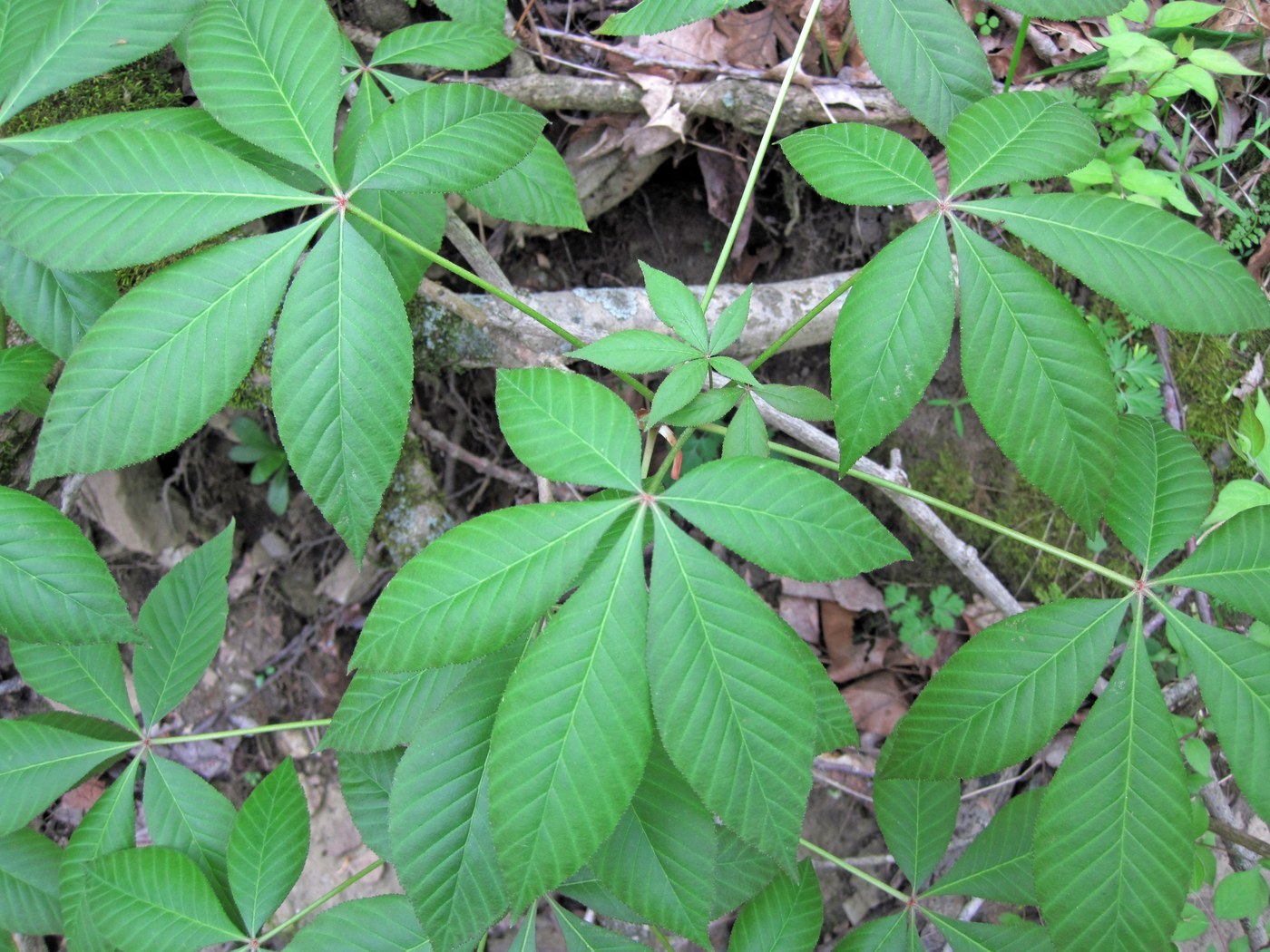
Ohio Buckeye (Aesculus glabra) is a medium-sized deciduous tree prized for its bold palmate foliage, upright greenish-yellow spring flower panicles, and early, dramatic fall color. It is a durable landscape and shade tree that rewards patient, moderate care once its root system is established.
Light
Give Ohio Buckeye full sun to part shade. It flowers most heavily and develops the fullest, most symmetrical crown in full sun, but young trees appreciate a little afternoon shade in hot regions. In deep shade the canopy thins and fall color weakens, so aim for at least a half-day of direct light.
Water
Keep the soil consistently moist, especially for the first two to three years while roots establish. Ohio Buckeye is naturally a bottomland and streambank species, so it dislikes prolonged drought. Water deeply and slowly to encourage roots to grow down, aiming for evenly damp soil rather than saturation. Established trees tolerate short dry spells but may drop leaves early (a natural summer response) if stressed.
Soil & Potting
This tree favors deep, fertile, moisture-retentive soil that is slightly acidic to neutral. It performs best in loamy or clay-loam ground with good organic content. Improve poor or compacted sites with organic matter at planting. A 5-8 cm ring of mulch over the root zone (kept off the trunk) conserves moisture and moderates soil temperature.
Humidity & Temperature
Ohio Buckeye is fully cold-hardy across temperate zones and needs a winter chill period to grow well. It handles a wide range of ambient humidity and shrugs off cold winters. It is not suited to frost-free tropical climates because it requires seasonal dormancy.
Feeding
Feeding needs are modest. A single spring application of a balanced slow-release tree fertilizer, or a topdressing of compost over the root zone, supports steady growth. Avoid heavy nitrogen, which pushes soft growth prone to leaf scorch. Mature trees in decent soil often need no supplemental feeding at all.
Propagation
Ohio Buckeye is grown almost exclusively from seed. Collect the rounded seeds in autumn, sow them promptly in outdoor beds, and let winter cold provide natural stratification; they germinate the following spring. If sowing is delayed, store seeds in moist medium under refrigeration for several weeks of cold stratification. Do not let seeds dry out, as they lose viability quickly.
Repotting / Pruning
Because of a deep, sensitive taproot, transplant only when young and preferably in early spring while dormant. Prune in late winter to remove dead, damaged, or crossing branches and to establish a single strong leader. Keep pruning light; the tree has a naturally rounded habit that needs little shaping.
Common Problems & Pests
The most common issue is leaf blotch and powdery mildew, which cause brown or scorched-looking foliage and often trigger early leaf drop by late summer; rake and dispose of fallen leaves to reduce reinfection, and improve air circulation. Leaf scorch also appears in dry, windy sites. Occasional pests include scale, bagworms, and Japanese beetles, none usually serious on an otherwise healthy tree.
Seasonal Care Tips
In spring, refresh mulch and apply any needed feeding as buds break. Through summer, water during dry spells and accept some early leaf drop as normal for the species. In autumn, enjoy the early color and collect seed for propagation if desired. In winter, complete structural pruning while the tree is dormant.
Frequently asked questions
Why do the leaves turn brown and drop in mid-summer?
Ohio Buckeye is prone to leaf blotch and scorch in hot, dry conditions and often sheds foliage early. Keep soil evenly moist, rake up fallen leaves to limit fungal spread, and the tree will releaf normally the next spring.
How much sun does Ohio Buckeye need?
Full sun to part shade. It flowers best and forms the densest canopy in full sun, though young trees benefit from light afternoon shade in hot climates.
Can I grow Ohio Buckeye from seed?
Yes, it grows readily from fresh seed. Sow the rounded seeds outdoors in autumn so winter cold stratifies them, and keep them from drying out since they lose viability fast.
Does it need a lot of pruning?
No. It has a naturally rounded form. Prune lightly in late winter to remove dead or crossing wood and establish a strong central leader while young.