
Ohio Buckeye Identification Guide
Identify Ohio buckeye by its palmately compound five-leaflet leaves, spiny capsules holding glossy brown nuts, and foul-smelling crushed parts. Covers leaves, flowers, fruit, look-alikes, and habitat.
Read the full Ohio Buckeye encyclopedia entry →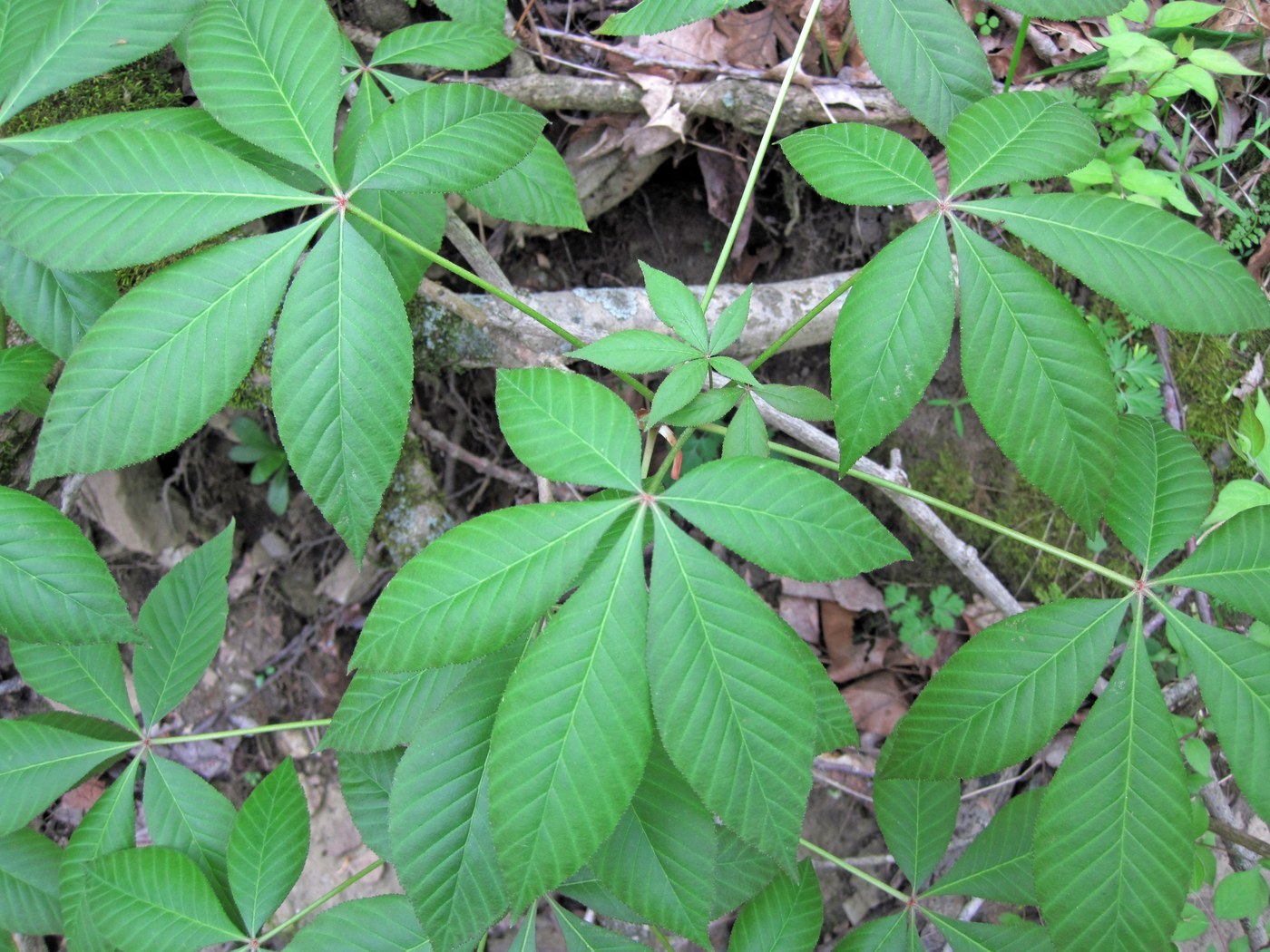
Key Identifying Features
Ohio buckeye (Aesculus glabra) is a medium-sized tree of the central United States, famous for its glossy brown 'buckeye' nuts. Identify it by opposite, palmately compound leaves with (usually) five leaflets, upright clusters of pale yellow-green flowers, and spiny seed capsules. Crushed leaves, twigs, and bark give off a distinctly unpleasant, fetid odor — hence the old name 'fetid buckeye.' It grows 30-50 feet.
Leaves & Stems
- Leaves are opposite and palmately compound, radiating from one point like a hand, with typically 5 leaflets (occasionally 7).
- Leaflets are elliptical, finely toothed, 3-6 inches long, tapering at both ends.
- They leaf out very early in spring and often drop early; fall color ranges from yellow to orange-red.
- Twigs are stout with large terminal buds; bruised twigs and crushed leaves smell rank.
Flowers & Fruit
- In spring, upright pyramidal clusters (panicles) of pale greenish-yellow flowers, 4-7 inches tall, stand at branch tips.
- The fruit is a leathery capsule covered in short spines/warty prickles that splits to release one or two large, smooth, shiny mahogany-brown seeds, each with a pale tan scar (the 'buck's eye').
Bark
Bark is gray to gray-brown, becoming scaly and broken into plates on older trunks, and shares the foul scent when scratched.
How to Tell It Apart from Look-Alikes
- Yellow buckeye (Aesculus flava) has smooth (non-spiny) capsules and usually lacks the strong odor.
- Horsechestnut (Aesculus hippocastanum) has 7 leaflets, larger white flower clusters, and big sticky buds; its capsules are spiny but the leaflets are broader and stalkless.
- Ash (Fraxinus) has opposite pinnately compound (feather-like) leaves, not palmate, and no buckeye nuts.
Where You'll Find It
Ohio buckeye grows in moist woods, river bottoms, and slopes across the Ohio Valley and central Midwest. It is the Ohio state tree and is also planted as an ornamental. Look for it as an understory or streamside tree leafing out before most neighbors.
Quick ID Checklist
- Opposite, palmately compound leaves with 5 leaflets
- Upright clusters of pale yellow-green spring flowers
- Spiny capsules holding shiny brown nuts with a pale eye
- Fetid odor from crushed leaves, twigs, or bark
- Large terminal buds; leafs out very early
Five-leaflet palmate leaves, spiny nut capsules, and a foul smell confirm Ohio buckeye.
Frequently asked questions
How do I tell Ohio buckeye from horsechestnut?
Ohio buckeye usually has 5 leaflets, smaller greenish-yellow flowers, and a foul odor, while horsechestnut has 7 broad stalkless leaflets, large showy white flower clusters, and big sticky buds.
What is the difference between Ohio buckeye and yellow buckeye?
Ohio buckeye has spiny, prickly seed capsules and a strong unpleasant smell, while yellow buckeye has smooth capsules and little to no odor.
Why is it sometimes called fetid buckeye?
Crushing or scraping its leaves, twigs, or bark releases a distinctly rank, unpleasant odor that is a reliable identification clue.
What features best identify Ohio buckeye in spring?
Look for opposite, palmately compound leaves with five leaflets radiating from one point, large terminal buds, and very early leaf-out in spring, paired with the spiny capsules and shiny brown nuts.