
Okra Identification Guide
Recognize okra by its tall stems, broad maple-like leaves, hibiscus-style cream-and-maroon flowers, and the ribbed, pointed seed pods that stand upright.
Read the full Okra encyclopedia entry →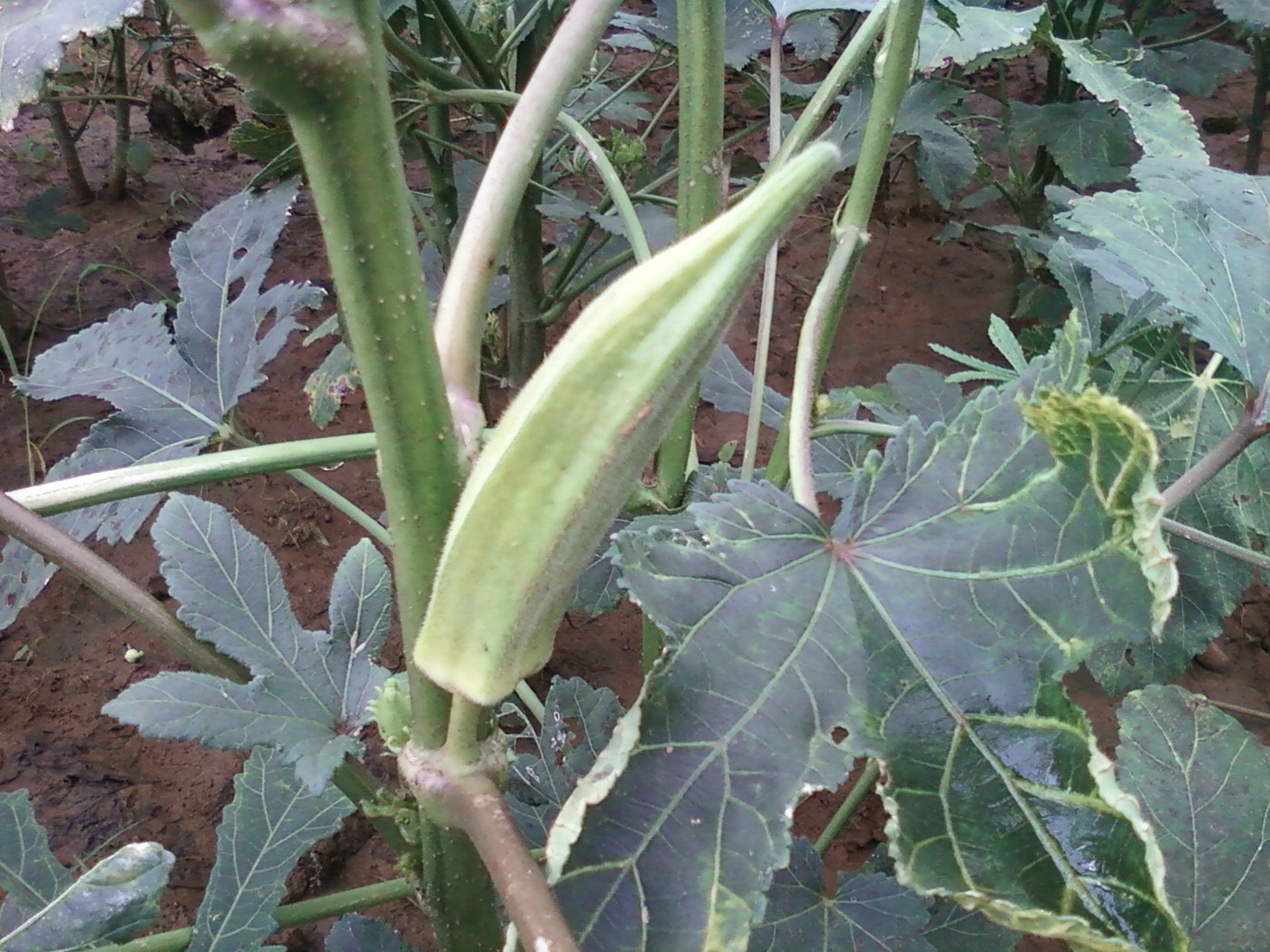
Key Identifying Features
Okra (Abelmoschus esculentus) is a tall warm-season annual in the mallow family (Malvaceae), related to hibiscus and cotton. It is identified by its upright woody stem, large lobed leaves, showy pale-yellow hibiscus-like flowers with a dark center, and the distinctive ribbed, finger-like green pods that point upward from the stem.
- Growth habit: erect, single- to few-stemmed plant 3–7 ft tall (some types taller)
- Stem: sturdy, often slightly woody and sometimes reddish, with bristly hairs
Leaves & Stems
Leaves are large, alternate, and palmately 3–7 lobed (maple- or fig-leaf shaped), 4–10 inches across, with toothed edges and a roughly hairy texture. Leaf stalks (petioles) are long, and the whole plant is covered in scratchy hairs. Stems are upright and tough.
Flowers & Fruit
Flowers are classic mallow-family: 2–3 inches wide, 5 overlapping cream to pale-yellow petals with a deep maroon-purple blotch at the throat, and a central column of fused stamens (the staminal column) typical of hibiscus relatives. Flowers appear in the leaf axils and last about a day.
The fruit is the unmistakable clue: a slender, ribbed (usually 5-angled), pointed capsule 3–8 inches long held upright or angled along the stem. Pods are green (some varieties red/burgundy); young pods are soft and green, while mature pods turn woody and split to release round seeds. The upward-pointing, lantern-like pod arrangement is highly distinctive.
How to Tell It Apart from Look-Alikes
- Cotton (Gossypium): similar lobed leaves and mallow flowers, but cotton produces a rounded boll that bursts into white fluff, never a ribbed pointed pod.
- Hibiscus / rose mallow: showier, larger flowers and seed capsules, but lacks the long ridged pods.
- Roselle (Hibiscus sabdariffa): has fleshy red calyces around the fruit instead of a long ribbed pod.
- Castor bean: has palmate leaves too, but spiny round seed pods and reddish foliage, no mallow flower.
The lobed hairy leaves + cream/maroon hibiscus flower + upright ridged pointed pod combo confirms okra.
Where You'll Find It
Okra loves heat and is grown across the southern United States, Africa, the Middle East, and South Asia in vegetable gardens and farm fields. It needs full sun and warm soil and is rarely seen in cool climates except in summer plots.
Quick ID Checklist
- Tall erect stem, 3–7 ft, sometimes reddish and bristly
- Large maple-shaped 3–7 lobed hairy leaves
- Hibiscus-like flowers: pale yellow with maroon center
- Ribbed, pointed pods standing upright on the stem
- Mallow-family staminal column in the flower
Frequently asked questions
How do I tell okra from cotton, since the plants look similar?
Both are mallows with lobed leaves and similar flowers, but okra forms long, ribbed, pointed pods held upright, while cotton forms a rounded boll that splits open into fluffy white fiber.
Why do okra flowers look like hibiscus?
Okra is in the same family (Malvaceae) as hibiscus, so it shares the five overlapping petals, the dark throat blotch, and the central column of fused stamens characteristic of that group.
What color are okra pods?
Most are bright green, but some varieties produce burgundy or reddish pods. All have the telltale ribbed, tapering, finger-like shape pointing upward from the stem.
What is the most distinctive feature for identifying okra?
The slender, ribbed, pointed pods that stand upright along the stem are the clearest clue, combined with the lobed maple-shaped leaves and pale-yellow hibiscus-like flowers with a maroon center.