
How to Care for Orchid Tree
Grow Bauhinia variegata, the orchid tree, for its lush orchid-like blooms and twin-lobed leaves in warm, sunny gardens.
Read the full Orchid Tree encyclopedia entry →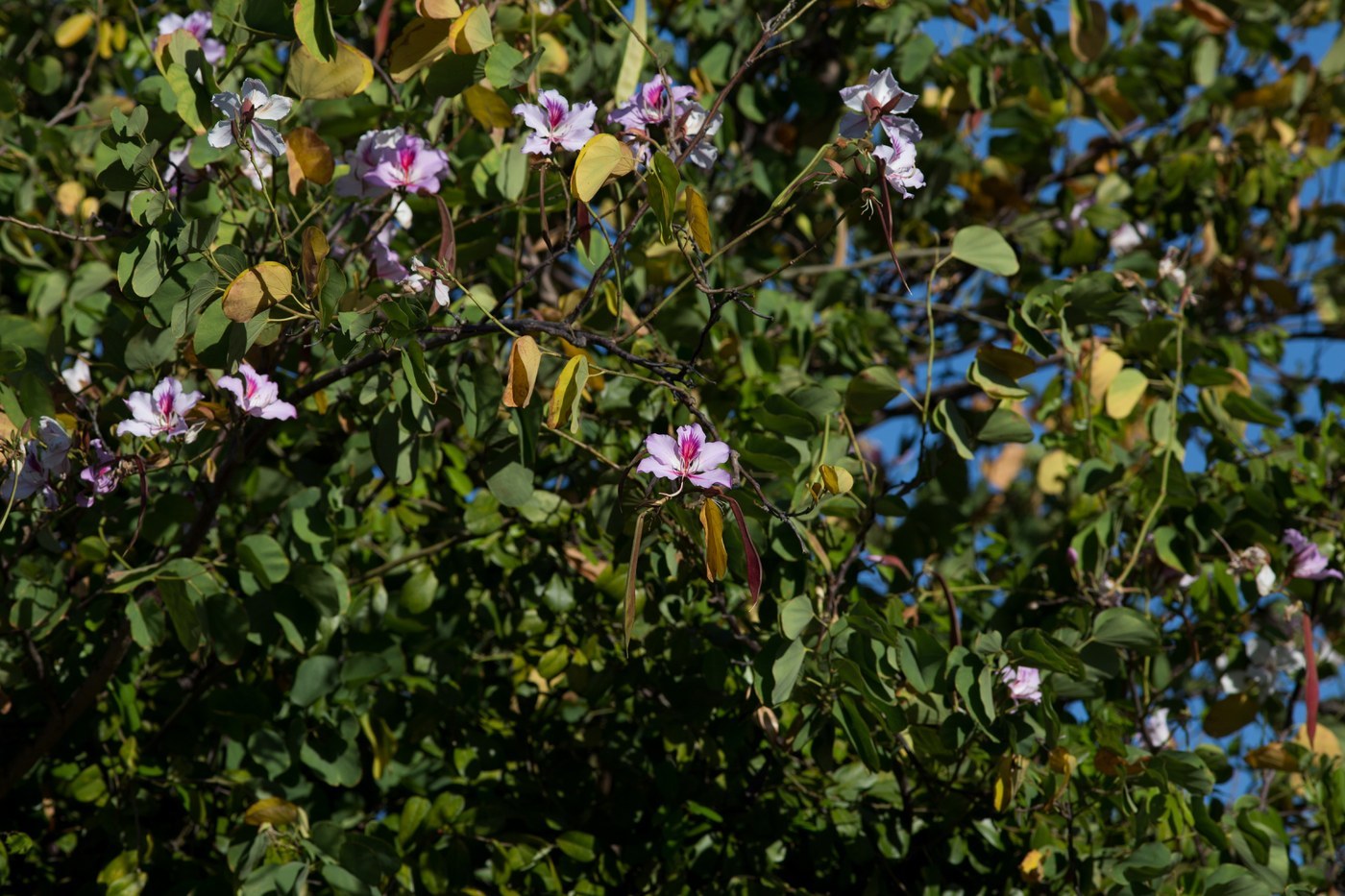
The orchid tree (Bauhinia variegata) is a fast-growing small-to-medium ornamental tree prized for its showy, orchid-shaped flowers and distinctive butterfly-lobed leaves. It thrives in warm climates, rewarding full sun with a spectacular late-winter to spring bloom.
Light
Give the orchid tree full sun for the heaviest flowering and a compact, well-branched habit. It will tolerate light dappled shade, but bloom density and overall vigor drop noticeably in shadier spots. Plant it in an open location away from taller trees that would cast it in shade.
Water
This tree prefers moderate, even moisture during its establishment years and through the active growing season. Water deeply and let the top few inches of soil dry between waterings; mature specimens become fairly drought-tolerant. Avoid waterlogged soil, which the fleshy roots dislike, and reduce watering in cool dormant periods.
Soil & Potting
Orchid tree adapts to a wide range of soils but performs best in deep, well-drained loam. It tolerates sandy and mildly alkaline ground as long as drainage is good. If growing a young specimen in a container, use a free-draining loam-based mix and a large, heavy pot to support the eventual top growth.
Humidity & Temperature
A subtropical to tropical species, it favors warm days and mild nights and is hardy roughly to USDA zones 9-11. Young trees are frost-sensitive and can be damaged by hard freezes, so site them in a sheltered, sun-warmed spot in marginal climates. It handles ambient humidity well and needs no special humidity provision outdoors.
Feeding
Feed in spring as growth resumes with a balanced granular or slow-release fertilizer to fuel foliage and flowering. A second lighter feeding in early summer supports vigorous young trees. Avoid heavy nitrogen late in the season, which pushes soft growth vulnerable to cold.
Propagation
Orchid tree is most commonly grown from seed, which germinates readily when scarified or soaked in warm water overnight before sowing in a warm, moist medium. Semi-hardwood cuttings and air layering can also work but are slower and less reliable. Seedlings grow quickly and may flower within a few years.
Repotting / Pruning
Prune after flowering to shape the canopy, remove crossing or weak branches, and control size, since the tree can grow leggy. Formative pruning while young establishes a strong single or multi-trunk framework. Container specimens should be potted up every couple of years until they reach their final container.
Common Problems & Pests
Generally trouble-free, it can occasionally attract scale, mealybugs, or caterpillars that chew the leaves. Watch for leaf spots and root problems in poorly drained or overwatered soil. Seed pods can be messy and prolific; remove them if self-seeding is a concern in your garden.
Seasonal Care Tips
Expect the main flush of bloom in late winter to spring, sometimes with sporadic reblooming. Feed and lightly prune after this flush. Through summer, keep young trees watered during dry spells. In autumn, ease off feeding and watering to harden growth ahead of any cool weather, and protect young trees from frost.
Frequently asked questions
How fast does an orchid tree grow?
It is a fast grower in warm climates, often adding a couple of feet of height per year when given full sun, moderate water, and a spring feeding.
Why isn't my orchid tree flowering?
Insufficient sun is the most common cause. Move or site it in full sun, avoid excess nitrogen that favors leaves over blooms, and be patient, as young seedlings take a few years to flower.
Can I grow an orchid tree in a pot?
Yes, while young. Use a large, heavy, free-draining container and a loam-based mix, keep it in full sun, and pot up as it grows, though it ultimately performs best planted in the ground in a warm climate.
Is the orchid tree cold-hardy?
It is best in USDA zones 9-11. Young trees are frost-sensitive, so plant them in a sheltered, sun-warmed spot and protect them during hard freezes in marginal areas.