
Oregon Grape Identification Guide
Identify Oregon grape (Mahonia) by its holly-like spiny compound leaves, bright yellow flower clusters, and dusty-blue grape-like berries.
Read the full Oregon Grape encyclopedia entry →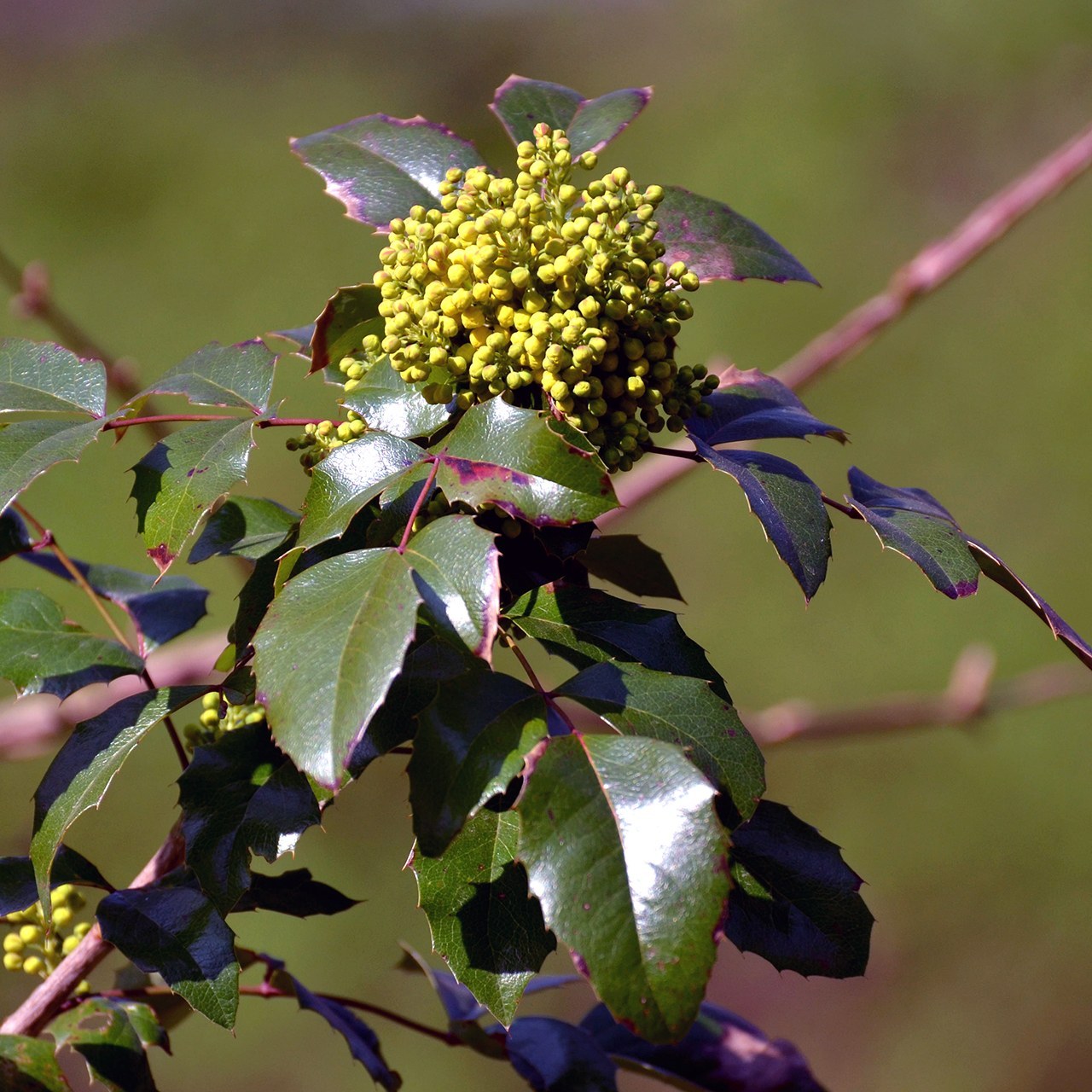
Key Identifying Features
Oregon grape (Mahonia aquifolium and relatives) is a Western North American evergreen shrub that looks like a cross between holly and grape. Its standout features are glossy, holly-like spiny leaflets, dense clusters of bright yellow flowers in late winter to spring, and clusters of waxy, dusty-blue berries that resemble tiny grapes.
- Upright evergreen shrub, usually 3–6 ft (some dwarf, some taller)
- Pinnately compound leaves with spiny, holly-like leaflets
- Showy yellow flower clusters at branch tips
- Powder-blue, grape-like berries in summer
Leaves & Stems
The leaf is the best clue. Each leaf is compound, 4–12 in long, with 5–9 (or more) leaflets arranged along a central stalk. Leaflets are glossy, leathery, and edged with sharp spiny teeth, strongly resembling English holly — but holly has single leaves while Oregon grape has compound leaves with multiple leaflets per stalk. New growth often flushes bronze or reddish, and in cold weather mature foliage frequently turns burgundy, purple, or red. Stems are stout, and a cut stem or root reveals bright yellow inner wood (from berberine), a strong confirming trait.
Flowers & Fruit
Flowers appear in dense upright or rounded clusters of small, bright golden-yellow blooms, often lightly fragrant, in late winter and spring — among the earliest nectar sources for bees. These mature into clusters of round, ¼-in berries with a frosty blue-gray waxy bloom, looking like miniature grapes.
How to Tell It Apart from Look-Alikes
- English holly (Ilex): has simple single leaves and red berries; Oregon grape has compound leaves and blue berries.
- Nandina (heavenly bamboo): also compound leaves, but leaflets are smooth-edged (not spiny) and berries are red.
- Barberry (Berberis): closely related with yellow inner wood, but true barberries have simple leaves and thorny stems.
- Salal: simple oval leaves and dark berries, no spines.
The spiny holly-like compound leaves + yellow flowers + blue grape-like berries + yellow inner bark set is unmistakable.
Where You'll Find It
Native to the Pacific Northwest (it's Oregon's state flower) and widely planted across temperate gardens. In the wild it grows in forest understory, woodland edges, and shaded slopes; in landscapes it's valued for shade tolerance, evergreen structure, and wildlife value. It prefers partial shade to sun and well-drained soil.
Quick ID Checklist
- Evergreen shrub, 3–6 ft
- Compound leaves with spiny, holly-like leaflets
- New growth bronze; winter foliage often purple-red
- Bright yellow flower clusters in late winter/spring
- Dusty-blue, grape-like berry clusters in summer
- Yellow inner wood when stem is cut
- Often in shade or woodland settings
If you see a holly-leaved evergreen with yellow spring flowers, frosty-blue berries, and yellow wood inside its stems, it's Oregon grape.
Frequently asked questions
How is Oregon grape different from holly?
Holly has simple, single spiny leaves and red berries, while Oregon grape has compound leaves — several spiny leaflets attached to one central stalk — plus yellow flowers and powdery-blue berries. Cutting an Oregon grape stem also reveals bright yellow inner wood, which holly lacks.
Why does the foliage turn red or purple in winter?
Oregon grape is evergreen, but cold weather and sun exposure trigger many leaves to develop rich burgundy, purple, or red tones in fall and winter. The foliage greens up again in spring, and this seasonal color shift is a useful identification cue.
What is the yellow color inside the stems?
The bright yellow inner wood and roots come from berberine, an alkaloid shared with related barberries. It's a reliable confirming trait and was historically used as a natural dye.