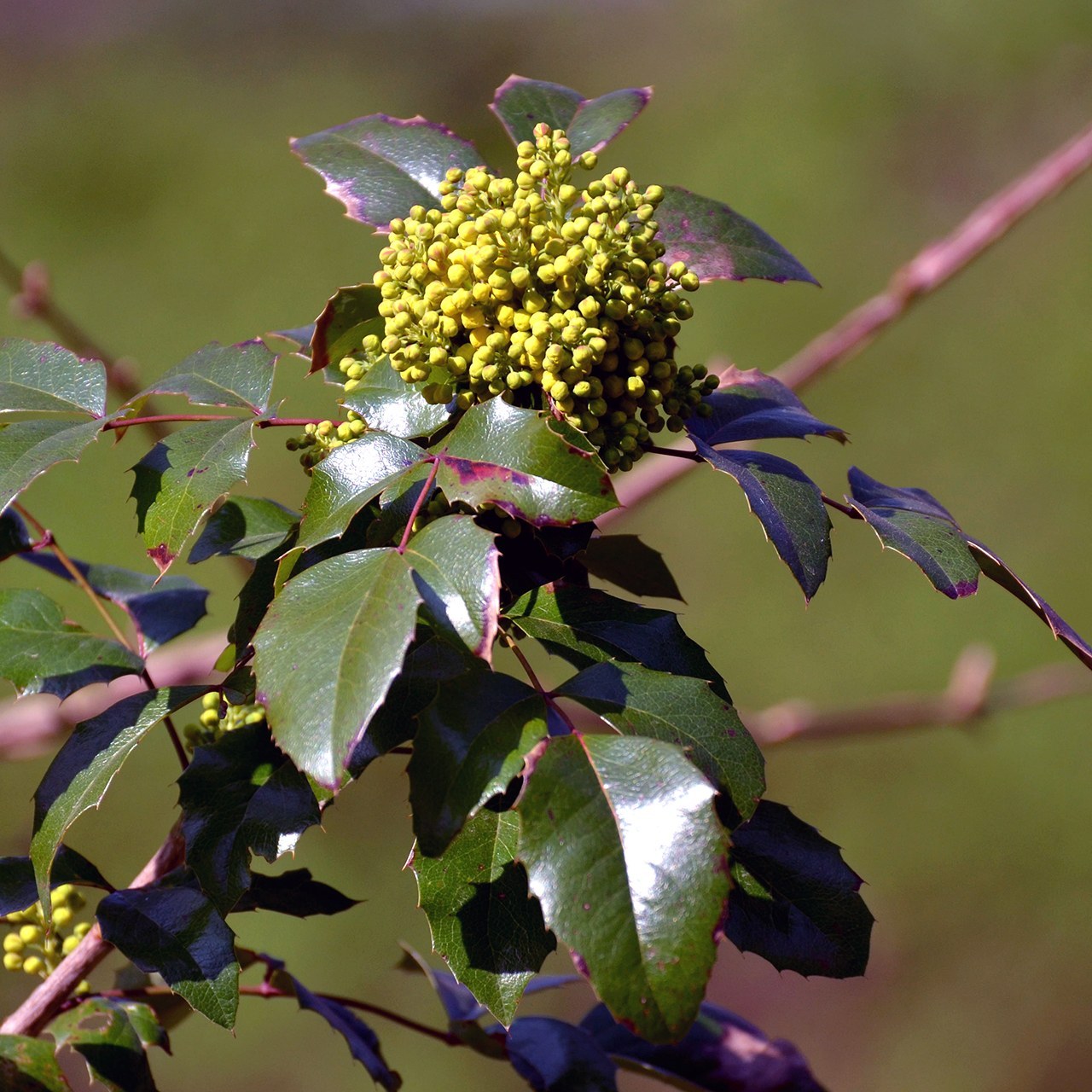
Oregon Grape
Mahonia aquifolium
Oregon grape is a hardy evergreen shrub with spiny, holly-like leaves, bright yellow spring flowers and clusters of blue berries. It is the state flower of Oregon and a tough plant for shade.
- Light
- Part shade to shade
- Water
- Moderate; tolerates some drought once established
- Difficulty
- Easy
Got a plant like this?
Identify any plant from a photo, free.
Overview
Oregon grape (Mahonia aquifolium) is an evergreen shrub native to western North America, named for its grape-like clusters of blue fruit and its prominence in Oregon, where it is the state flower.
It forms an upright, suckering clump of glossy, spiny compound leaves that resemble holly and often flush bronze or red in cold weather. Fragrant yellow flowers appear in spring, followed by powdery blue berries.
Prized for shade tolerance, deer resistance and four-season interest, it is a dependable shrub for woodland gardens and difficult shady sites.
How to identify it
- Leaves: compound (pinnate) with 5 to 9 glossy, holly-like leaflets bearing spiny-toothed margins; evergreen, turning bronze-purple in winter
- Flowers: dense clusters of small, fragrant bright yellow flowers in early spring
- Fruit: clusters of dusty blue-black berries with a waxy bloom
- Habit: upright, suckering evergreen shrub, typically 3 to 6 ft tall
- Stems: inner wood is bright yellow
Care & growing
Prefers part to full shade, especially protection from drying winter sun and wind.
- Water: moderate; tolerant of some drought once established
- Soil: humus-rich, well-drained, slightly acidic; adaptable
- Temperature: cold hardy, USDA zones 5 to 8
- Feeding: light mulch and occasional feeding; generally low-maintenance
- Pruning: remove old or leggy canes at the base after flowering to renew the clump
- Propagation: seed, division of suckers, or semi-hardwood cuttings
Habitat & origin
Native to the Pacific Northwest of North America, from British Columbia south through Oregon and into northern California, growing in coniferous and mixed forest understory.
It is well adapted to dappled woodland shade. Widely cultivated as an ornamental across temperate regions and naturalized in parts of Europe.
Frequently asked questions
Is it related to grapes?
No. The name comes from the grape-like clusters of blue fruit, but it is actually in the barberry family (Berberidaceae).
Will it grow in shade?
Yes. Oregon grape is one of the better evergreen shrubs for part to full shade and woodland conditions.
Why do the leaves turn purple in winter?
Cold weather and sun exposure cause the glossy leaves to flush bronze-red or purple, which is normal and turns green again in spring.
Oregon Grape guides
In-depth guides for identifying, growing, and caring for Oregon Grape.
How to Care for Oregon Grape
Oregon grape is an easy evergreen shrub for shade, offering glossy holly-like leaves, yellow spring flowers, and low-water resilience.
Oregon Grape Identification Guide
Identify Oregon grape (Mahonia) by its holly-like spiny compound leaves, bright yellow flower clusters, and dusty-blue grape-like berries.