
Organ Pipe Cactus Identification Guide
Identify the Organ Pipe Cactus (Stenocereus thurberi) by its many tall, ribbed stems branching from the base like the pipes of an organ.
Read the full Organ Pipe Cactus encyclopedia entry →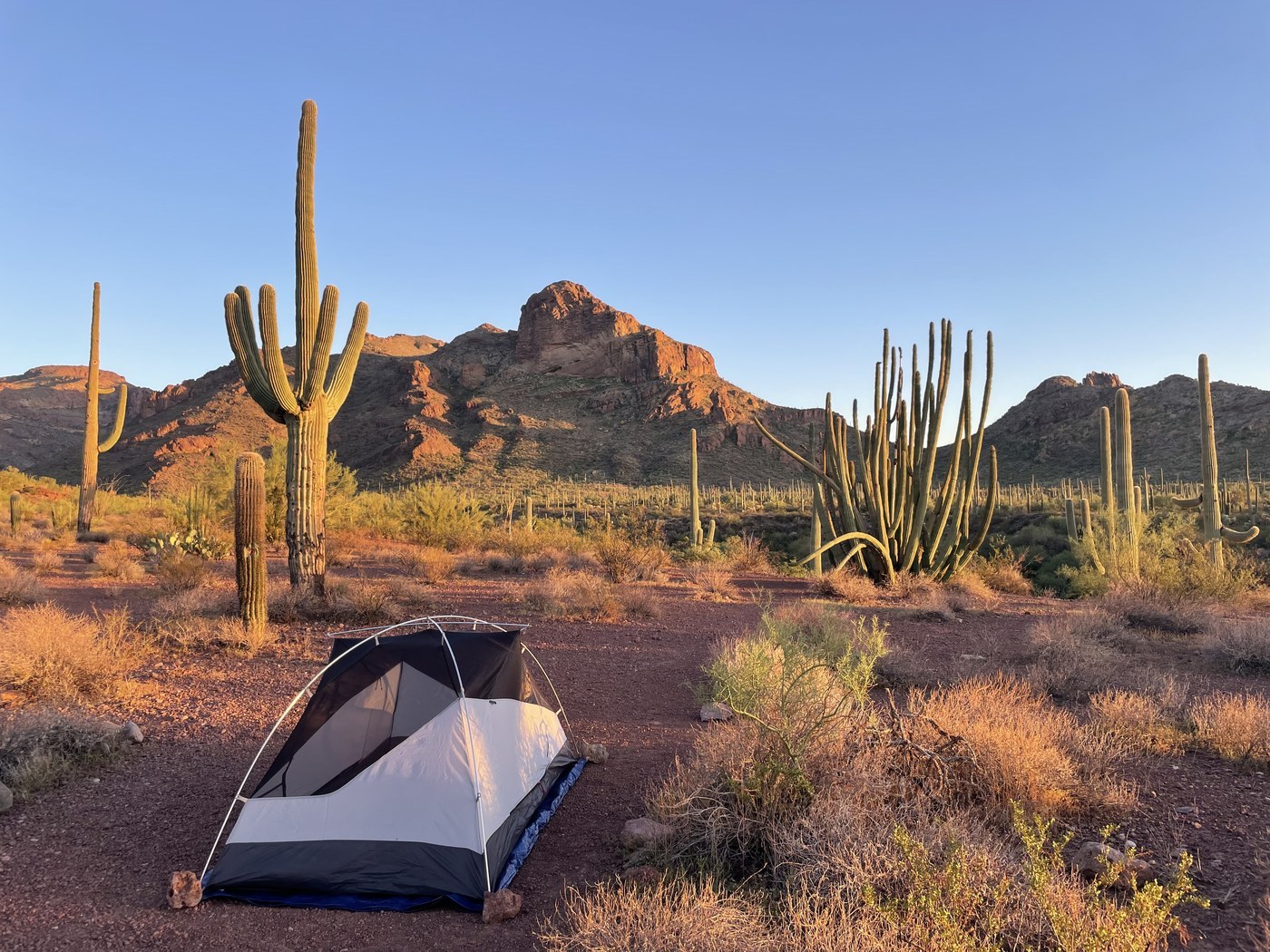
Key Identifying Features
The Organ Pipe Cactus (Stenocereus thurberi) is a large desert cactus that grows as a cluster of tall, slender, vertical stems rising from a single base, resembling the pipes of a pipe organ. Mature plants reach 10–25 ft tall with many parallel arms and little or no central trunk.
- Multiple columnar stems branching from at or near ground level
- Stems ribbed (usually 12–17 ribs), dark green, several inches thick
- Ribs lined with areoles bearing clusters of short brown to black spines
- Overall fan or candelabra of vertical pipes
Leaves & Stems
Leafless. Each stem is a thick, fluted column with many vertical ribs; the spines are relatively short and dense, brownish, becoming grayer with age. Unlike the saguaro, which forms a single thick trunk with a few arms, the Organ Pipe branches from the base into numerous similar-sized stems. Older stems can be quite woody at the core.
Flowers & Fruit
Flowers are nocturnal, opening near the stem tips at night and closing by midday. They are funnel-shaped, white to pale pink/lavender, about 3 inches across, blooming in late spring/summer. The fruit is a round, spiny, red-fleshed fruit known as the "pitaya," historically harvested by the Tohono O'odham people.
How to Tell It Apart from Look-Alikes
- Saguaro (Carnegiea gigantea): Has a massive single trunk with a few upturned arms; Organ Pipe has many slender stems from the base and no dominant trunk.
- Senita Cactus (Pachycereus schottii): Similar multi-stem habit but stems have fewer ribs and develop gray bristly "whiskers" near the top.
- Cereus / other columnar cacti: Check the base-branching, many-pipe habit and the 12–17 ribs.
Where You'll Find It
Native to the Sonoran Desert of southern Arizona and northwestern Mexico (Sonora, Baja California), famously protected at Organ Pipe Cactus National Monument. It grows on warm, rocky south-facing desert slopes and is frost-sensitive, hardy only to about USDA zones 9–11. It is rare north of the Mexico border outside that protected range.
Quick ID Checklist
- Many tall, ribbed stems rising from a common base (organ-pipe shape)
- Stems with 12–17 ribs and clusters of short dark spines
- No dominant central trunk (unlike saguaro)
- Night-blooming white/pink flowers; red pitaya fruit
- Sonoran Desert native, frost-tender
Frequently asked questions
How is it different from a saguaro?
A saguaro has one massive trunk with a few raised arms, while the Organ Pipe Cactus branches into many slender stems straight from the base, with no single dominant trunk.
When do the flowers open?
The white-to-pink funnel-shaped flowers open at night near the stem tips and usually close by the following midday, blooming in late spring and summer.
Where can I see it growing wild?
Mainly in the Sonoran Desert of northwestern Mexico and a small part of southern Arizona, notably Organ Pipe Cactus National Monument. It is frost-sensitive and rare farther north.
How many ribs do the stems have?
Each columnar stem typically has 12–17 vertical ribs lined with areoles bearing clusters of short brown to black spines.