Organ Pipe Cactus
Stenocereus thurberi
A large columnar desert cactus that grows many tall ribbed stems from near its base, resembling the pipes of an organ. It is a signature plant of the Sonoran Desert.
- Light
- Full sun
- Water
- Very sparingly; drought tolerant
- Difficulty
- Moderate
Got a plant like this?
Identify any plant from a photo, free.
Overview
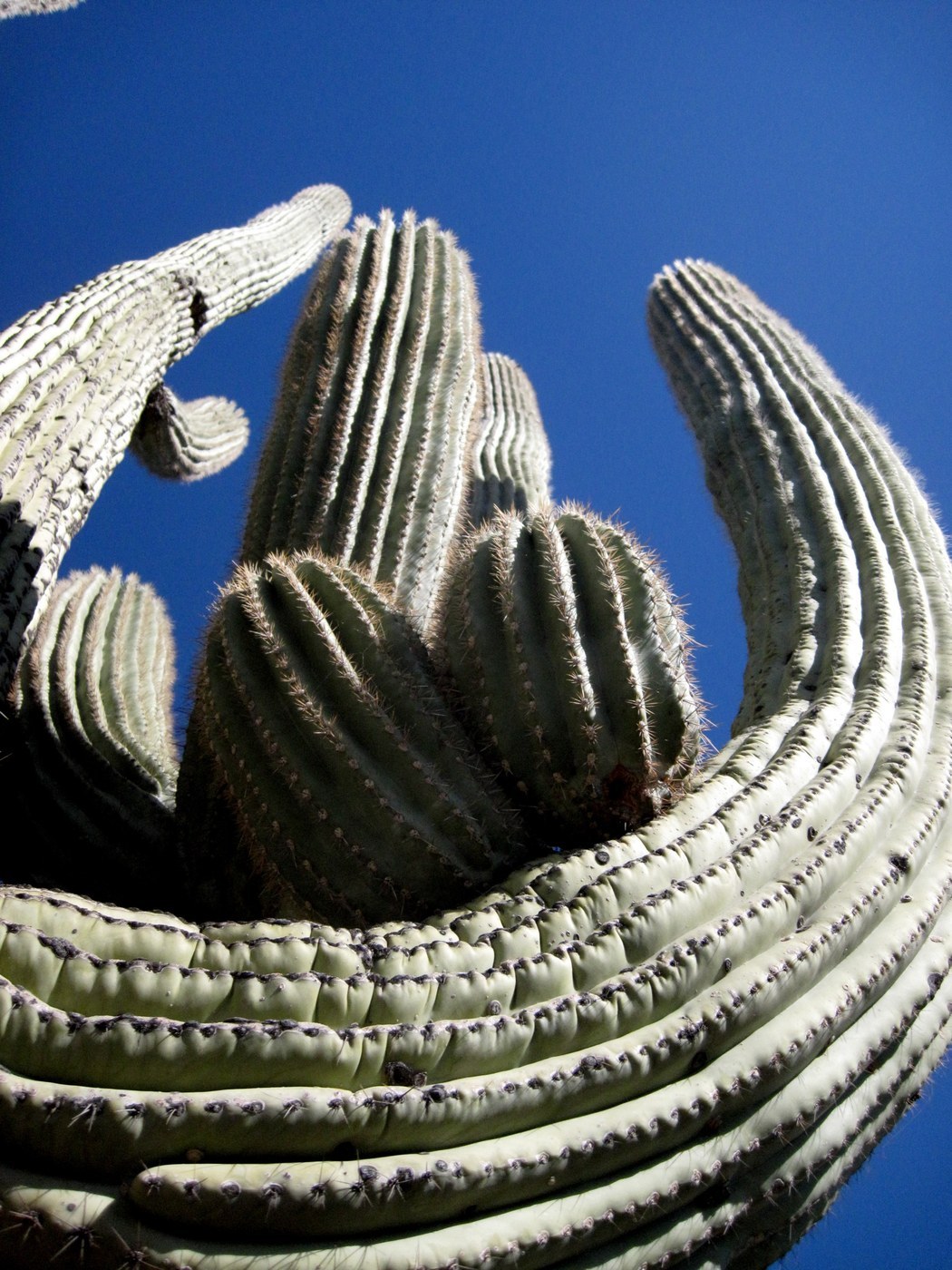
The Organ Pipe Cactus is a large, multi-stemmed columnar cactus that branches from near the ground into numerous tall, ribbed arms, creating the pipe-organ silhouette that gives it its name. It is a signature plant of the Sonoran Desert.
Growing slowly to 15-25 ft (4.5-7.5 m), it produces white to pinkish nocturnal flowers that open at night and close by morning, pollinated by bats and insects. These are followed by red fruits known as pitaya dulce.
It is the namesake of Organ Pipe Cactus National Monument in Arizona and is a slow but rewarding plant for hot, dry climates.
How to identify it
- Stems: Many tall, slender, ribbed columns branching from near the base, forming a clustered, organ-pipe shape
- Ribs: Prominent vertical ribs lined with clusters of spines
- Flowers: White to pale pink, funnel-shaped, opening at night and closing in the morning
- Fruit: Round, spiny, red fruit (pitaya dulce)
- Size: Large, reaching 15-25 ft (4.5-7.5 m) tall over many decades
Care & growing
Light: Full, intense sun is essential.
Water: Extremely drought tolerant; water sparingly and only when soil is bone dry. Keep nearly dry in winter.
Soil: Sandy, gritty, sharply draining desert soil.
Temperature: Loves desert heat; sensitive to frost and cold, wet conditions.
Feeding: Minimal; light cactus feed in summer at most.
Propagation: From seed or cuttings, both slow to establish.
Habitat & origin
Stenocereus thurberi is native to the Sonoran Desert of southern Arizona and northwestern Mexico, including Baja California, where it grows on rocky, south-facing desert slopes.
It is protected within Organ Pipe Cactus National Monument and grown elsewhere as a specimen cactus in hot, arid landscapes.
Frequently asked questions
When do its flowers open?
The white to pinkish flowers open at night and close by the following morning, and are pollinated mainly by bats and insects.
How big does it get?
It is a large cactus, slowly reaching 15 to 25 feet tall with many branching stems over several decades.
Can it handle frost?
Not well. It is a desert heat lover and is sensitive to frost and cold, wet conditions.
Organ Pipe Cactus guides
In-depth guides for identifying, growing, and caring for Organ Pipe Cactus.

How to Care for Organ Pipe Cactus
A dramatic columnar desert cactus that thrives on blazing sun, extremely lean gritty soil, and very sparing water.
Organ Pipe Cactus Identification Guide
Identify the Organ Pipe Cactus (Stenocereus thurberi) by its many tall, ribbed stems branching from the base like the pipes of an organ.