
Overcup Oak Identification Guide
How to identify Overcup Oak (Quercus lyrata) by its acorn cap that nearly encloses the nut and its variable lyre-shaped bottomland leaves.
Read the full Overcup Oak encyclopedia entry →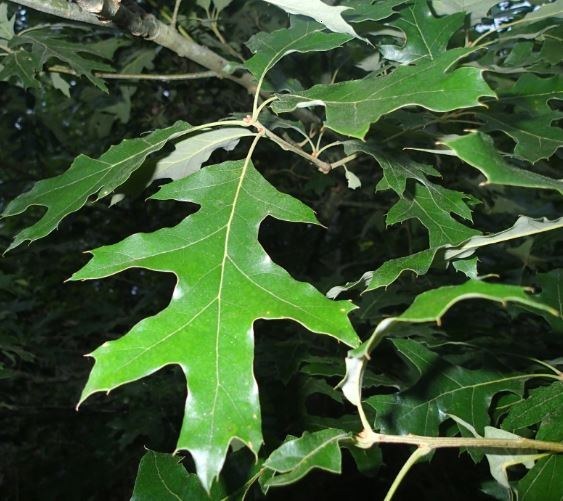
Key Identifying Features
Overcup Oak (Quercus lyrata) is a white-oak-group tree of southern swamps and floodplains, 40-60 feet tall. Its name and clearest ID feature is the acorn: the warty, ragged cap almost completely encloses the nut, leaving only a small portion exposed — like a ball nearly swallowed by its cup. No other common oak has such an enveloping cap. The species name lyrata refers to the often lyre- or fiddle-shaped leaves.
- Acorn nearly enclosed (capped over) by a warty cup
- Variable, often lyre-shaped leaves with deep irregular lobes
- A bottomland white oak: rounded lobes, sweet acorns
Leaves & Stems
Leaves are highly variable, 6-10 inches long, with 5-9 lobes of irregular size and depth. Many leaves have a narrow base, a constricted middle, and broader upper lobes, producing the fiddle/lyre outline. Lobes are rounded (no bristle tips). The upper surface is dark green; the underside is paler and often slightly downy or whitish. Fall color is yellow-brown.
Twigs are gray-brown and may be slightly hairy. Buds are small, rounded, and reddish-brown. Bark is gray-brown, broken into rough, irregular, scaly, blocky plates somewhat like white oak but coarser.
Flowers & Fruit
Drooping yellow-green catkins appear with the leaves in spring. The fruit is the hallmark: a rounded acorn nearly or wholly enclosed by a thin, warty, scaly cap that often splits irregularly at maturity. Acorns are about 1/2-1 inch, mature in one season (white oak group), and float — an adaptation for dispersal by floodwaters.
How to Tell It Apart from Look-Alikes
- Bur oak (Quercus macrocarpa): also has a deeply cupped acorn, but the cap has a conspicuous fringed/mossy margin, and bur oak grows on uplands and prairies; overcup oak caps are warty without the long fringe and the tree is a swamp species.
- White oak: acorn cap is shallow (covers only a quarter); leaves more evenly lobed.
- Swamp white oak / swamp chestnut oak: shallow caps and toothed (not deeply lobed) leaves.
The near-fully-enclosed warty acorn on a bottomland tree is unmistakable.
Where You'll Find It
Overcup Oak is a bottomland and swamp specialist, growing on poorly drained clay flats, river floodplains, and backwater swamps that flood seasonally. It ranges across the southeastern United States from Maryland and the Gulf Coast up the Mississippi Valley to Illinois and into eastern Texas. Its floating, well-protected acorns are an adaptation to these wet, flood-prone habitats.
Quick ID Checklist
- Acorn cap that almost entirely encloses the nut
- Variable lyre/fiddle-shaped leaves, 5-9 rounded lobes
- Rounded lobes, no bristles (white oak group)
- Coarse, scaly gray-brown bark
- Wet bottomlands, swamps, and floodplains of the Southeast
- Acorns float on floodwaters
Frequently asked questions
What is the easiest way to identify overcup oak?
Its acorn. The warty cap almost completely encloses the nut, leaving only a small tip showing — no other common oak has a cap that wraps the acorn so fully.
How is overcup oak different from bur oak?
Both have deeply cupped acorns, but bur oak's cap has a shaggy fringed margin and it grows on uplands and prairies, while overcup oak has a warty (non-fringed) cap and lives in wet swamps and floodplains.
Why do overcup oak acorns float?
The tree grows in seasonally flooded bottomlands, and floating acorns are dispersed by floodwaters to new sites — an adaptation to its wet habitat.
What does the leaf look like?
Quite variable, but often lyre- or fiddle-shaped with a narrow base, a pinched middle, and broader upper lobes; all lobes are rounded without bristle tips.