
Ox Tongue Identification Guide
Identify Ox Tongue (Gasteria) by its thick, strap-shaped, tongue-like leaves with rough warty texture, usually arranged in two opposite rows.
Read the full Ox Tongue encyclopedia entry →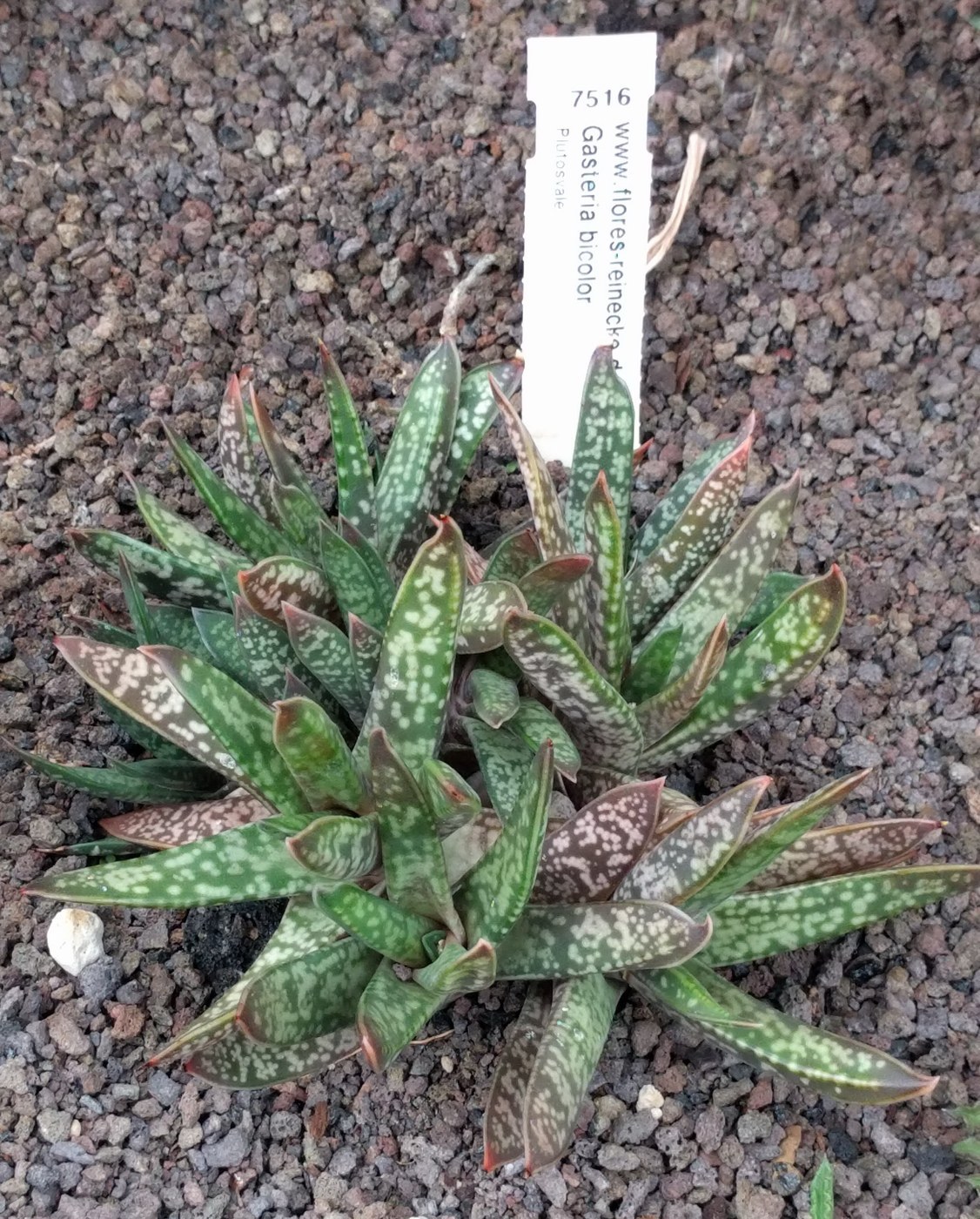
Key Identifying Features
Ox Tongue (genus Gasteria, especially Gasteria bicolor and relatives) is a South African succulent named for its thick, tongue-shaped leaves with a rough, sandpapery, warty surface. Young plants hold their leaves in a flat, two-ranked (distichous) fan, while older plants may form a loose rosette.
- Thick, strap- or tongue-shaped leaves with rounded or blunt tips
- Surface often rough, bumpy, and covered in raised white tubercles/spots
- Leaves usually in two opposite rows forming a flat fan (especially when young)
- Dark green to grayish leaves, sometimes banded or mottled
Leaves & Stems
The leaves are the main ID feature: fleshy, tongue-like, often 3-8 inches long, with a tough, frequently tuberculate (warty) texture that feels like rough sandpaper. Many species are speckled with white or pale raised dots and may show darker green banding. Leaf tips are typically blunt or end in a small soft point rather than a sharp spine. The two-ranked, stacked arrangement gives juvenile plants a distinctive flattened, fan-like silhouette. There is essentially no visible stem; leaves arise from a basal point and the plant offsets to form clumps.
Flowers & Fruit
Ox Tongue is easy to confirm in bloom. It sends up a tall, arching flower stalk bearing rows of curved, tubular flowers that are swollen and pouch-like (stomach-shaped) at the base — the feature that gives the genus its name (gaster = stomach). Flowers are typically pink to red with green or white tips. This stomach-shaped flower is the single most reliable way to separate Gasteria from Haworthia and Aloe.
How to Tell It Apart from Look-Alikes
- Aloe: Aloe leaves are usually thinner, more upright, with toothed/spiny margins; Ox Tongue leaves are smoother-edged, thicker, and tongue-like, with bumpy faces rather than marginal teeth.
- Haworthia: smaller, often translucent-windowed leaves in tight rosettes; Gasteria leaves are larger, tougher, and tongue-shaped. The pouch-bellied flower confirms Gasteria.
- Gasteraloe (hybrids): intermediate between Gasteria and Aloe; can be tricky, but the stomach-shaped flower indicates strong Gasteria parentage.
Where You'll Find It
Native to South Africa, Ox Tongue is a tough, shade-tolerant houseplant popular for low-light tolerance. Outdoors it grows in rock gardens and containers in warm, frost-free climates (USDA zones 9-11). It tolerates more shade than most succulents, which is a useful behavioral clue.
Quick ID Checklist
- Thick, tongue-shaped leaves with blunt tips
- Rough, warty, white-spotted surface
- Leaves often in two opposite rows (fan shape) when young
- No marginal teeth (unlike Aloe)
- Pouch/stomach-shaped pink-red flowers on an arching stalk
- Clumping, nearly stemless habit; tolerates shade
Tip: If you can let it bloom, the swollen-based, curved tubular flowers are unmistakable for Gasteria.
Frequently asked questions
How do I tell Ox Tongue from an Aloe?
Aloe leaves are typically thinner, more upright, and have toothed or spiny margins, while Ox Tongue (Gasteria) has thicker, tongue-shaped leaves with smooth edges and a rough, warty, often white-spotted surface.
Why is it called Ox Tongue?
The common name refers to the thick, strap-like, rough-textured leaves that resemble an ox's tongue. The genus name Gasteria comes from the stomach-shaped (pouched) base of its flowers.
What do Ox Tongue flowers look like?
It produces an arching stalk lined with curved, tubular flowers that bulge at the base like a little stomach, usually pink to red with green or white tips. This flower shape is the surest way to confirm Gasteria.
Can Ox Tongue grow in low light?
Yes. Gasteria is more shade-tolerant than most succulents and grows well in bright indirect light, which is itself a helpful clue when distinguishing it from sun-loving Aloes.