Paper Birch Identification Guide
Identify paper birch (Betula papyrifera) by its peeling white bark with dark horizontal lenticels, doubly toothed oval leaves, and slender catkins.
Read the full Paper Birch encyclopedia entry →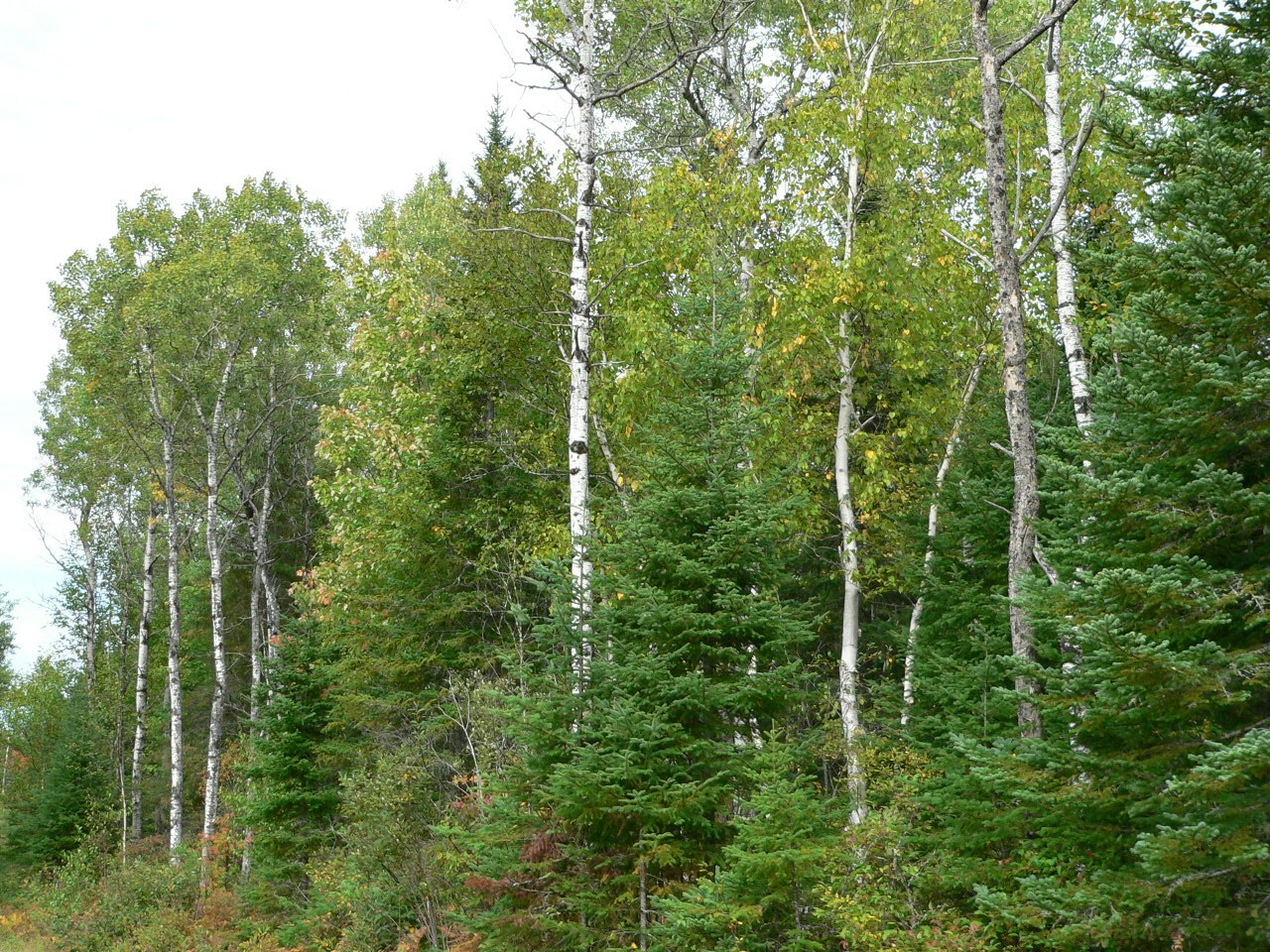
Key Identifying Features
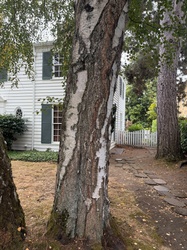
Paper birch (Betula papyrifera), also called white or canoe birch, is instantly recognized by its chalky-white bark that peels in thin, papery horizontal strips, marked with dark horizontal lenticels. It is a slender, often clumped deciduous tree of northern forests.
- Medium tree, 50-70 ft (15-21 m) tall, fairly narrow crown
- Bright white, peeling, papery bark on mature trunks
- Bark inner layer is pale orange-tan when peeled
Leaves & Stems
Leaves are oval to egg-shaped, 2-4 in long, with a rounded base, pointed tip, and doubly serrated (double-toothed) margins - a sawtooth-on-sawtooth edge typical of birches. They are dark green above, paler below, with 5-9 pairs of veins, turning bright yellow in fall. Leaves are alternate on slender twigs. Young bark is brown and only develops the famous white peeling character as the tree matures; twigs are reddish-brown, not strongly aromatic (unlike yellow or sweet birch).
Flowers & Fruit
Paper birch is monoecious, bearing catkins. In spring, drooping male catkins (1-4 in long, brownish-yellow) release pollen, while shorter, upright female catkins develop into cylindrical, drooping seed catkins about 1-2 in long. At maturity these break apart to scatter tiny winged nutlets along with small three-lobed scales (bracts) shaped like a tiny bird in flight - a helpful birch fruit clue.
How to Tell It Apart from Look-Alikes
- Gray birch (Betula populifolia): Whitish bark but does not peel readily and has triangular leaves with long tapering tips and dark chevron marks below branches.
- Yellow birch (Betula alleghaniensis): Has shiny bronze-yellow, curly bark and wintergreen-scented twigs.
- Aspen/poplar: Smooth whitish-green bark that does not peel in papery sheets and rounder leaves.
- The decisive cues: bright white bark peeling in papery strips, dark lenticels, and doubly toothed oval leaves.
Where You'll Find It
Paper birch is a tree of cool northern climates across Canada and the northern United States, growing in mixed and boreal forests, burned or cleared areas, and rocky slopes. As a pioneer species it quickly colonizes disturbed ground and forest openings, often in clumps of several trunks.
Quick ID Checklist
- Chalky-white bark peeling in thin papery horizontal strips
- Dark horizontal lenticels on the bark
- Oval, doubly toothed (double-serrate) leaves, yellow in fall
- Drooping male catkins and cylindrical seed catkins
- Northern forests; often multi-trunked
Frequently asked questions
How do I identify paper birch?
Look for bright chalky-white bark that peels in thin papery horizontal strips with dark lenticel marks, paired with oval, doubly toothed leaves that turn yellow in fall.
Why does only the mature bark look white?
Young paper birch bark is brownish and only develops its characteristic peeling white surface as the tree matures, so saplings can be easy to overlook.
How is paper birch different from gray birch?
Paper birch bark peels freely in papery strips, while gray birch bark is whitish but tight and non-peeling, and gray birch has more triangular, long-pointed leaves.
Can I identify birch by the seed catkins?
Yes. When the cylindrical female catkins break apart they release tiny winged nutlets along with small three-lobed bracts shaped like a bird in flight, a classic birch feature.
Paper Birch identified by the community
Recent Paper Birch specimens identified with Plant Identifier.