How to Care for Paperbark Maple
Grow Paperbark Maple (Acer griseum), a slow, elegant small tree famous for its peeling cinnamon bark and fiery autumn color.
Read the full Paperbark Maple encyclopedia entry →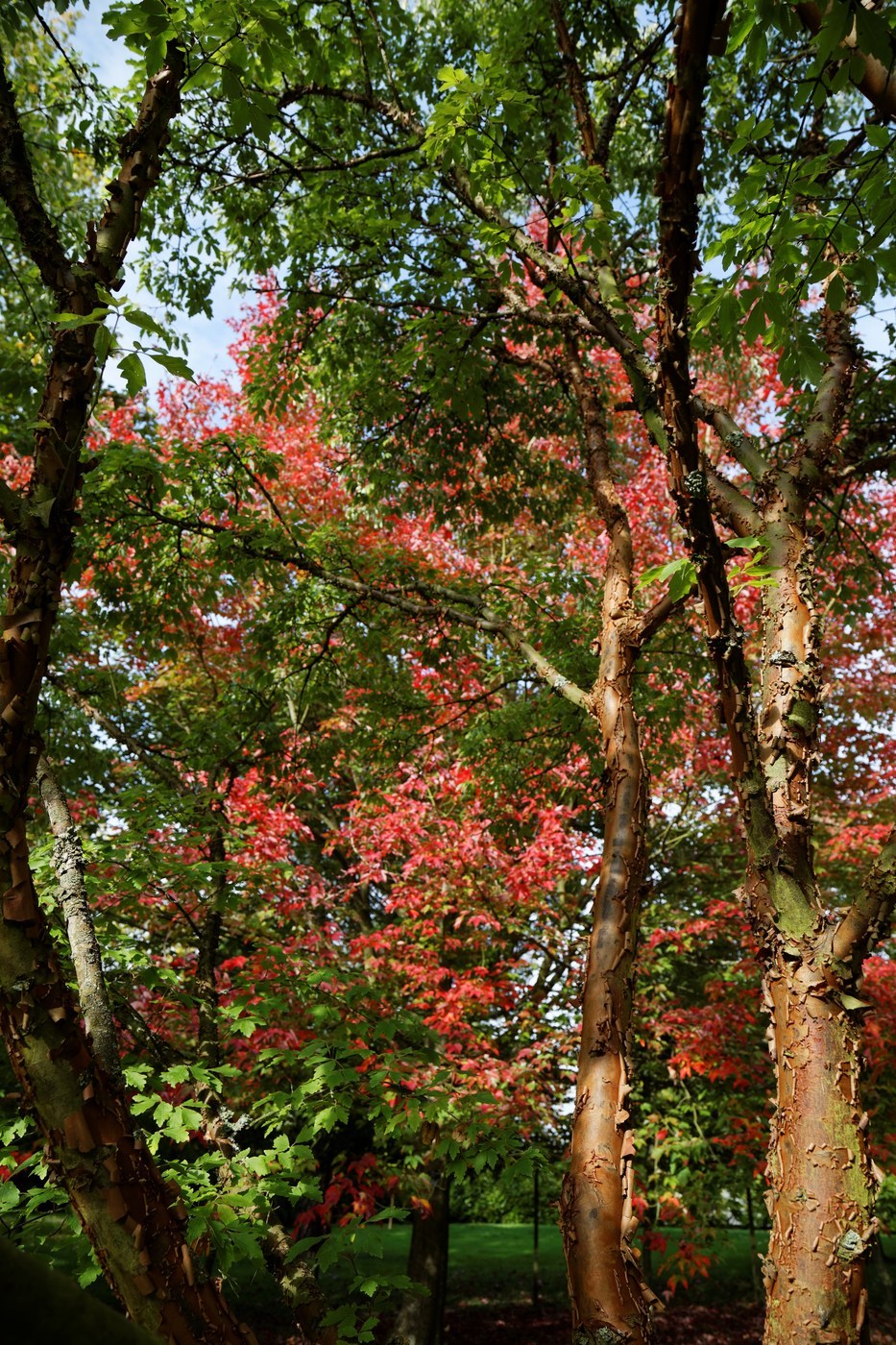
Paperbark Maple (Acer griseum) is a slow-growing, refined small tree celebrated for its cinnamon-colored bark that peels in papery curls, revealing glossy new bark beneath, and for its brilliant scarlet-to-orange autumn foliage. Its year-round bark interest makes it a prized specimen tree.
Light
Plant in full sun to part shade. It develops the strongest fall color and densest form in full sun, but appreciates some afternoon shade in hot climates to protect the foliage. A minimum of about four to six hours of sun keeps it healthy and colorful.
Water
Provide moderate, consistent moisture and keep the root zone evenly moist, especially while the tree is young and establishing. It is not drought-tolerant when newly planted, so water deeply during dry spells for the first few years. Mulch over the root area to conserve moisture and moderate soil temperature, keeping the mulch off the trunk. Established trees appreciate steady moisture but should never sit in waterlogged soil.
Soil & Potting
Grow in fertile, well-drained soil that holds moisture yet drains freely. It prefers slightly acidic to neutral soil rich in organic matter but adapts to a range of soils as long as drainage is good. Improve heavy clay with compost before planting. Choose a site with room for its slow, upright spreading canopy to develop over many years.
Humidity & Temperature
Paperbark Maple is a cold-hardy tree that handles temperate climates and cold winters well. It is not fussy about humidity. It performs best where summers are not brutally hot; in very hot regions, give it afternoon shade and reliable moisture to prevent leaf scorch.
Feeding
Feed lightly. A single application of a balanced, slow-release tree fertilizer in early spring supports steady growth, but this maple is naturally slow-growing and does not need heavy feeding. A generous layer of compost or organic mulch renewed yearly usually supplies enough nutrition. Avoid late-season high-nitrogen feeding that pushes tender growth before winter.
Propagation
Paperbark Maple is notoriously difficult to propagate, which contributes to its rarity. Seed is the usual route, but a large share of seeds are not viable, and those that are require patient stratification through cold and warm cycles, sometimes over more than a year, before germinating. It can also be grafted, though that is a specialist technique. Most gardeners simply purchase nursery-grown trees.
Repotting / Pruning
Prune minimally and only in late fall or winter when the tree is dormant, since maples bleed sap heavily if cut in late winter or spring. Remove only dead, damaged, or crossing branches to preserve the natural branching and showcase the bark. If grown in a large container while young, top up or refresh the soil and step up pot size gradually, but it ultimately belongs in the ground.
Common Problems & Pests
Paperbark Maple is relatively trouble-free. Watch for verticillium wilt in poorly drained soils, leaf scorch in hot, dry, or windy sites, and occasional aphids, scale, or leaf-feeding pests common to maples. Good drainage, adequate water, and mulch prevent most issues. Avoid trunk injuries, and keep string trimmers and mowers away from the base.
Seasonal Care Tips
In spring, mulch and, if desired, apply a light feeding as growth resumes. Through summer, water consistently to prevent scorch, especially in heat. Enjoy the fiery foliage in autumn, and rake fallen leaves. In winter, the peeling bark is the star; do any needed structural pruning during dormancy and protect young trunks from harsh cold and sunscald.
Frequently asked questions
Why is Paperbark Maple so slow-growing?
Acer griseum is naturally a slow grower, often adding under a foot of height per year. This is normal; steady moisture, decent soil, and full sun will keep it growing at its best pace.
When should I prune my Paperbark Maple?
Prune in late fall or early winter when fully dormant. Maples bleed sap heavily if cut in late winter or spring, so avoid pruning then, and limit cuts to dead or crossing branches.
Does Paperbark Maple need full sun for good fall color?
It colors most vividly in full sun, though it grows in part shade too. In hot climates, give it afternoon shade to prevent leaf scorch while still enjoying strong autumn color.
How much water does a young Paperbark Maple need?
Keep young trees evenly moist and water deeply during dry spells for the first few years while roots establish. Mulch helps retain moisture, but never let it sit in soggy soil.
Paperbark Maple identified by the community
Recent Paperbark Maple specimens identified with Plant Identifier.