Paperbark Maple
Acer griseum
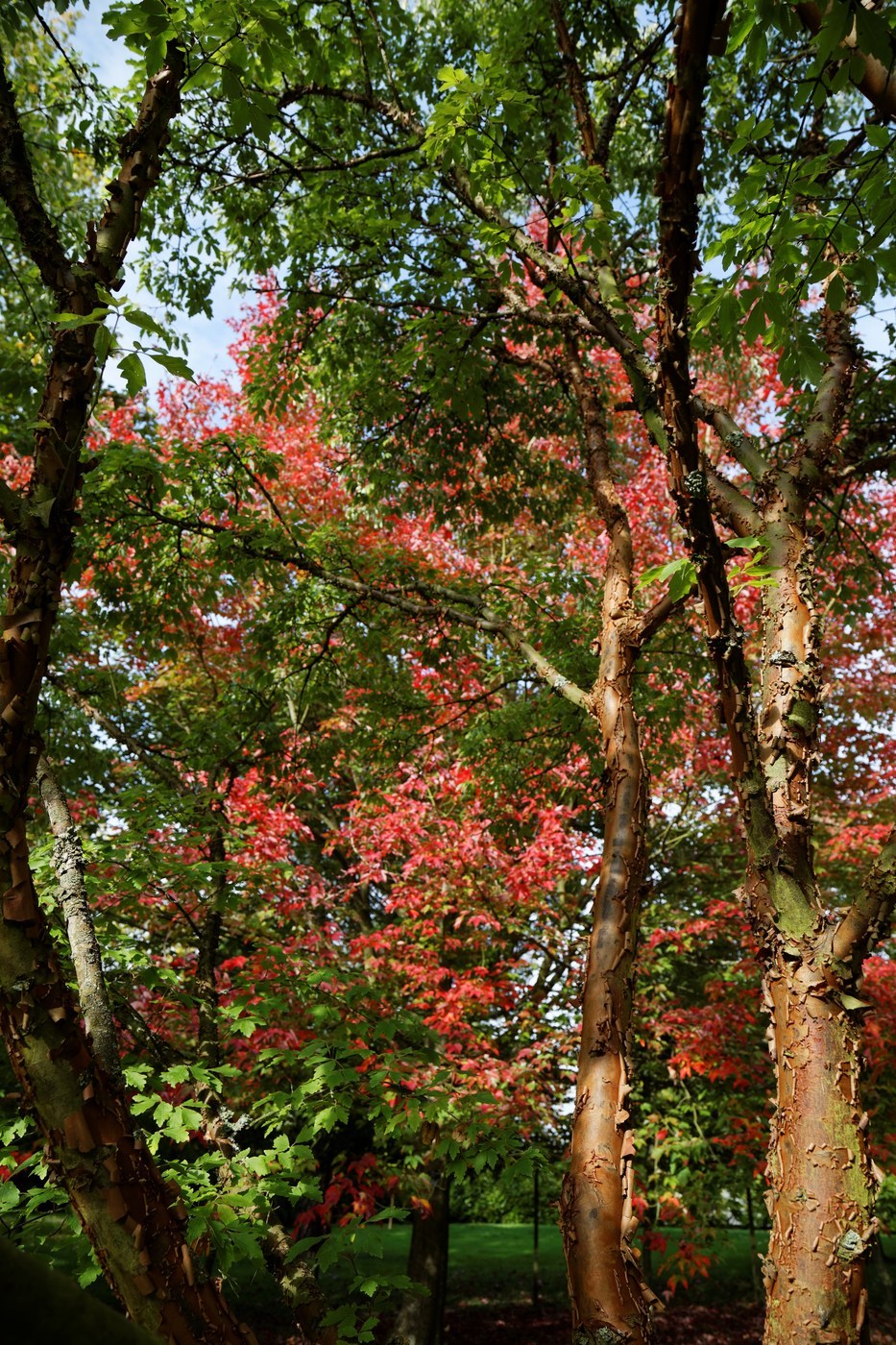
Paperbark maple is a small ornamental maple famous for its cinnamon-colored bark that peels in papery curls year-round and its fiery red-orange autumn foliage. It offers four-season interest in a compact form.
- Light
- Full sun to part shade
- Water
- Moderate; keep evenly moist
- Difficulty
- Moderate
Got a plant like this?
Identify any plant from a photo, free.
Overview
Paperbark maple, Acer griseum, is a slow-growing small tree treasured above all for its exfoliating bark in shades of cinnamon, copper and mahogany that curls away to reveal smooth orange new bark beneath.
It has compound leaves of three leaflets (trifoliate), unusual among maples, that turn brilliant scarlet and orange in fall, often weeks after other trees.
Compact size, refined habit and peeling bark that glows in winter sun make it one of the most prized specimen trees for small gardens, though it is slow and somewhat expensive to establish.
How to identify it
- Bark: the signature feature, cinnamon-brown to mahogany, peeling in thin papery curls all year, even on young branches
- Leaves: trifoliate (three leaflets), bluish-green above and silvery beneath, turning vivid red and orange in late autumn
- Habit: small, upright to rounded tree, slow-growing to about 20-30 ft
- Seeds: paired winged samaras (helicopters) typical of maples, often sterile
- Winter interest: bare branches reveal the glowing peeling bark
Care & growing
Light: full sun to part shade; some afternoon shade is welcome in hot regions, but good light enhances fall color.
Water: keep the soil evenly moist, especially while young; it dislikes both drought and waterlogging.
Soil: fertile, well-drained, slightly acidic to neutral soil; tolerates clay better than many maples.
Feeding: a light spring mulch of compost is usually enough.
Pruning: minimal; remove crossing or damaged branches in late summer to keep the elegant form. Avoid spring pruning when sap flows.
Propagation: difficult, as seed has very low viability; grafting and stratified seed are used by specialists.
Habitat & origin
Acer griseum is native to central China, where it grows in mixed mountain forests and along valleys. It was introduced to Western gardens by plant collector Ernest Wilson in 1901.
It is now an uncommon but highly valued ornamental in temperate gardens (USDA zones 4-8), and is considered rare and threatened in parts of its native Chinese range.
Frequently asked questions
Why is my paperbark maple growing so slowly?
Slow growth is normal for this species, typically under a foot per year. Patience is rewarded with a refined, long-lived specimen.
Should I peel the loose bark off?
No, leave it. The naturally curling, peeling bark is the tree's main ornamental feature and protects the new bark beneath.
Does it need full sun for fall color?
Good light improves the red-orange autumn display, but it colors well even in part shade and is one of the last trees to turn.
Why are paperbark maples expensive?
Seed viability is very low and the tree grows slowly, so nursery production takes years, raising the price of a sizeable specimen.
Paperbark Maple guides
In-depth guides for identifying, growing, and caring for Paperbark Maple.
How to Care for Paperbark Maple
Grow Paperbark Maple (Acer griseum), a slow, elegant small tree famous for its peeling cinnamon bark and fiery autumn color.
Paperbark Maple Identification Guide
Identify paperbark maple (Acer griseum) by its cinnamon-colored peeling bark, three-part compound leaves, and brilliant red fall color.
Paperbark Maple identified by the community
Real specimens identified with Plant Identifier.