Paperbark Maple Identification Guide
Identify paperbark maple (Acer griseum) by its cinnamon-colored peeling bark, three-part compound leaves, and brilliant red fall color.
Read the full Paperbark Maple encyclopedia entry →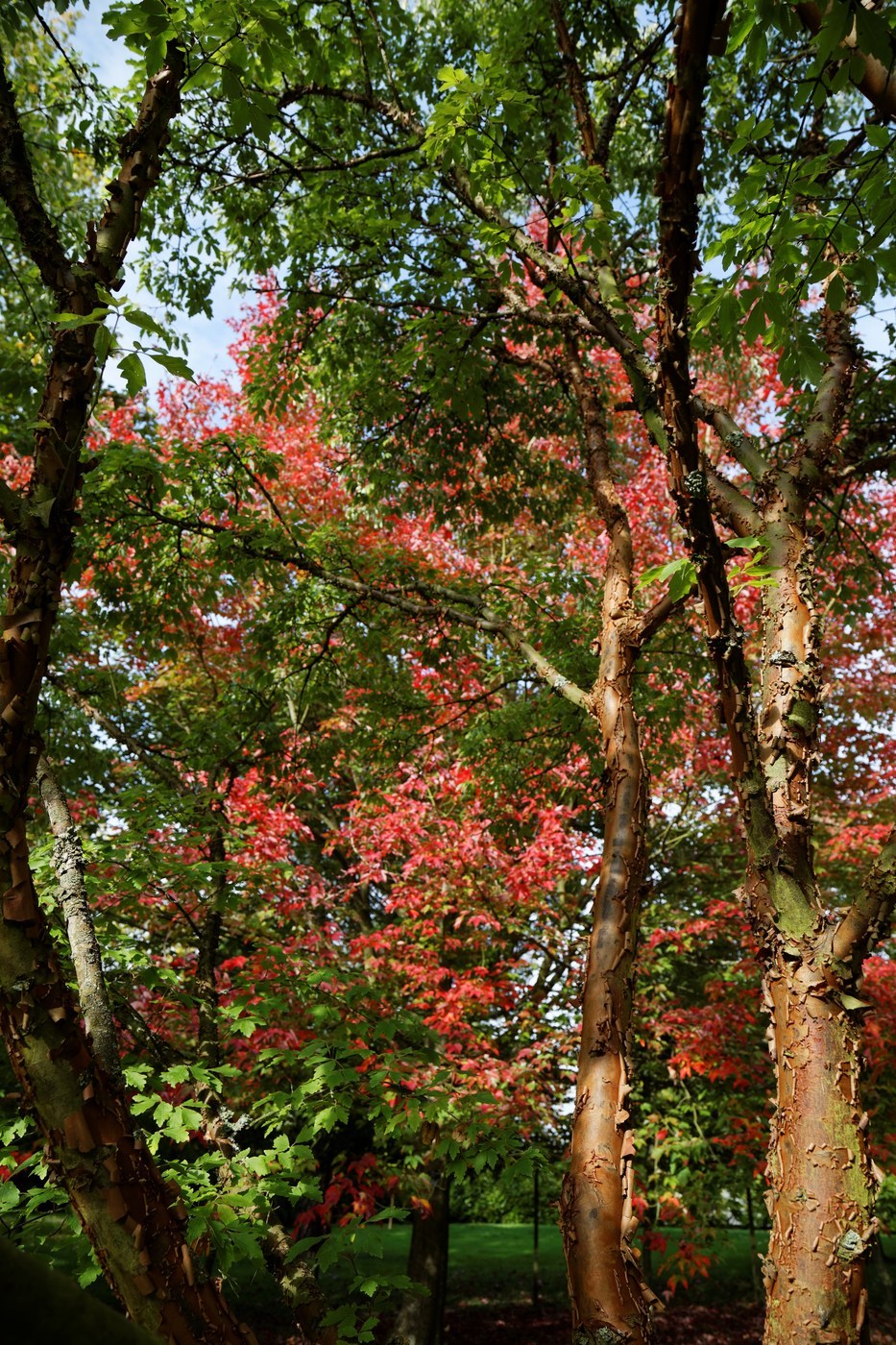
Key Identifying Features
Paperbark maple (Acer griseum) is one of the most easily recognized small maples thanks to its cinnamon-to-mahogany bark that peels and curls in thin papery sheets year-round, glowing when backlit. Combined with its trifoliate (three-leaflet) leaves, it is hard to confuse with any other maple.
- Coppery, cinnamon-brown exfoliating bark that curls and persists on the trunk
- Compound leaves of exactly three leaflets (most maples have simple lobed leaves)
- Small, oval to vase-shaped tree typically 20-30 ft tall
- Spectacular scarlet-to-russet autumn color
Leaves & Stems
The leaves are the second great clue. Each leaf is trifoliate: three separate leaflets on a single stalk, opposite on the twig (maple trait). Leaflets are 1.5-2.5 in long, coarsely toothed or shallowly lobed, dull blue-green above and silvery-hairy beneath - the species name griseum means "gray," referring to this underside. New twigs are slender and reddish; the bark exfoliation begins even on young branches.
Flowers & Fruit
Flowers are small, greenish-yellow, and inconspicuous, hanging in tiny clusters in spring with the emerging leaves. The fruit is the classic maple double samara ("helicopter"), but with notably thick, woolly seed cases; many seeds are empty, which is why the tree rarely self-sows. Paired wings meet at a wide angle.
How to Tell It Apart from Look-Alikes
- Other maples (sugar, red, Japanese): have simple, single lobed leaves, not three separate leaflets - the trifoliate leaf instantly separates Acer griseum.
- Three-flowered maple (Acer triflorum): also trifoliate, but its bark is grayer-brown and flakes in scales rather than smooth cinnamon curls.
- Boxelder (Acer negundo): has compound leaves of 3-7 leaflets but green non-peeling bark and a weedy, fast habit.
- River birch: has peeling cinnamon bark too, but simple alternate diamond leaves and birch catkins, not maple samaras.
The pairing of curling cinnamon bark + opposite trifoliate leaves + maple samaras is unique to paperbark maple.
Where You'll Find It
Native to central China, it is grown almost exclusively as a prized ornamental specimen tree in gardens, arboreta, and parks across temperate regions (USDA zones 4-8). Look for it as a focal-point tree where its winter bark can be appreciated, often near paths and patios.
Quick ID Checklist
- Cinnamon/mahogany bark peeling in papery curls all year
- Leaves compound with three toothed leaflets, opposite on twig
- Silvery-hairy leaf undersides
- Inconspicuous greenish spring flowers
- Maple double samaras with thick woolly seeds
- Fiery red-orange fall color; small ~20-30 ft tree
Frequently asked questions
What makes paperbark maple so easy to identify?
Two features together: cinnamon-colored bark that peels in thin curling papery sheets year-round, and leaves made of exactly three toothed leaflets. No other common maple combines these.
Is the peeling bark a problem for the tree?
No. The exfoliating, curling bark is completely natural and is the tree's signature ornamental feature, providing winter interest. It does not harm the tree.
How is it different from a three-flowered maple?
Both have trifoliate leaves, but paperbark maple has smooth, shiny, cinnamon bark that curls, while three-flowered maple (Acer triflorum) has grayer-brown bark that flakes in scales.
Why doesn't my paperbark maple produce seedlings?
Many of its samaras contain empty, infertile seeds, so it rarely self-sows. This low fertility is typical of the species and one reason it is propagated mostly by grafting.
Paperbark Maple identified by the community
Recent Paperbark Maple specimens identified with Plant Identifier.