Parsley Identification Guide
How to recognize parsley by its triangular, deeply divided leaves, hollow grooved stems, and characteristic carrot-family scent. Includes tips for telling flat-leaf from curly types and separating it from similar-looking relatives.
Read the full Parsley encyclopedia entry →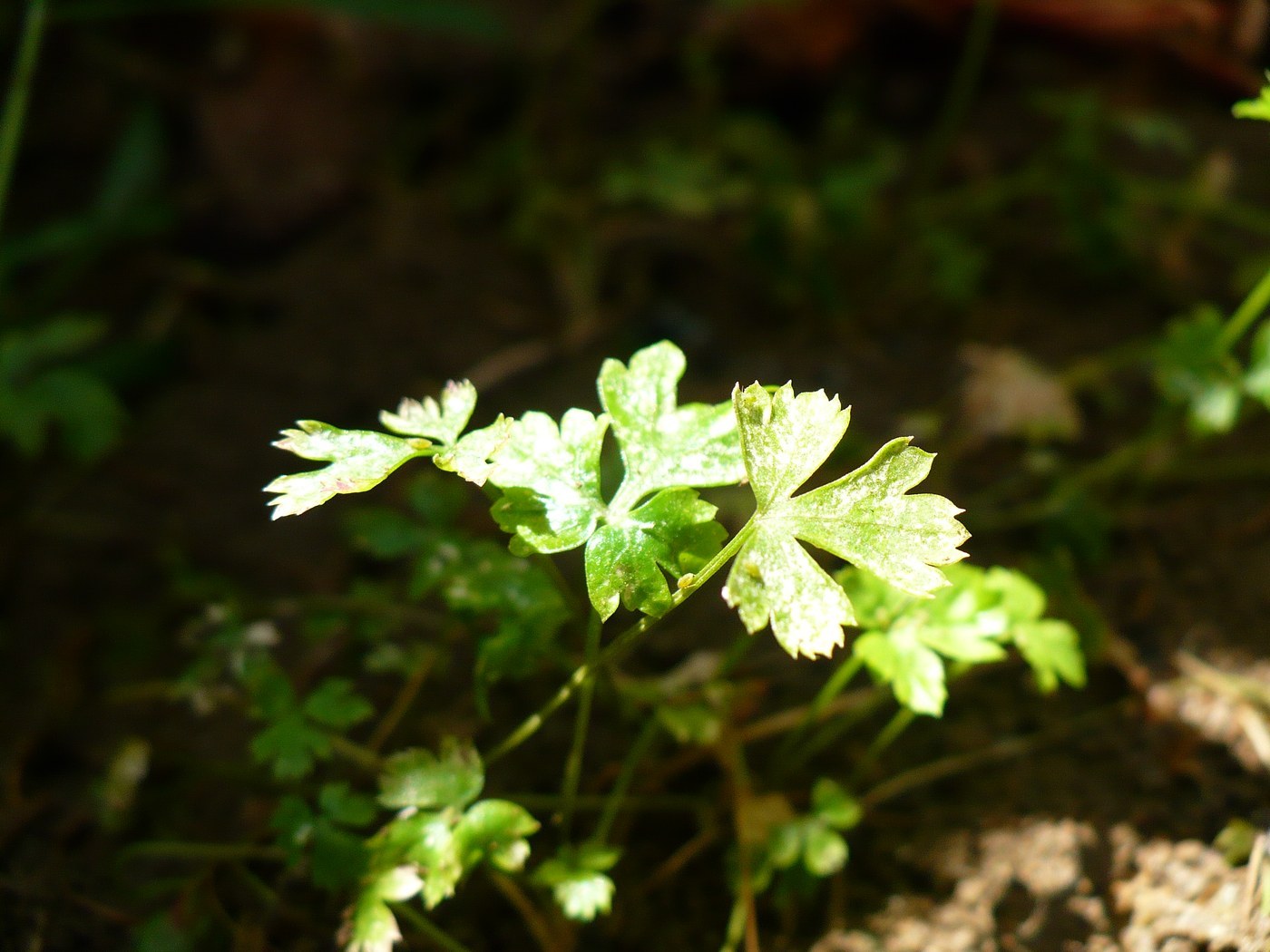
Key Identifying Features
Parsley (Petroselinum crispum) is a biennial herb in the carrot family (Apiaceae) usually grown as an annual. The strongest clues are its bright green, triangular compound leaves, hollow grooved flower stems, and a clean, fresh, grassy-peppery smell when the foliage is crushed. In its first year it forms a low rosette; in the second year it bolts to 60-90 cm and flowers.
Leaves & Stems
- Leaves are two- to three-times pinnately divided (tripinnate), with an overall triangular outline.
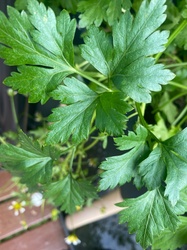
- Flat-leaf (Italian) parsley has flat, deeply toothed, fern-like leaflets resembling cilantro but with pointier tips.
- Curly parsley has tightly crinkled, ruffled, densely curled leaflets.
- Leaflet margins are sharply toothed; the leaf surface is glossy.
- Leaf stalks (petioles) are long, grooved, and somewhat fleshy.
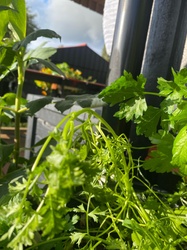
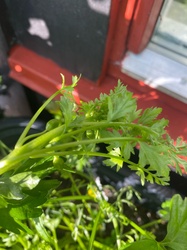
- Stems are ridged/grooved, hollow, hairless, and solid green (no purple blotches).
Flowers & Fruit
- In the second year it produces flat-topped compound umbels of tiny greenish-yellow flowers.
- Each umbel is 2-5 cm across, with many small spokes.
- Fruits are small, ribbed, oval schizocarps (paired seeds) about 2-3 mm long.
How to Tell It Apart from Look-Alikes
- Cilantro/coriander leaves are more rounded and scalloped lower down, and smell strongly citrus-soapy, not grassy.
- Poison hemlock (Conium maculatum) differs by its purple-spotted, smooth stems, a musty mousy smell, much greater height (1.5-2.5 m), and white (not yellow-green) flowers.
- Fool's parsley (Aethusa cynapium) has white flowers with long hanging bracts beneath the umbel and an unpleasant smell.
- Parsley's fresh, clean herb scent plus plain green grooved stems help confirm the identification.
Where You'll Find It
Parsley is cultivated worldwide in herb gardens, containers, and kitchen windowsills, preferring rich moist soil and partial to full sun. It occasionally escapes into waste ground in mild climates. Curly and flat-leaf types are both widely grown.
Quick ID Checklist
- Triangular, tripinnate bright green leaves (flat fern-like or tightly curled)
- Grooved, hollow, plain-green hairless stems
- Fresh grassy-peppery scent when crushed
- Yellow-green compound umbels in second year
- No purple stem spots and no musty smell (rules out hemlock)
Frequently asked questions
How do I tell flat-leaf parsley from cilantro?
Parsley leaflets are pointed and deeply cut with a fresh grassy smell; cilantro leaves are more rounded/scalloped and smell strongly citrusy or soapy. Crushing a leaf is the fastest test.
Is parsley easy to confuse with poison hemlock?
Both are ferny umbellifers, but hemlock has purple-spotted smooth stems, a musty odor, grows 1.5-2.5 m tall, and has white flowers. Parsley has plain green grooved stems and a clean herb scent.
What does parsley look like before it flowers?
In its first year it forms a dense low rosette of triangular, divided green leaves with no tall stem.
Are curly and flat-leaf parsley the same plant?
Yes, both are Petroselinum crispum cultivars. Curly parsley has tightly ruffled leaflets while flat-leaf (Italian) has flat, fern-like ones.
Parsley identified by the community
Recent Parsley specimens identified with Plant Identifier.