
Pasque Flower Identification Guide
Identify Pulsatilla vulgaris by its silky, hairy buds, bell-shaped purple spring flowers, and feathery seed plumes.
Read the full Pasque Flower encyclopedia entry →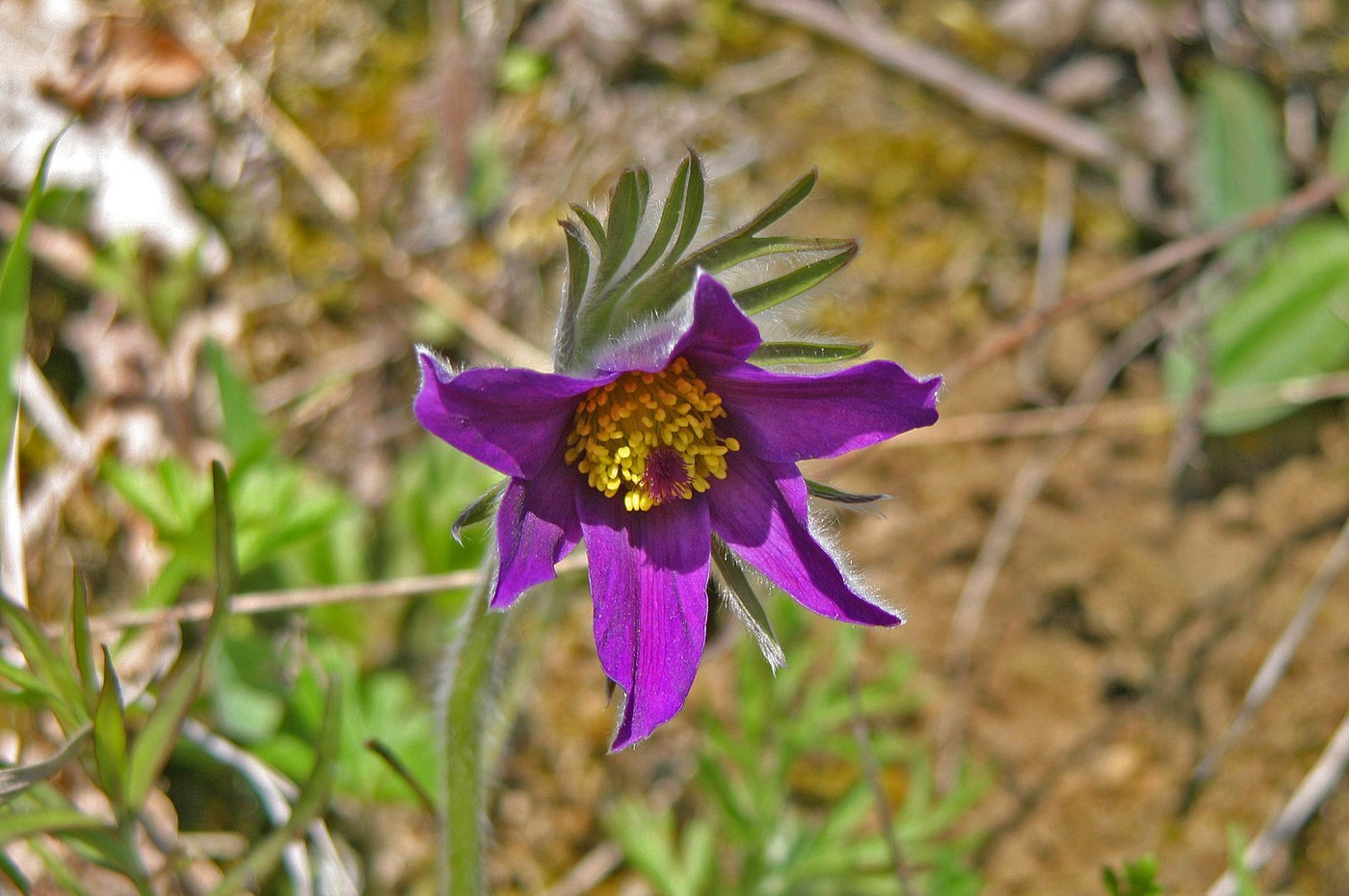
Key Identifying Features
Pasque flower (Pulsatilla vulgaris, formerly Anemone pulsatilla) is a low, early-spring perennial famed for its silky-haired blooms. Watch for:
- Bell- to cup-shaped flowers in violet-purple (sometimes white, red, or pink) with a golden boss of stamens
- A dense covering of soft silvery hairs on stems, buds, and leaves
- Finely dissected, feathery leaves
- Striking feathery, silken seed heads after bloom
Leaves & Stems
Leaves are basal, fern-like, and divided into many narrow segments, giving a soft feathery look. Both the leaves and stems are densely clothed in silky, silvery hairs, especially when young — a key tactile clue. The plant is low, 4-12 in tall, forming a small clump. Notably, leaves often emerge with or just after the flowers, so early blooms may appear before full foliage develops.
Flowers & Fruit
Blooming very early spring (around Easter — hence 'Pasque'), the flowers are solitary, upward- to outward-facing, bell-shaped, about 2-3 in across, with 6 silky petal-like sepals (no true petals). Color is typically rich violet-purple, centered by a prominent tuft of yellow stamens. A whorl of hairy bracts sits just below each bloom. After flowering, the plant produces its second show: fluffy, feathery seed heads of long silky plumes (styles), like a silvery firework, that catch the wind.
How to Tell It Apart from Look-Alikes
- Wood anemone (Anemone nemorosa) — related and similar shape, but white, smaller, less hairy, and woodland-dwelling.
- Crocus — also early purple flowers, but crocus has grassy leaves with a white midrib, grows from a corm, and lacks silky hairs.
- Hepatica — early purple/blue blooms, but with lobed (not feathery) leathery leaves and no silky seed plume.
- Other Pulsatilla species — share the silky hairs and seed plumes; identify by flower color and leaf detail.
The silky hairs plus feathery leaves plus silken seed heads combination is diagnostic for pasque flower.
Where You'll Find It
Native to calcareous (chalk and limestone) grasslands, dry meadows, and slopes in Europe, pasque flower likes full sun and well-drained soil. It's increasingly rare in the wild but widely grown in rock gardens and alpine collections. Look for it on short-turf hillsides in early spring.
Quick ID Checklist
- Low clump, 4-12 in tall
- Silky silver hairs on buds, stems, and leaves
- Bell-shaped violet flowers with yellow stamen center
- Feathery, finely divided leaves
- Fluffy silken seed heads after bloom
- Dry, sunny, well-drained grassland
A hairy, silvery early-spring flower with a purple bell and a later puff of silken seed plumes is the pasque flower.
Frequently asked questions
Why is it called pasque flower?
It blooms around Pasque (Easter) in early spring, and the name reflects its traditional Eastertide flowering and its use as a dye for Easter eggs.
Is it an anemone?
It was once classified as Anemone pulsatilla and is closely related, but it's now placed in the genus Pulsatilla, distinguished by its silky-haired seed plumes.
What are the fluffy seed heads?
After flowering, each seed develops a long silky plume (a feathery style) that helps wind dispersal, creating a silvery, firework-like seed head.
How do I tell it from a crocus?
Pasque flower is densely silky-hairy with feathery leaves and a yellow stamen center, while crocus has smooth grassy leaves with a white midrib and grows from a corm.