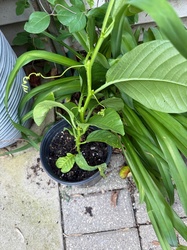
Passion Fruit Identification Guide
Identify passion fruit (Passiflora edulis) by its climbing tendrils, three-lobed glossy leaves, intricate fringed flowers, and wrinkled purple or yellow fruit.
Read the full Passion Fruit encyclopedia entry →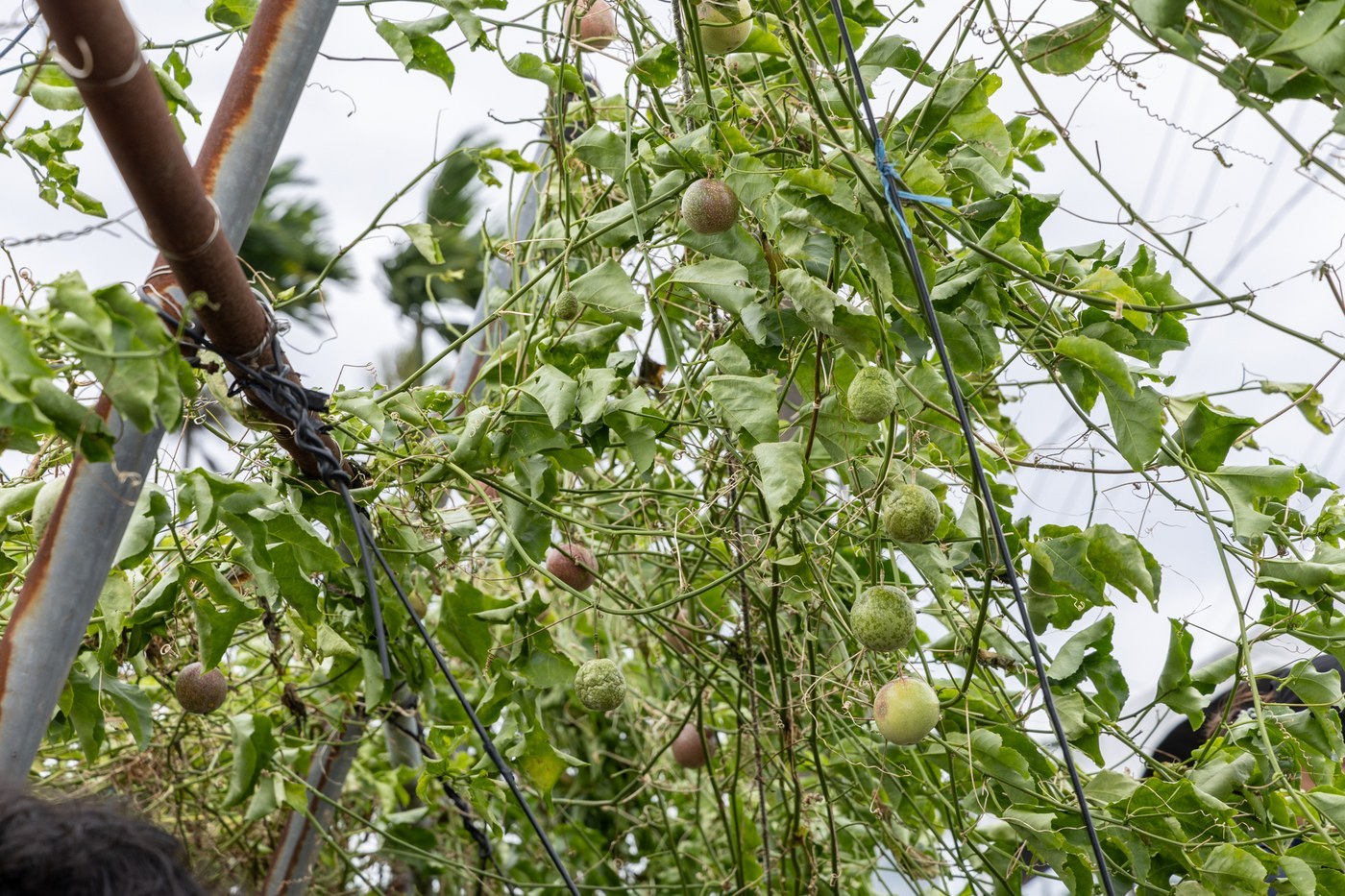
Key Identifying Features
Passion fruit (Passiflora edulis) is a vigorous woody-stemmed evergreen vine that climbs by coiling tendrils. It is instantly recognizable by its elaborate, fringed flowers with a ring of thread-like filaments (the "corona"), and its round to oval fruit with a leathery, dimpling rind enclosing aromatic seedy pulp. The whole plant can climb 5-10 m over supports.
Leaves & Stems
- Leaves are alternate, glossy dark green, and deeply 3-lobed (sometimes unlobed on juvenile growth), 7-20 cm long, with finely toothed margins.
- Each leaf node bears a single coiling tendril used for climbing, plus small glands on the leaf stalk.
- Stems are green and ridged when young, becoming woody with age.
Flowers & Fruit
- Flowers are 5-7.5 cm across, with five white petals and five sepals, topped by a striking corona of wavy purple-and-white filaments.
- A central column carries five stamens and a distinctive three-branched (clubbed) stigma above.
- Fruit is a round to ovoid berry, 4-8 cm, ripening deep purple (P. edulis) or yellow (forma flavicarpa); the smooth skin wrinkles and dimples as it ripens.
- Inside is orange-yellow gelatinous pulp packed with small hard black seeds, intensely aromatic.
How to Tell It Apart from Look-Alikes
- Maypop (Passiflora incarnata): similar fringed flower but lavender, with larger green-yellow fruit; it is cold-hardier and herbaceous.
- Giant granadilla (P. quadrangularis): has four-winged stems and much larger fruit.
- Banana passionfruit (P. tarminiana/mollissima): has pink tubular flowers and elongated yellow fruit.
- Other vines (grape, ivy): lack the coiled single tendrils plus the unmistakable corona flower, so the flower or tendril settles the ID.
Where You'll Find It
Native to South America, passion fruit is grown throughout tropical and subtropical regions and frost-free warm-temperate gardens. Look for it on fences, trellises, arbors, and pergolas, where it climbs rapidly. It naturalizes in some warm climates along forest edges and disturbed ground. It needs warmth, full sun, and well-drained soil.
Quick ID Checklist
- Climbing vine with coiling tendrils
- Glossy, deeply 3-lobed, toothed leaves
- Spectacular fringed corona flower (purple-white filaments)
- Three-branched stigma above the flower
- Round purple or yellow fruit with wrinkling, dimpled rind and seedy aromatic pulp
Frequently asked questions
What makes a passion fruit flower so distinctive?
Its intricate structure: five white petals and sepals surround a corona of wavy purple-and-white filaments, with a raised central column bearing five stamens and a three-branched, club-tipped stigma. No common look-alike has this exact arrangement.
Why is my passion fruit wrinkled and is it still good?
Passion fruit naturally develops a wrinkled, dimpled rind as it fully ripens, which actually signals peak sweetness. A smooth, heavy fruit is ripe too; deeply shriveled fruit is at its most flavorful but past its prime if dried out.
How do I identify the vine when it is not flowering or fruiting?
Look for glossy, deeply three-lobed leaves with toothed edges and a single coiling tendril at each leaf node on green ridged stems. This tendril-plus-trilobed-leaf combination is a strong clue even without flowers.
Are purple and yellow passion fruit the same plant?
They are forms of the same species, Passiflora edulis. The standard purple form and the yellow form (f. flavicarpa) differ in fruit color, size, and acidity, but share the same flower and leaf structure.
Passion Fruit identified by the community
Recent Passion Fruit specimens identified with Plant Identifier.