Passion Fruit
Passiflora edulis
A vigorous tropical climbing vine grown for its intricate, exotic flowers and its rounded fruit. The purple passion fruit is the most widely cultivated variety.
- Light
- Full sun
- Water
- Regular; keep evenly moist
- Difficulty
- Moderate
Got a plant like this?
Identify any plant from a photo, free.
Overview
Passion fruit comes from Passiflora edulis, a fast-growing perennial vine in the passionflower family. It is a fruiting vine prized for its strikingly complex flowers.
The vine climbs vigorously by tendrils and can cover a trellis or fence in a single season in warm climates. There are two main forms: the purple type (cooler, subtropical) and the yellow type (more tropical and vigorous).
How to identify it
Identifying features:
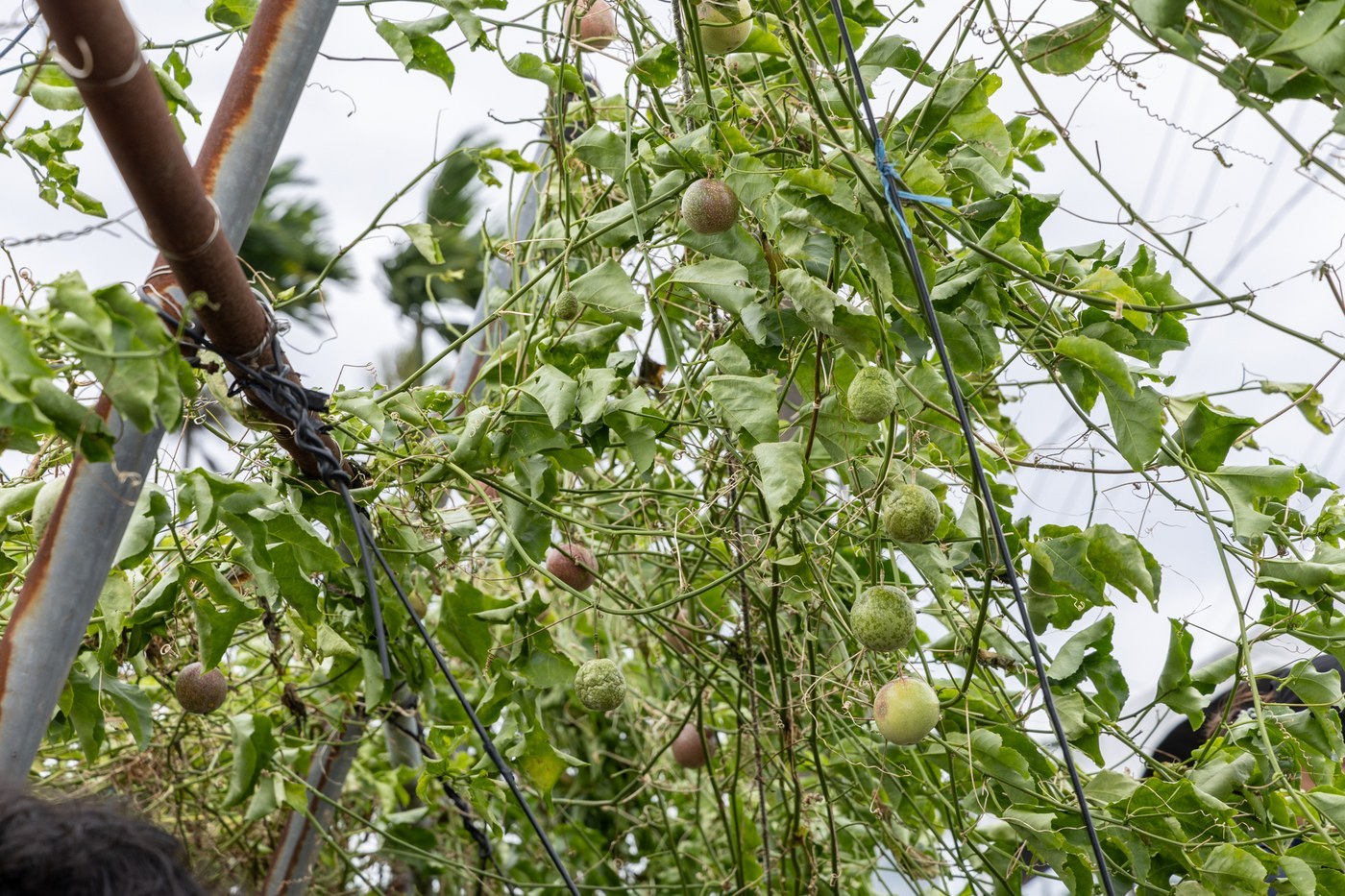
- Habit: Woody perennial climbing vine reaching 5-10 m, climbing by coiling tendrils
- Leaves: Glossy, deeply three-lobed, alternate, with finely toothed margins
- Flowers: Spectacular 5-7 cm blooms with white petals and a fringe of purple-and-white filaments (corona) over five stamens
- Fruit: Round to oval, 4-8 cm, with a tough purple (or yellow) rind enclosing orange pulp and many black seeds
- Tendrils: Wiry, spiraling, emerging at leaf axils
Care & growing
Light: Full sun for heavy flowering and fruiting.
Water: Keep soil consistently moist, especially while flowering and fruiting; do not let it dry out completely.
Soil: Rich, well-drained soil with plenty of organic matter, pH 6.5-7.5.
Temperature: Frost-sensitive; thrives in USDA zones 9-11. Purple types tolerate slightly cooler conditions than yellow.
Feeding: Feed regularly through the growing season; it is a hungry feeder but avoid excess nitrogen, which favors leaves over fruit.
Propagation: From seed, cuttings, or grafting. Provide a sturdy trellis and prune annually to maintain vigor and air flow.
Habitat & origin
Passiflora edulis is native to southern Brazil, Paraguay, and northern Argentina. It grows naturally in subtropical forest margins where it scrambles over other vegetation.
It is now cultivated throughout the tropics and subtropics, including Australia, New Zealand, South Africa, Hawaii, and Southeast Asia, both commercially and in home gardens.
Frequently asked questions
Why does my passion fruit vine flower but not set fruit?
Poor pollination is common; passion fruit often needs carpenter bees or hand-pollination, and some varieties require cross-pollination.
How long until a passion fruit vine produces fruit?
From seed or cuttings, vines usually fruit within 1-2 years in warm conditions.
What do passion fruit flowers look like?
The flowers are spectacular 5-7 cm blooms with white petals and a fringe of purple-and-white filaments (the corona) above five stamens.
Where is passion fruit native to?
Passiflora edulis is native to southern Brazil, Paraguay, and northern Argentina, and is now cultivated across the tropics and subtropics.
Passion Fruit guides
In-depth guides for identifying, growing, and caring for Passion Fruit.
How to Care for Passion Fruit
Grow Passion Fruit (Passiflora edulis): a fast, sun-loving climbing vine with exotic flowers. Learn light, water, feeding and pruning for vigorous growth.
Passion Fruit Identification Guide
Identify passion fruit (Passiflora edulis) by its climbing tendrils, three-lobed glossy leaves, intricate fringed flowers, and wrinkled purple or yellow fruit.
Passion Fruit identified by the community
Real specimens identified with Plant Identifier.