
Pawpaw Tree Identification Guide
Identify the pawpaw tree (Asimina triloba) by its large drooping tropical-looking leaves, maroon spring flowers, and the largest fruit native to North America.
Read the full Pawpaw Tree encyclopedia entry →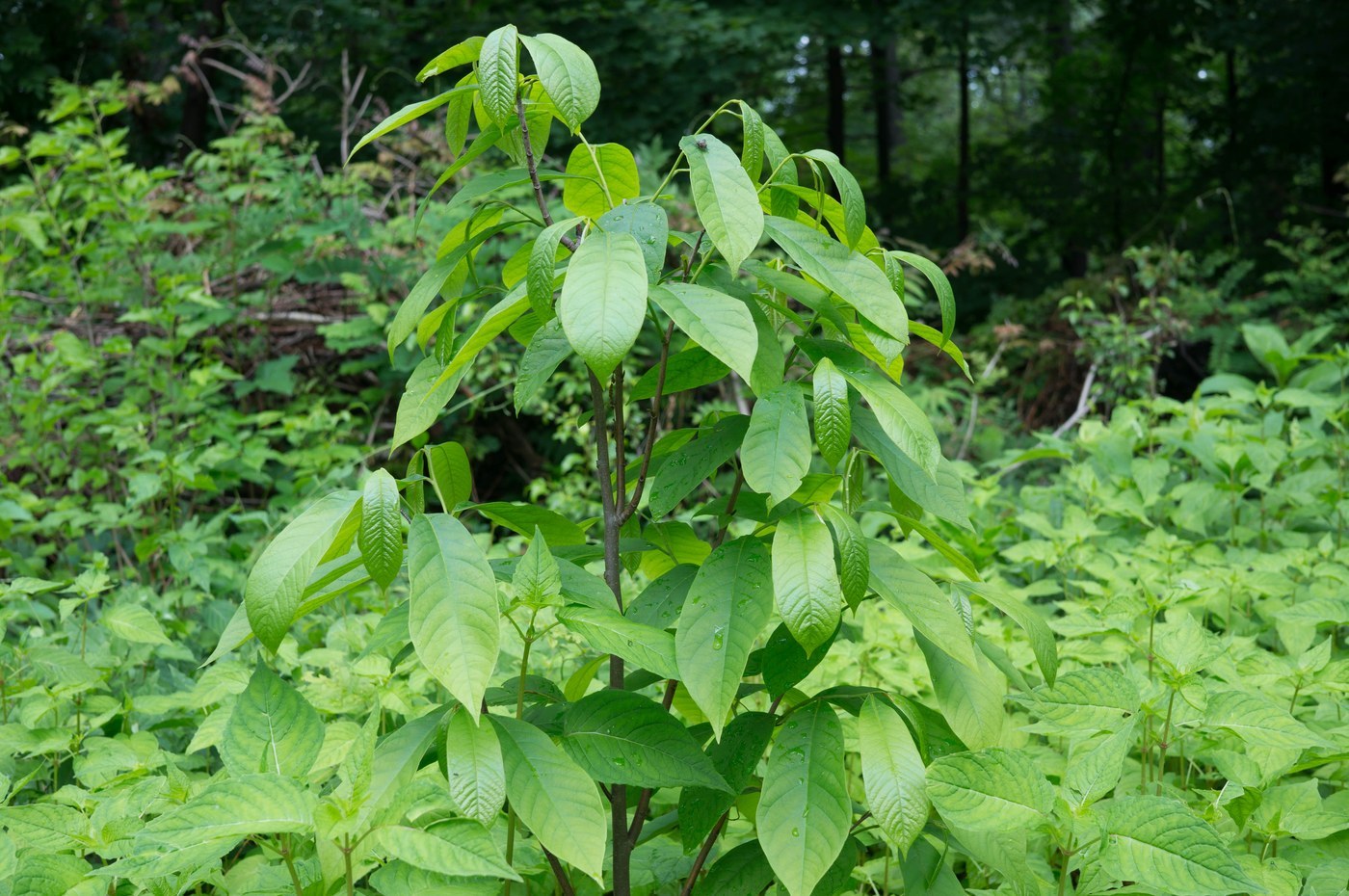
Key Identifying Features
The pawpaw (Asimina triloba) is a small understory tree, 10-30 ft tall, native to eastern North America and the only temperate member of the tropical custard-apple family. It has a distinctly lush, tropical look from its large, drooping, broad leaves, and it bears the largest fruit native to the U.S. — a green, oblong berry.
- Large (6-12 in.), oblong, drooping leaves clustered at branch tips
- Often grows in clonal patches/thickets in shady bottomlands
- Maroon, six-petaled, downward-facing spring flowers
- Big green oblong fruit in late summer/fall
Leaves & Stems
Leaves are alternate, simple, obovate (widest near the tip), 6-12 in. long, with smooth margins and a pointed tip, tapering at the base. They hang downward, giving a drooping, almost tropical appearance, and are arranged in spirals concentrated near the branch ends. Crushed foliage has a disagreeable, slightly green-pepper or resinous smell. Bark is thin, gray-brown, and smooth with light blotches; twigs are slender with naked (no-scale), fuzzy brown buds.
Flowers & Fruit
Flowers appear in early spring before or with the leaves: 1-2 in., cup-shaped, with six petals in two whorls, opening green then turning deep maroon to purple-brown, hanging downward. They smell faintly of yeast or carrion to attract fly and beetle pollinators. Fruit is the clincher: a large, oblong, slightly kidney-shaped berry 3-6 in. long, green ripening to yellowish with brown blotches, with soft flesh and two rows of large brown seeds. Fruit often grows in clusters.
How to Tell It Apart from Look-Alikes
- Persimmon: Has smaller, more rounded leaves and round orange fruit; pawpaw fruit is large, green, and oblong.
- Magnolia: Some have large leaves, but magnolia flowers are large and showy white/pink, not small maroon nodding cups.
- Catalpa / paulownia: Large leaves too, but those are heart-shaped and oppositely arranged; pawpaw leaves are alternate and obovate.
- Spicebush: Smaller shrub with aromatic spicy leaves; pawpaw foliage smells unpleasant, not spicy-citrus.
The drooping large obovate leaves plus nodding maroon spring flowers plus huge green oblong fruit together are diagnostic.
Where You'll Find It
Pawpaw grows in rich, moist bottomlands, floodplains, ravines, and shady forest understory across the eastern and midwestern United States and into southern Ontario. It spreads by root suckers into dense colonies, so finding many similar saplings in a shady, moist patch is itself a clue. It tolerates deep shade as an understory tree.
Quick ID Checklist
- Small understory tree, 10-30 ft, often in thickets
- Large drooping obovate leaves clustered at twig tips
- Unpleasant smell when leaves are crushed
- Nodding maroon six-petaled flowers in early spring
- Large green oblong fruit with big brown seeds
- Moist, shady bottomland or floodplain habitat
Frequently asked questions
What does pawpaw fruit look like?
It is a large, oblong, slightly kidney-shaped green berry 3-6 inches long, ripening yellowish with brown blotches, with soft flesh and two rows of big brown seeds.
Why does the pawpaw look tropical?
It is the only temperate member of the tropical custard-apple family, with large drooping obovate leaves that give it a lush, jungle-like appearance.
What do the flowers look like?
Small cup-shaped flowers about 1-2 inches across with six maroon-to-purple petals that hang downward and bloom in early spring before the leaves fully expand.
Why are there so many pawpaws growing together?
Pawpaw spreads by root suckers, forming clonal colonies, so you often find dense patches of genetically identical trees in moist, shady bottomlands.