Pawpaw Tree
Asimina triloba
A small native North American tree producing the largest fruit native to the continent, borne on a hardy understory tree with large drooping leaves. It is the only temperate member of a largely tropical plant family.
- Light
- Full sun (shade when young)
- Water
- Regular; moist, well-drained soil
- Difficulty
- Moderate
Got a plant like this?
Identify any plant from a photo, free.
Overview
The pawpaw is a small deciduous tree, the only temperate-climate member of the largely tropical custard-apple family (Annonaceae). It is native to eastern North America.
It bears the largest fruit native to the continent, a green, oblong fruit borne on a tropical-looking understory tree.
Long a wild Appalachian tree, the pawpaw has gained popularity among gardeners, though its delicate, short-lived fruit keeps it uncommon.
How to identify it
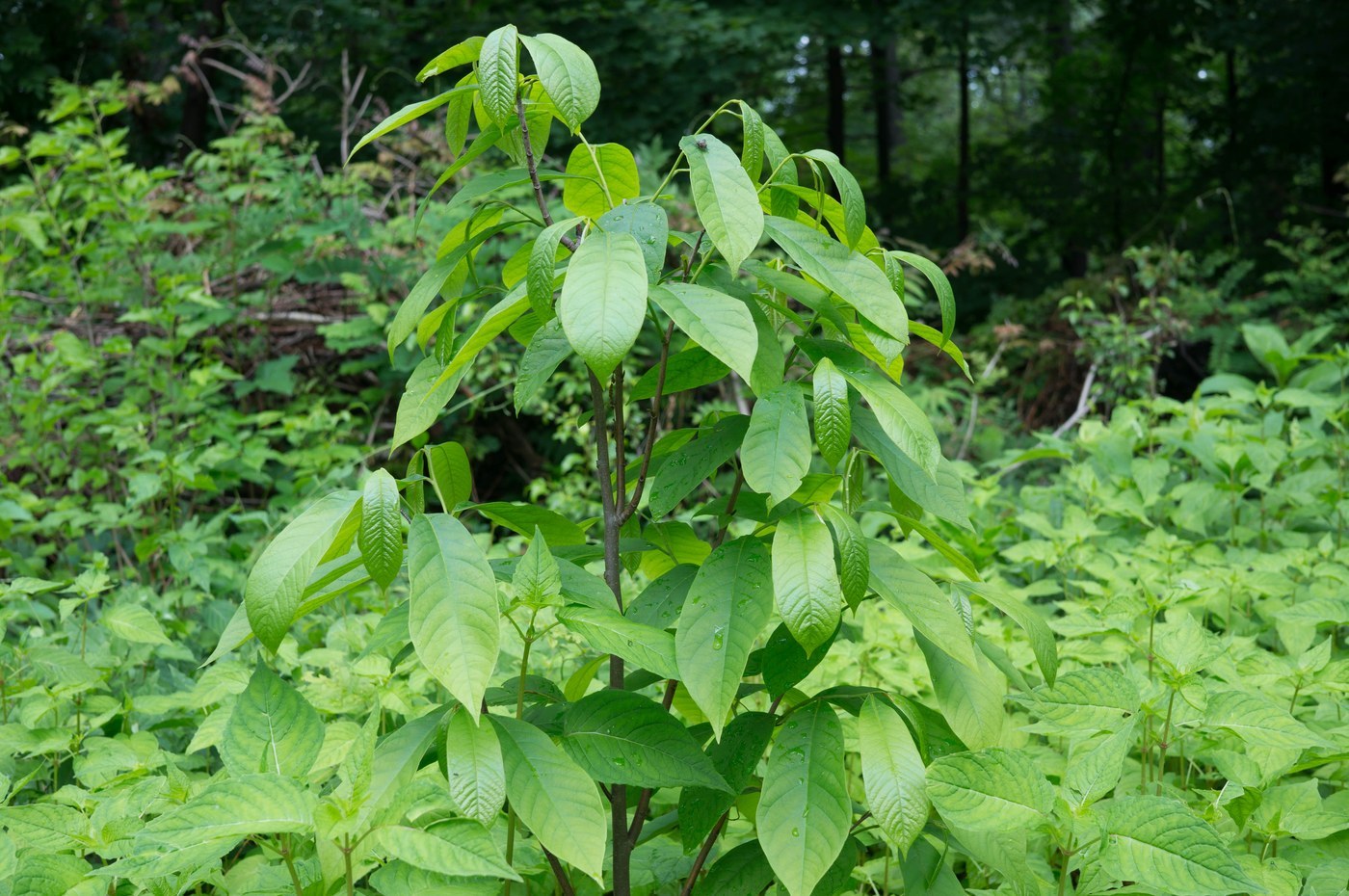
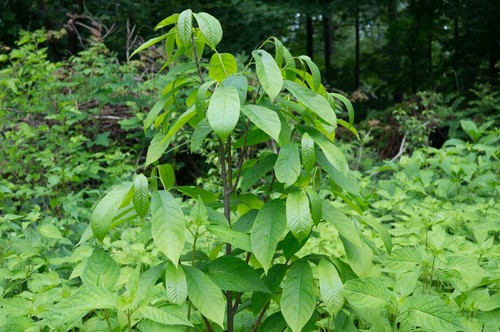
A small understory tree with large drooping leaves and tropical-looking fruit.
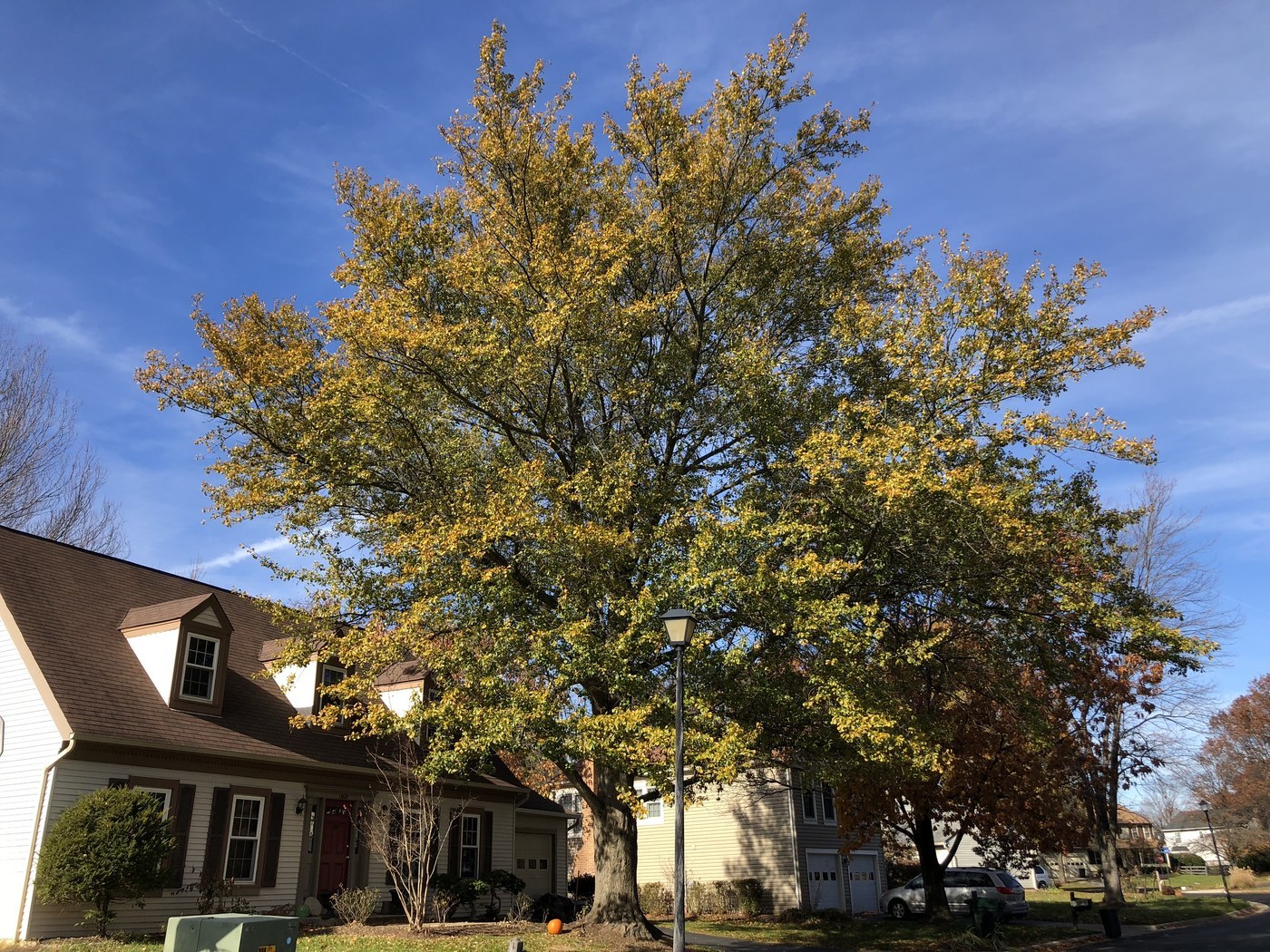
- Leaves: Large, oblong, drooping, 15-30 cm long, turning yellow in autumn, with a faint odor when crushed
- Bark: Smooth, gray-brown
- Flowers: Maroon to purple-brown, cup-shaped, 3-5 cm, appearing before or with the leaves in spring
- Fruit: Oblong green berries 7-15 cm, ripening to yellow-green, with large brown seeds
- Size: Typically 4-10 m tall, often forming suckering clonal patches
Care & growing
Rewarding but needs patience and cross-pollination.
- Light: Young trees need shade; mature trees fruit best in full sun
- Water: Consistently moist, well-drained soil; intolerant of drought
- Soil: Deep, fertile, slightly acidic and rich in organic matter
- Temperature: Cold-hardy to about -25C; needs a long, warm growing season to ripen fruit
- Feeding: Balanced fertilizer in spring; mulch generously
- Propagation: Seed (needs cold stratification) or grafting; plant two genetically different trees, since the flowers need cross-pollination, often by flies and beetles
Habitat & origin
Asimina triloba is native to the eastern and central United States and southern Ontario, from the Great Lakes to the Gulf states.
In the wild it grows as an understory tree in moist, fertile bottomlands, river valleys and shady woodlands, often forming dense clonal thickets. It is now cultivated in orchards and home gardens across temperate North America and parts of Europe and Asia.
Frequently asked questions
Do I need two pawpaw trees?
Generally yes. The flowers usually require cross-pollination from a genetically different tree to set good fruit.
How big does a pawpaw tree get?
Pawpaws are small understory trees, typically 4-10 m tall, and often form suckering clonal patches.
What do pawpaw flowers look like?
The flowers are maroon to purple-brown, cup-shaped, 3-5 cm across, appearing before or with the leaves in spring.
Where do pawpaws grow naturally?
Asimina triloba is native to the eastern and central United States and southern Ontario, where it grows in moist, fertile bottomlands and shady woodlands.
Pawpaw Tree guides
In-depth guides for identifying, growing, and caring for Pawpaw Tree.
How to Care for Pawpaw Tree
Grow the Pawpaw Tree (Asimina triloba): an understory native with tropical-looking leaves and maroon flowers; shade young, sun when mature.
Pawpaw Tree Identification Guide
Identify the pawpaw tree (Asimina triloba) by its large drooping tropical-looking leaves, maroon spring flowers, and the largest fruit native to North America.