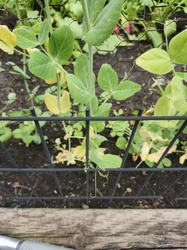
Pea Identification Guide
Identify the pea plant (Pisum sativum) by its waxy blue-green leaves with clasping stipules and tendrils, white or purple flowers, and rounded pods.
Read the full Pea encyclopedia entry →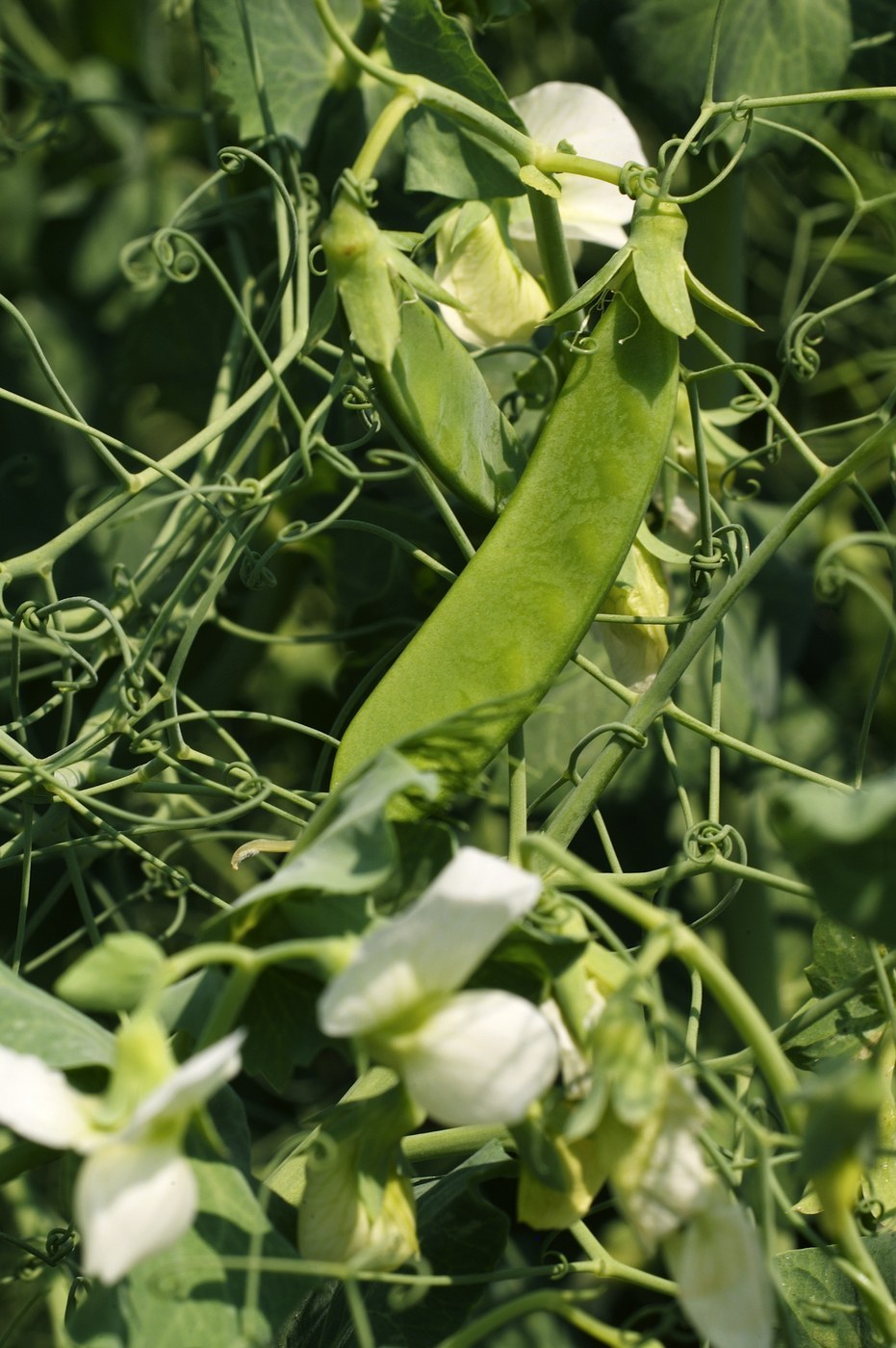
Key Identifying Features
The pea (Pisum sativum) is a cool-season annual climbing legume in the pea family (Fabaceae). Identify it by waxy blue-green compound leaves ending in curling tendrils, large leaf-like clasping stipules at each node, butterfly-shaped flowers (usually white or purple), and rounded green pods holding spherical seeds.
Leaves & Stems
- Leaves are pinnately compound with a few pairs of oval, blue-green, waxy leaflets and the leaf tip modified into branched curling tendrils for climbing.
- At each node sit large, rounded, leaf-like stipules that clasp the stem — a key pea trait.
- Stems are slender, smooth, and hollow, climbing by tendrils to 0.5–2 m depending on variety.
- The whole plant has a soft, cool-season, glaucous (waxy) look.
Flowers & Fruit
- Flowers are classic pea-family blooms with a broad banner, two wings, and a keel, 1.5–3.5 cm, typically white (garden peas) or bi-colored purple/pink (snow and some heirloom types).
- Pods are plump and rounded (garden/shelling peas), flat (snow peas), or rounded-but-tender (snap peas), green, holding a row of round seeds.
- Shelling-pea seeds are spherical; mature seeds dry and wrinkle or stay smooth.
How to Tell It Apart from Look-Alikes
- Green/snap bean (Phaseolus vulgaris): broad, hairy, three-leaflet leaves with no tendrils, twining stems, warm-season; peas are waxy, tendrilled, and cool-season.
- Sweet pea (Lathyrus odoratus): ornamental relative with showy fragrant flowers and winged stems, unlike the plain waxy blue-green tendrilled pea.
- Vetch (Vicia): wild tendrilled legume with smaller leaflets and flowers.
Where You'll Find It
Peas are a cool-season garden crop sown in early spring (and fall in mild areas), grown on trellises, netting, and brush in full sun. They tolerate light frost and fade in summer heat. Look for delicate blue-green tendrilled vines with clasping stipules, white or purple flowers, and dangling rounded pods.
Quick ID Checklist
- Waxy blue-green compound leaves
- Curling tendrils at leaf tips
- Large clasping leaf-like stipules at each node
- White or purple butterfly-shaped flowers
- Rounded (or flat) green pods with spherical seeds
- Cool-season, soft glaucous appearance
Frequently asked questions
How do I tell a pea plant from a bean plant?
Peas have waxy blue-green leaves that end in curling tendrils and large clasping stipules, and they thrive in cool weather. Beans have broad, hairy, three-leaflet leaves, twine without tendrils, and need warm weather.
What are the leaf-like flaps where the pea leaf meets the stem?
Those are stipules — unusually large, rounded, leaf-like structures that clasp the stem at each node. Their prominence is a distinctive and reliable identifying feature of the pea plant.
How do I tell snow peas, snap peas, and shelling peas apart?
All three are the same species but differ in pod form: shelling (garden) peas have plump rounded pods with prominent round seeds, snow peas have flat thin pods, and snap peas have rounded crisp pods.
Is the sweet pea the same as the garden pea?
No. The ornamental sweet pea (Lathyrus odoratus) is a relative grown for its fragrant flowers and has winged stems. The garden pea (Pisum sativum) has plainer white or purple flowers and waxy blue-green tendrilled foliage.
Pea identified by the community
Recent Pea specimens identified with Plant Identifier.