
How to Care for Peach Tree
Grow a productive, ornamental peach tree with full sun, deep watering, careful pruning, and a proactive spray schedule against fungal disease.
Read the full Peach Tree encyclopedia entry →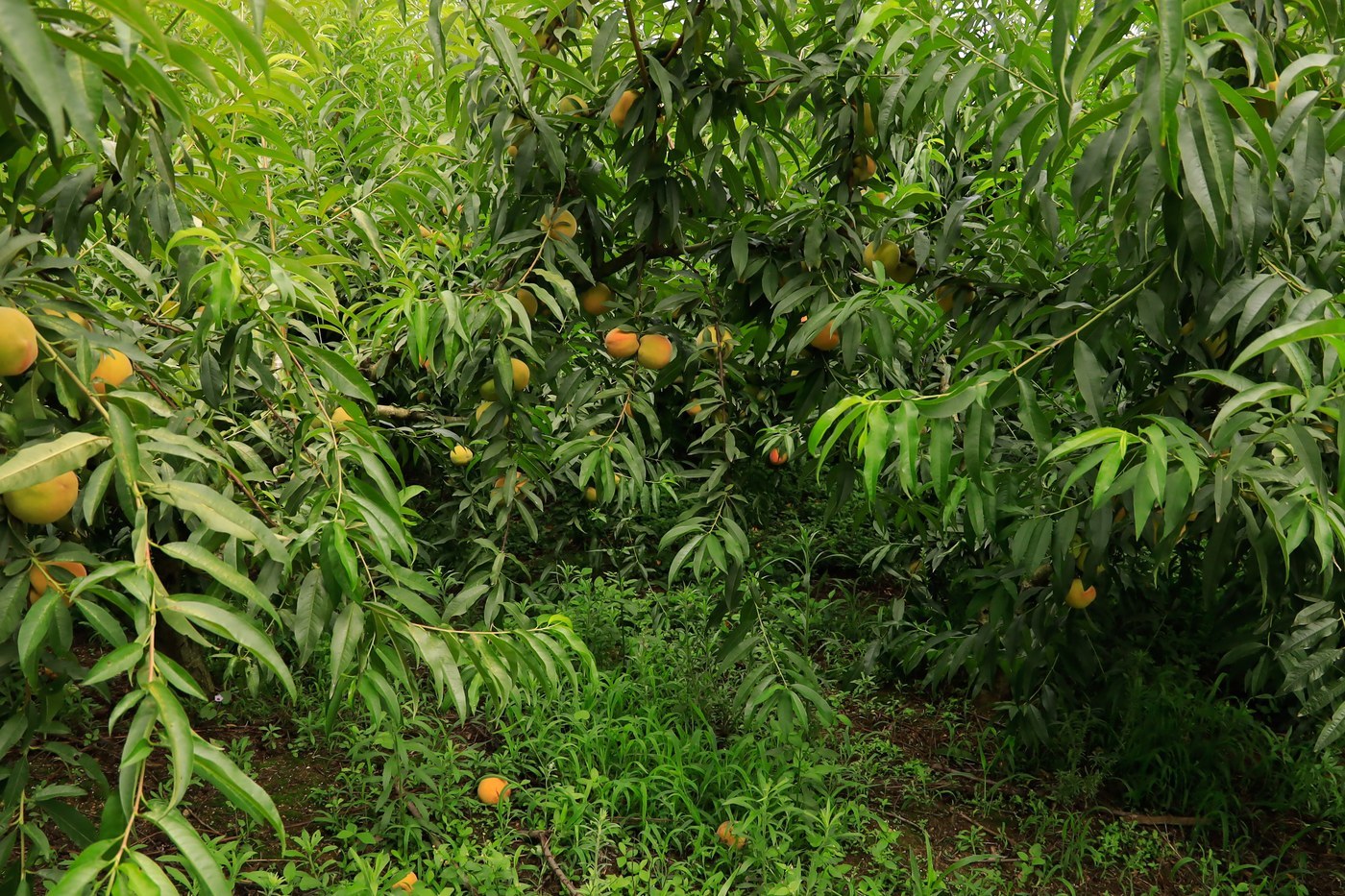
The peach tree (Prunus persica) is a fast-growing, short-lived deciduous fruit tree prized for its spring show of pink blossoms and its rounded, spreading canopy. It rewards attentive growers with heavy crops but needs steady sun, sharp drainage, and a consistent pruning and disease routine to stay vigorous.
Light
Peaches demand full sun, a minimum of six to eight hours of direct light daily and ideally more. Site the tree in the brightest, most open part of the garden, away from the shade of buildings or larger trees. Good sun exposure drives strong wood, dense flowering, and even ripening; shaded trees grow leggy, bloom sparsely, and become far more disease-prone.
Water
Water deeply and regularly, keeping the root zone moist but never soggy. Young trees need thorough soakings every few days through their first summers to establish; mature trees benefit from a deep weekly watering during dry spells, tapering as fruit finishes and the tree hardens off for winter. Apply water at the drip line rather than against the trunk, and let the surface dry slightly between soakings to discourage root rot. A mulch ring conserves moisture and evens out swings.
Soil & Potting
Peaches insist on well-drained, loamy soil with a slightly acidic to neutral pH. Heavy clay that holds water is the most common killer, so amend planting sites generously with compost and, on wet ground, plant on a raised mound or berm. Dwarf cultivars grow well in large containers of at least 20 to 25 gallons filled with a free-draining loam-based mix; ensure ample drainage holes and never let the pot stand in a saucer of water.
Humidity & Temperature
Peach trees are temperate plants that need a winter chill period to set fruit and a warm growing season to ripen it. They tolerate cold dormancy well but their early blossoms are vulnerable to late frosts; siting on a gentle slope where cold air drains away helps protect flowers. Humid, still conditions encourage leaf and fruit diseases, so choose an airy spot and prune for open structure.
Feeding
Feed in early spring as growth resumes with a balanced fertilizer, and give a second light application after fruit set. Nitrogen supports the new shoot growth that carries next year's crop, but avoid heavy late-season feeding, which pushes soft growth that will not harden before winter. An annual topdressing of compost keeps organic matter and micronutrients up.
Propagation
Peaches are usually propagated by budding or grafting named cultivars onto rootstock, which preserves fruit quality and controls tree size. Seedlings grown from a pit will germinate readily after a period of cold stratification but rarely come true to the parent and take years to reach bearing size. For home growers, buying a grafted nursery tree is the reliable route.
Repotting / Pruning
Pruning is essential. Peaches fruit on one-year-old wood, so annual pruning renews fruiting shoots and keeps the center open to light and air. Train young trees to an open-vase shape with three or four main scaffold limbs. Prune in late winter to early spring, removing dead, crossing, and inward-growing wood, and shortening vigorous shoots. Thin the young fruit heavily so remaining fruits are spaced several inches apart, which improves size and prevents limbs from breaking. Container trees should be repotted or root-pruned every two to three years.
Common Problems & Pests
Peach leaf curl, a fungal disease that distorts and reddens spring foliage, is the signature problem and is controlled with a dormant fungicide spray before buds swell. Brown rot can spoil ripening fruit in humid weather; remove and destroy affected fruit and mummies. Watch for aphids on new shoots, scale, and boring insects at the trunk base. Good sanitation, raking up fallen leaves and fruit, and an open canopy prevent most trouble.
Seasonal Care Tips
Apply dormant sprays in late winter before bud break. Prune and shape in late winter, then thin fruit in late spring once it has set. Water most attentively through summer swell and ripening. In autumn, rake and dispose of all dropped leaves and fruit to break disease cycles, and mulch the root zone for winter protection.
Frequently asked questions
Why does my peach tree's new spring foliage look puckered and red?
That is peach leaf curl, a common fungal disease. Control it by applying a dormant fungicide spray in late winter before the buds swell, and rake up and remove fallen infected leaves to reduce reinfection.
Do I really need to thin the young fruit?
Yes. Thinning to leave fruits spaced several inches apart produces larger, better-quality peaches and prevents heavy clusters from snapping limbs. Thin in late spring soon after fruit sets.
Can I grow a peach tree in a pot?
Yes, choose a dwarf or genetic-dwarf cultivar and a large container of at least 20 gallons with excellent drainage. Use a free-draining loam-based mix, keep it in full sun, and root-prune or repot every two to three years.
When should I prune my peach tree?
Prune in late winter to early spring while the tree is dormant. Train young trees to an open-vase form and remove dead, crossing, and inward wood each year, since peaches fruit on the previous season's growth.