Peach Tree
Prunus persica
The peach is a deciduous fruit tree grown for its summer fruit and showy pink spring blossom. Self-fertile and fast-bearing, it rewards gardeners but needs sun, good drainage and disease vigilance.
- Light
- Full sun
- Water
- Regular, deep watering; keep soil moist not soggy
- Difficulty
- Moderate
Got a plant like this?
Identify any plant from a photo, free.
Overview
The peach is a deciduous tree in the rose family, native to China where it has been cultivated for thousands of years. Its smooth-skinned variant, the nectarine, is the same species and differs only by a single gene controlling the fuzzy skin.
Peaches are prized for their fragrant pink spring blossom and their summer fruit. Most varieties are self-fertile, so a single tree can produce a crop, and trees often begin bearing within a few years of planting.
They are relatively short-lived and can be prone to pests and diseases such as peach leaf curl, so they reward attentive growers. Dwarf and patio forms make them suitable even for small gardens and large containers.
How to identify it
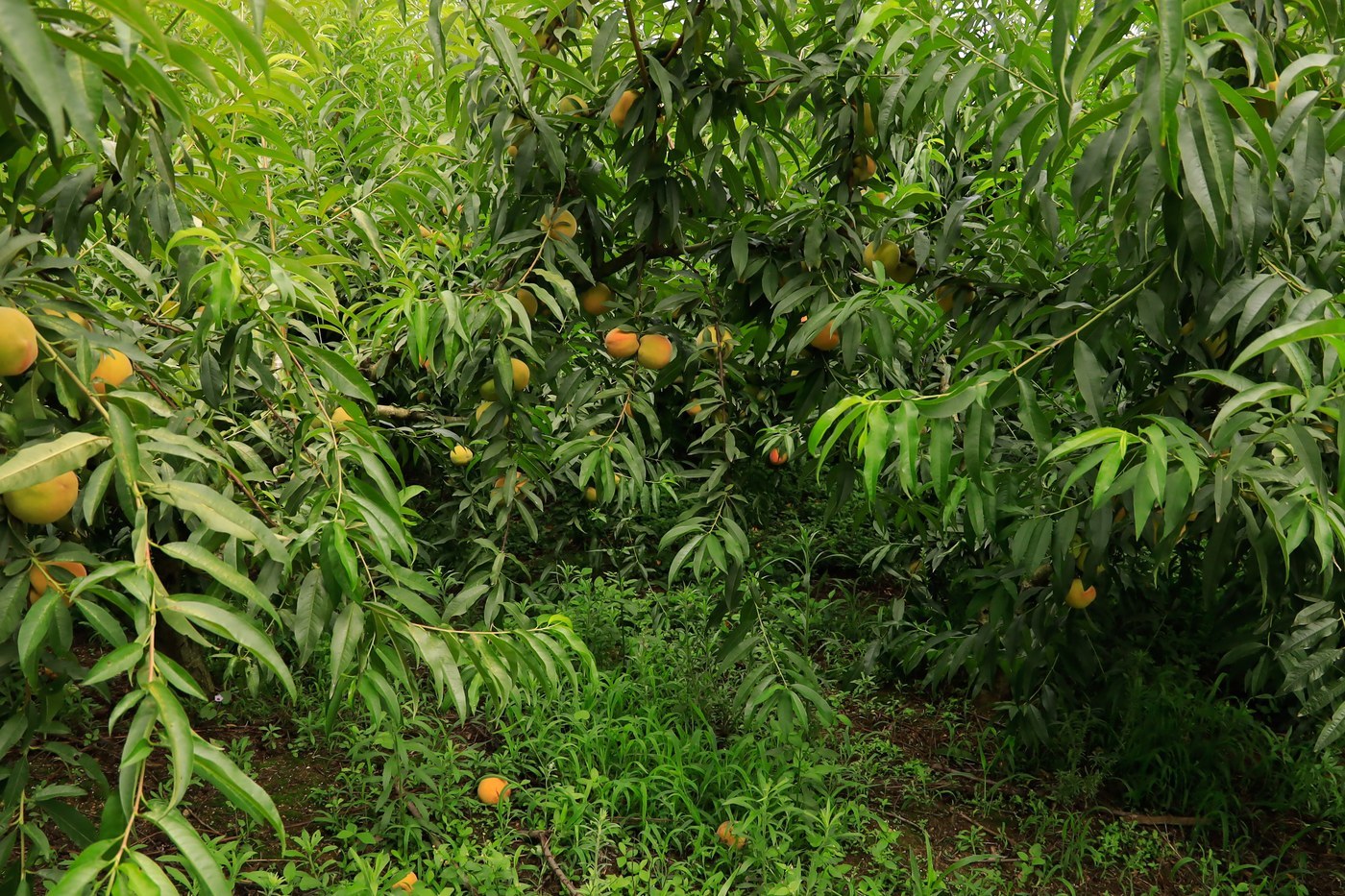
- Leaves: Long, narrow, lance-shaped, glossy green leaves with finely toothed edges
- Flowers: Showy pink (sometimes red or white) five-petaled blossoms in early spring, often before the leaves
- Fruit: Round drupe with a single large, wrinkled stone; fuzzy skin (peach) or smooth (nectarine), yellow to red-blushed
- Bark: Reddish-brown to grey, smooth when young
- Size: Typically 4–6 m (13–20 ft); dwarf forms much smaller
- Habit: Spreading, rounded crown; deciduous
Care & growing
Light: Full sun — essential for fruit quality and ripening.
Water: Keep soil consistently moist during the growing and fruiting season, especially as fruit swells; avoid both drought and waterlogging.
Soil: Fertile, well-draining soil with a slightly acidic to neutral pH. Good drainage is critical.
Temperature: Needs a period of winter chill to fruit; most varieties also need protection of early blossom from late frosts. Hardy in temperate zones but blossom is frost-sensitive.
Feeding: Feed in early spring with a balanced fertilizer; mulch to conserve moisture.
Disease: Watch for peach leaf curl (a fungal disease); preventive sprays and sheltering from rain help.
Propagation: Usually grafted onto a rootstock; can be grown from the stone, though seedlings vary from the parent.
Habitat & origin
Prunus persica is native to northwest China, where it was domesticated thousands of years ago, despite the species name persica ("Persian") reflecting its later spread westward through Persia to Europe.
Peaches are now grown throughout warm-temperate regions worldwide, including China (the leading producer), the Mediterranean, the United States and the Southern Hemisphere. In cooler climates they are often fan-trained against warm walls or grown in greenhouses and containers to protect early blossom from frost.
Frequently asked questions
Do peach trees need a pollinator?
Most peach and nectarine varieties are self-fertile, so a single tree can set fruit on its own. A second tree is generally not required.
What is peach leaf curl and how do I prevent it?
Peach leaf curl is a fungal disease that causes leaves to redden, blister and distort. Prevent it by keeping foliage dry, removing infected leaves, and applying preventive copper sprays in late winter before bud break.
Is a nectarine a different fruit from a peach?
No — a nectarine is the same species as a peach (Prunus persica). It simply lacks the fuzzy skin due to a single recessive gene; the trees are otherwise nearly identical.
How soon will a peach tree bear fruit?
Grafted peach trees often begin fruiting within 2–4 years of planting, making them one of the faster-bearing tree fruits.
Why did my peach blossom but produce no fruit?
Late frosts that kill the early blossom are the most common cause, along with poor pollination weather, young age, or lack of winter chilling. Protect blossom from frost where possible.
Peach Tree guides
In-depth guides for identifying, growing, and caring for Peach Tree.
How to Care for Peach Tree
Grow a productive, ornamental peach tree with full sun, deep watering, careful pruning, and a proactive spray schedule against fungal disease.
Peach Tree Identification Guide
Recognize the peach tree by its long narrow lance-shaped leaves, early pink blossoms, and fuzzy stone fruit. Includes how to separate it from nectarine, almond, and plum.