
Peach Tree Identification Guide
Recognize the peach tree by its long narrow lance-shaped leaves, early pink blossoms, and fuzzy stone fruit. Includes how to separate it from nectarine, almond, and plum.
Read the full Peach Tree encyclopedia entry →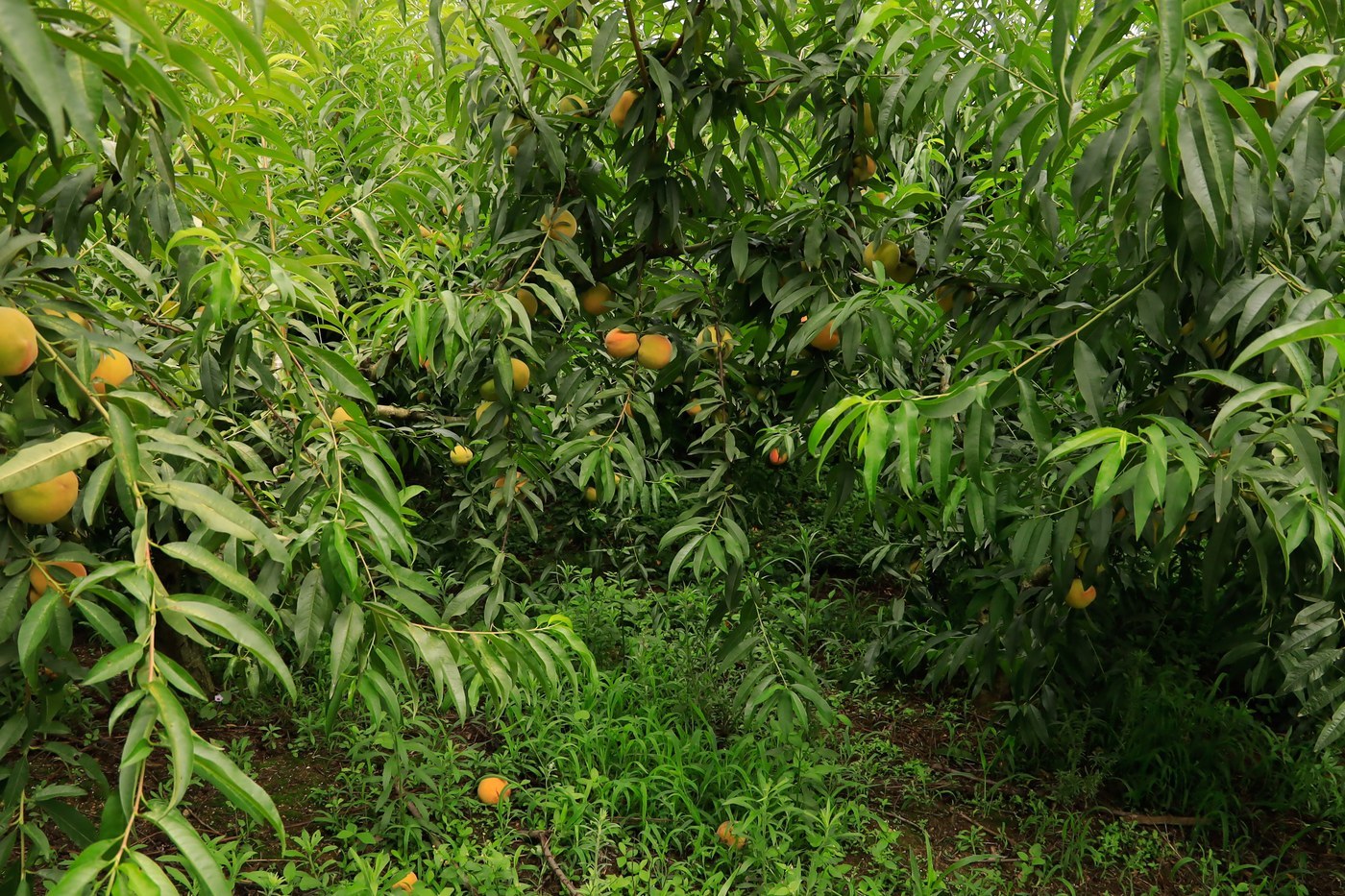
Key Identifying Features
The peach (Prunus persica) is a small deciduous tree in the rose family, instantly recognized in spring by its showy pink blossoms that open before the leaves, and in summer by its velvety-fuzzy stone fruit. The long, narrow, glossy, finely toothed leaves are distinctive even when the tree is bare of flowers and fruit.
- Long, narrow, lance-shaped leaves with fine teeth
- Bright pink flowers opening before the foliage
- Round fuzzy fruit with a single wrinkled stone
- Reddish young twigs and small, dark, sticky leaf buds
Leaves & Stems
Peach leaves are alternate, 8 to 16 cm long, narrow and lance-shaped (lanceolate), tapering to a fine point, with finely serrated margins and a glossy green surface that folds slightly along the midrib. Often there are small glands on the leaf stalk near the blade base, a feature shared with related stone fruits. Twigs are slender, reddish on the sun-exposed side, and green beneath. Bark is thin, reddish-brown to grey, and develops shallow fissures with age. The crown is low and spreading.
Flowers & Fruit
Peach flowers appear early, before or as the leaves emerge, and are typically deep pink to rose, about 2.5 to 3.5 cm across, with five petals, borne singly or in pairs directly on year-old wood. The fruit is a drupe: round, covered in soft fuzz (the skin is downy), ranging yellow to red-blushed, with juicy flesh surrounding a deeply pitted, hard, wrinkled stone. Flesh may cling to the stone (clingstone) or separate (freestone).
How to Tell It Apart from Look-Alikes
- Nectarine: genetically a peach but with smooth, fuzz-free skin; leaves and flowers are essentially identical, so judge by fruit surface.
- Almond (Prunus dulcis): very similar leaves and pink-white flowers, but the fruit is a leathery, dry, fuzzy hull splitting to reveal the familiar almond shell, not juicy flesh.
- Plum (Prunus): leaves are broader and more oval, flowers usually white, and fruit is smooth-skinned with a smoother stone.
The narrow lanceolate leaf plus early pink bloom plus fuzzy juicy drupe confirms peach over almond and plum.
Where You'll Find It
Peaches grow in warm-temperate regions worldwide and need a period of winter chill plus hot summers to fruit. Look for them in home gardens, commercial orchards, and as ornamental flowering trees prized for their spring color. They prefer full sun and well-drained soil and are often kept pruned to an open vase shape.
Quick ID Checklist
- Long narrow lance-shaped finely toothed leaves
- Pink flowers opening before the leaves
- Round fruit with soft downy fuzz
- Hard deeply wrinkled stone inside
- Reddish slender twigs, low spreading crown
- Small glands near the base of the leaf blade
Frequently asked questions
How do I tell a peach from a nectarine tree?
You can't tell them apart by leaves or flowers, since nectarines are a fuzz-free variant of peach. The only reliable difference is the fruit: peaches have downy skin, nectarines are smooth.
How is a peach different from an almond tree?
They look almost identical in leaf and blossom. The fruit gives it away: peach produces juicy fleshy fruit, while almond produces a dry leathery hull that splits to reveal the nut shell.
Why does my peach tree bloom before it has leaves?
Peaches flower on year-old wood early in spring, often before the leaves emerge. This early pink bloom is normal and one of the easiest ways to spot a peach in the landscape.
What are the little bumps on the peach leaf stalk?
Those are nectar glands found near the base of the leaf blade or on the petiole. Their presence and shape help distinguish peaches and related Prunus species.