
How to Care for Peperomia Rosso
An easy, compact houseplant with deeply grooved green leaves and wine-red undersides that thrives in bright indirect light and infrequent watering.
Read the full Peperomia Rosso encyclopedia entry →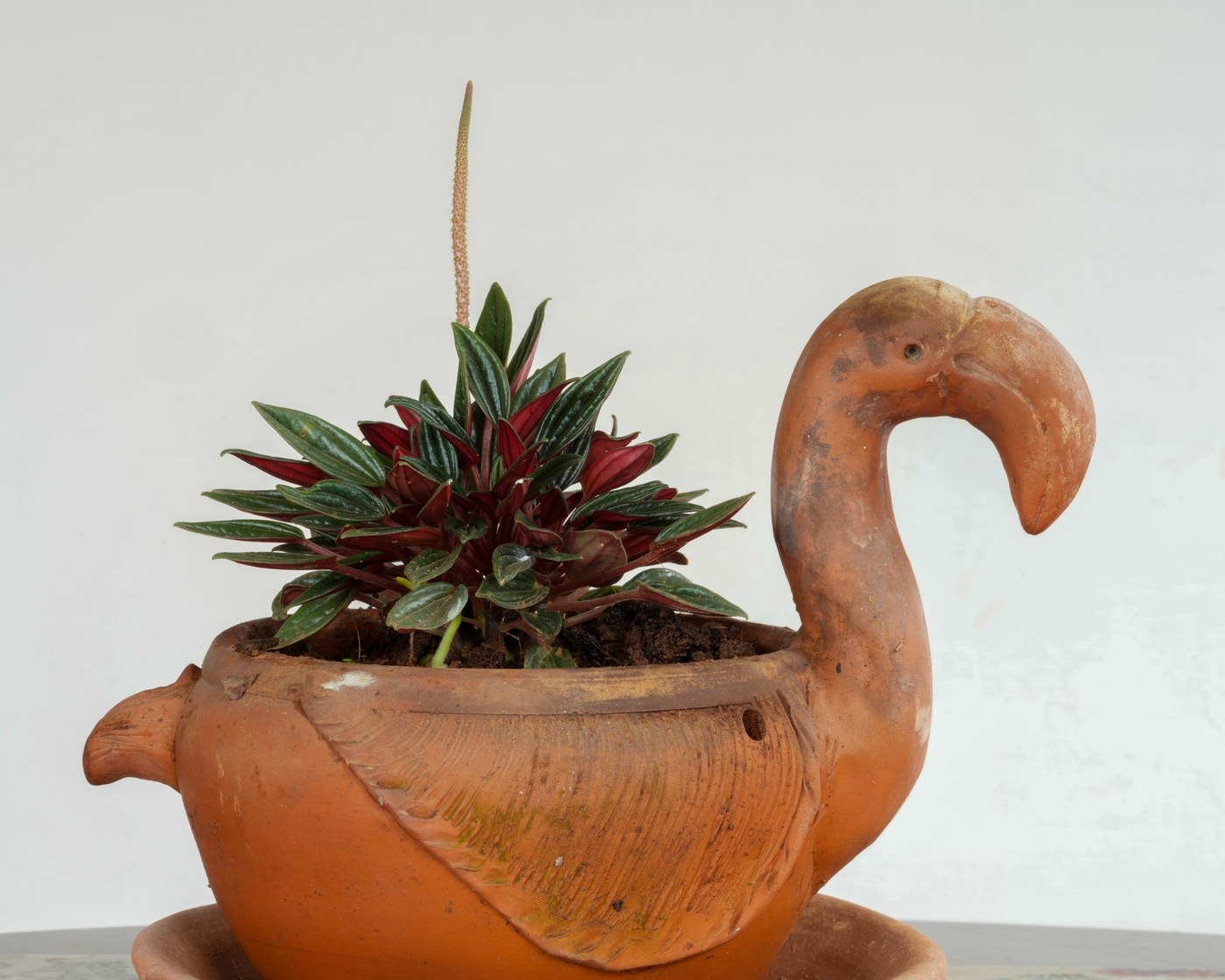
Peperomia Rosso (Peperomia caperata 'Rosso') is a small, slow-growing houseplant treasured for its heavily corrugated, glossy green leaves backed by deep burgundy-red undersides. Compact and undemanding, it is an excellent choice for desks, shelves, and terrariums, and forgives a wide range of home conditions.
Light
Give Rosso medium to bright indirect light. An east-facing window or a spot a few feet back from a brighter window is ideal. It tolerates lower light but loses the intensity of its red coloring and grows sparse; direct midday sun scorches the leaves and fades their sheen. Rotate the pot occasionally so growth stays even and rounded.
Water
Water when the top half of the soil has dried. Rosso stores moisture in its thick, semi-succulent leaves and stems, so it is far more tolerant of underwatering than overwatering. Soak thoroughly, let excess drain away, and empty the saucer. Soggy soil quickly causes stem and root rot, signalled by mushy stems and sudden leaf drop, so err on the dry side, especially in winter.
Soil & Potting
Use a light, airy, fast-draining mix. A blend of standard potting soil lightened with perlite, orchid bark, or coarse sand works well and prevents the compaction that suffocates the fine roots. Rosso has a small root system and prefers a snug pot; choose a container only slightly larger than the root ball, with drainage holes. Terracotta helps wick away excess moisture.
Humidity & Temperature
Rosso appreciates moderate to high humidity but adapts to average indoor levels thanks to its succulent foliage. Keep it in comfortable warm room temperatures and protect it from cold drafts, heating vents, and windowsills that turn chilly at night. It is not frost-hardy and should stay indoors in cool climates.
Feeding
Feed lightly. A balanced houseplant fertilizer diluted to half strength once a month through the active growing season is plenty; this plant is a light feeder and is easily burned by excess salts. Suspend feeding in autumn and winter when growth naturally slows.
Propagation
Rosso propagates readily from leaf and stem cuttings. Take a healthy leaf with a portion of its stem, let the cut end callus for an hour or two, then insert it into moist, airy mix or set it in water until roots and a small plantlet form. Warmth and bright indirect light speed rooting. Whole-leaf propagation is slower but reliable.
Repotting / Pruning
Repot only every two to three years, or when roots fill the pot, moving up just one size. Because it likes to be snug, frequent repotting does more harm than good. Pruning is minimal: pinch back leggy stems to encourage bushiness and remove any faded lower leaves or spent flower spikes to keep the plant tidy.
Common Problems & Pests
Overwatering is the main threat, causing root rot, wilting, and stem collapse; let the soil dry down and improve drainage if this appears. Dropped or scabby leaves can also come from cold or erratic watering. Watch for mealybugs tucked into leaf grooves and the occasional spider mite in dry air; wipe them off or treat with insecticidal soap. Faded red color usually means the light is too low.
Seasonal Care Tips
In spring and summer, water on its dry-down schedule and feed lightly during active growth. In autumn and winter, cut back sharply on watering and stop feeding as the plant rests. Keep it away from cold glass and heat sources through winter, and boost humidity if indoor heating dries the air.
Frequently asked questions
Why are the leaves losing their red color?
Fading red undersides and duller green tops usually mean the light is too low. Move Rosso to a brighter spot with medium to bright indirect light, but avoid harsh direct sun, which scorches the foliage.
How often should I water Peperomia Rosso?
Water only when the top half of the soil has dried out. Its thick, semi-succulent leaves store water, so it handles dryness far better than constant moisture. Overwatering is the leading cause of failure.
My stems are turning mushy and leaves are dropping. What happened?
That is classic overwatering and stem or root rot. Let the soil dry, remove any rotted portions, repot into a fast-draining airy mix, and water more sparingly going forward.
Does Rosso need a big pot?
No. It has a small root system and prefers to be snug, so use a pot only slightly larger than the root ball and repot just once every two to three years.