
How to Care for Periwinkle
Grow Vinca minor as an easy evergreen groundcover for shade, with glossy foliage and violet-blue spring flowers.
Read the full Periwinkle encyclopedia entry →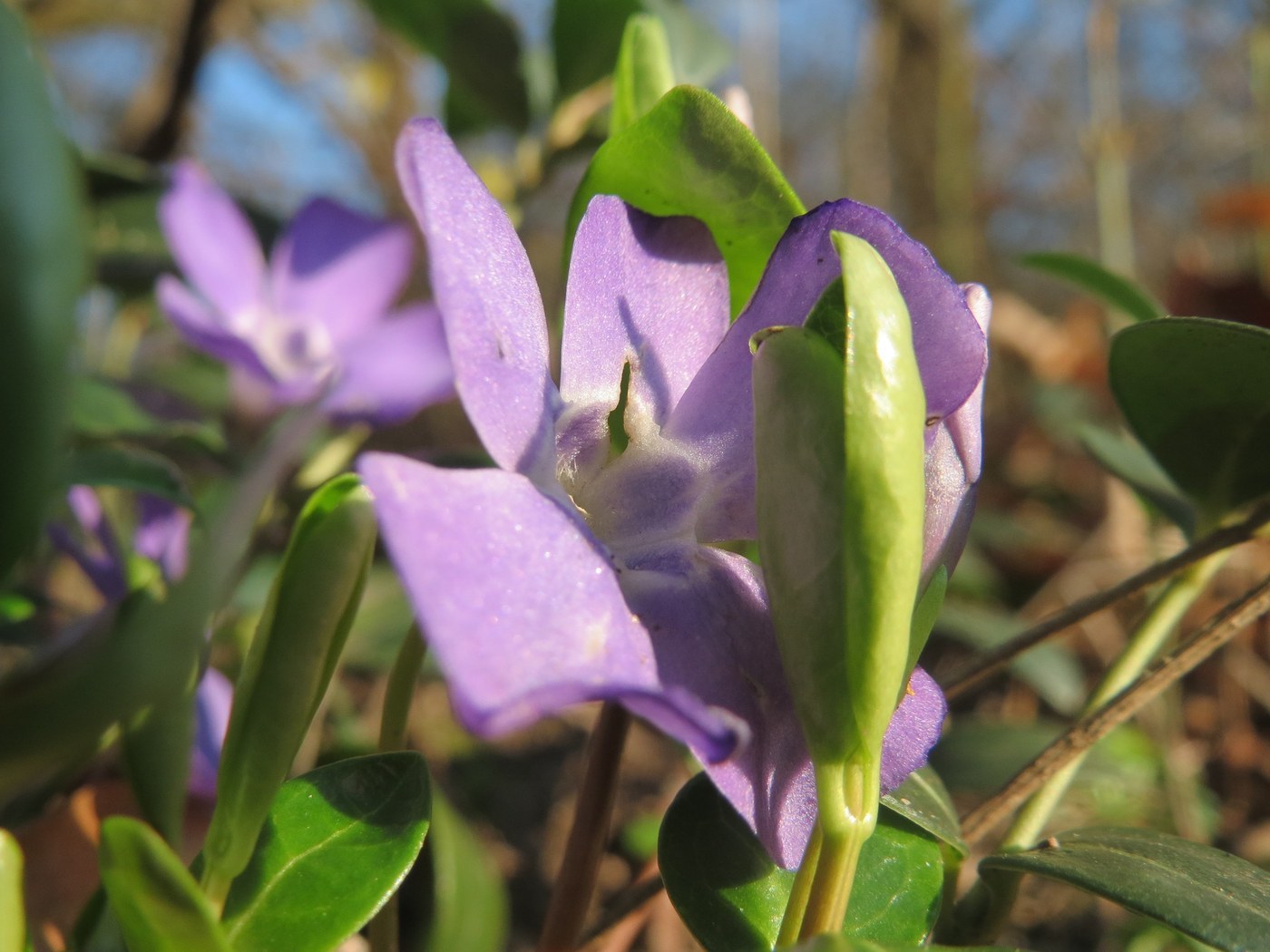
Periwinkle (Vinca minor) is a low, trailing evergreen groundcover prized for its glossy dark leaves and star-shaped violet-blue flowers. It is one of the most forgiving plants for shady spots where little else will grow, spreading steadily to knit together a dense mat.
Light
Periwinkle thrives in part shade to full shade, making it ideal beneath trees and along the north side of buildings. It tolerates dappled sunlight and will flower a bit more freely with a few hours of gentle morning light, but harsh midday sun in hot climates can scorch and bleach the foliage. In deep shade it grows well but blooms more sparsely.
Water
Keep the soil moderately moist while plants establish in their first season. Once rooted in, periwinkle is impressively drought tolerant and copes with dry shade under thirsty tree roots. Water deeply during prolonged dry spells to keep foliage looking fresh, but avoid waterlogged conditions.
Soil & Potting
Almost any average garden soil suits periwinkle, from sandy to clay, provided it drains reasonably. It prefers a slightly acidic to neutral pH and appreciates soil enriched with leaf mold or compost. If grown in containers or hanging baskets, use a general-purpose potting mix and ensure drainage holes are clear.
Humidity & Temperature
This is a cool-temperate plant, hardy through frost and mild winters where it stays evergreen. It tolerates a wide range of humidity and shrugs off cold snaps. In very hot, dry summers it benefits from the cooler microclimate of shade and a mulch layer over the roots.
Feeding
Periwinkle needs little feeding. A single application of balanced slow-release fertilizer or a topdressing of compost in early spring is plenty to encourage lush growth and flowering. Overfeeding produces leggy stems at the expense of a tight habit.
Propagation
Very easy. Trailing stems root wherever nodes touch moist soil, so simply lift rooted sections and replant them. You can also take stem cuttings in spring or early summer, or divide established clumps in spring or autumn. Water new divisions until they establish.
Repotting / Pruning
Shear or mow the patch every year or two in early spring to rejuvenate growth and keep it dense. Trim back runners that stray beyond their bounds, as periwinkle spreads vigorously and can outcompete neighbors. In pots, refresh soil and divide when the container becomes crowded.
Common Problems & Pests
Periwinkle is largely trouble-free. In poorly drained, humid conditions it can develop stem blight or leaf spot fungal diseases; improve air flow and thin congested growth. Watch occasionally for aphids or scale on new shoots. Yellowing leaves usually signal soggy soil.
Seasonal Care Tips
Expect the main flush of bloom in spring, with scattered flowers into summer. Refresh mulch in autumn to protect roots and suppress weeds. Cut back or shear in early spring before new growth to maintain a neat carpet. Keep an eye on its spread, as it colonizes readily.
Frequently asked questions
Will periwinkle grow in full shade?
Yes. It is one of the best groundcovers for full to part shade, though flowering is more generous with a little filtered light.
How do I stop periwinkle spreading too far?
Shear runners back each spring and pull rooted stems from areas where you don't want it. Edging barriers help contain it in beds.
Why isn't my periwinkle flowering much?
Very deep shade or overfeeding with nitrogen can reduce blooms. Give it a touch more filtered light and only a light spring feed.
Can I grow periwinkle in a hanging basket?
Yes. Its trailing stems cascade attractively. Use a general potting mix, keep it in part shade, and water when the top of the mix dries.