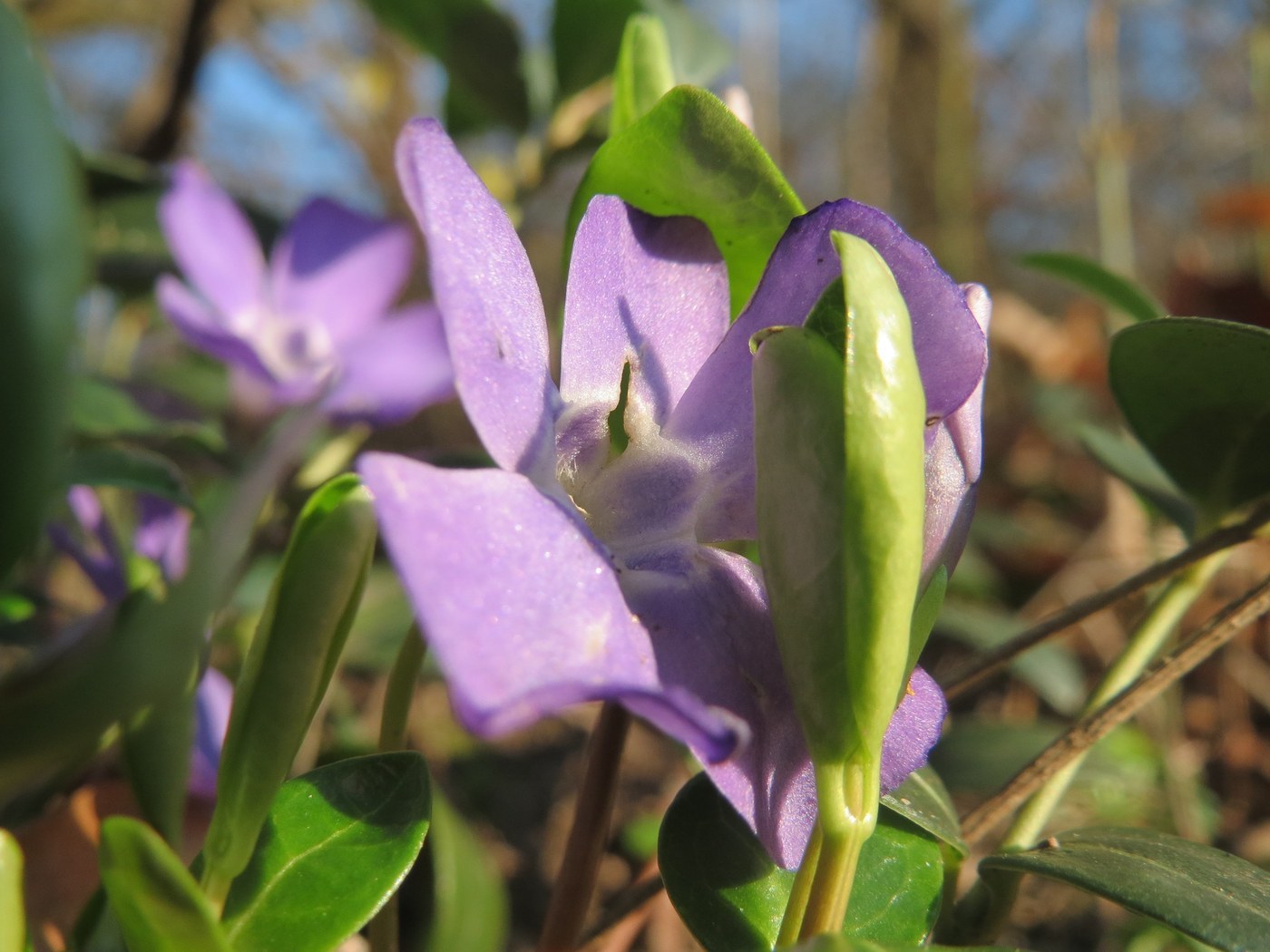
Periwinkle
Vinca minor
Periwinkle is a tough, low evergreen ground cover with glossy leaves and starry blue-violet flowers that thrives in shade. It spreads quickly to carpet difficult areas but can become invasive.
- Light
- Part shade to full shade
- Water
- Moderate; tolerates dry shade
- Difficulty
- Easy
Got a plant like this?
Identify any plant from a photo, free.
Overview
Periwinkle refers chiefly to Vinca minor (lesser periwinkle) and Vinca major (greater periwinkle), trailing evergreen ground covers in the dogbane family (Apocynaceae). They are valued for blanketing shady ground with glossy foliage and pinwheel-shaped blue-violet flowers.
Not to be confused with the tropical annual Madagascar periwinkle (Catharanthus roseus), the true vincas are hardy perennials that root as their stems creep, making them effective for erosion control and underplanting.
While useful and pretty, their vigorous spread means Vinca can escape gardens and is considered invasive in some regions, smothering native woodland flora.
How to identify it
Periwinkle is recognized by its trailing evergreen habit and five-lobed flowers.
- Flowers: Flat, five-lobed, pinwheel-shaped blooms, usually blue-violet (sometimes white or purple)
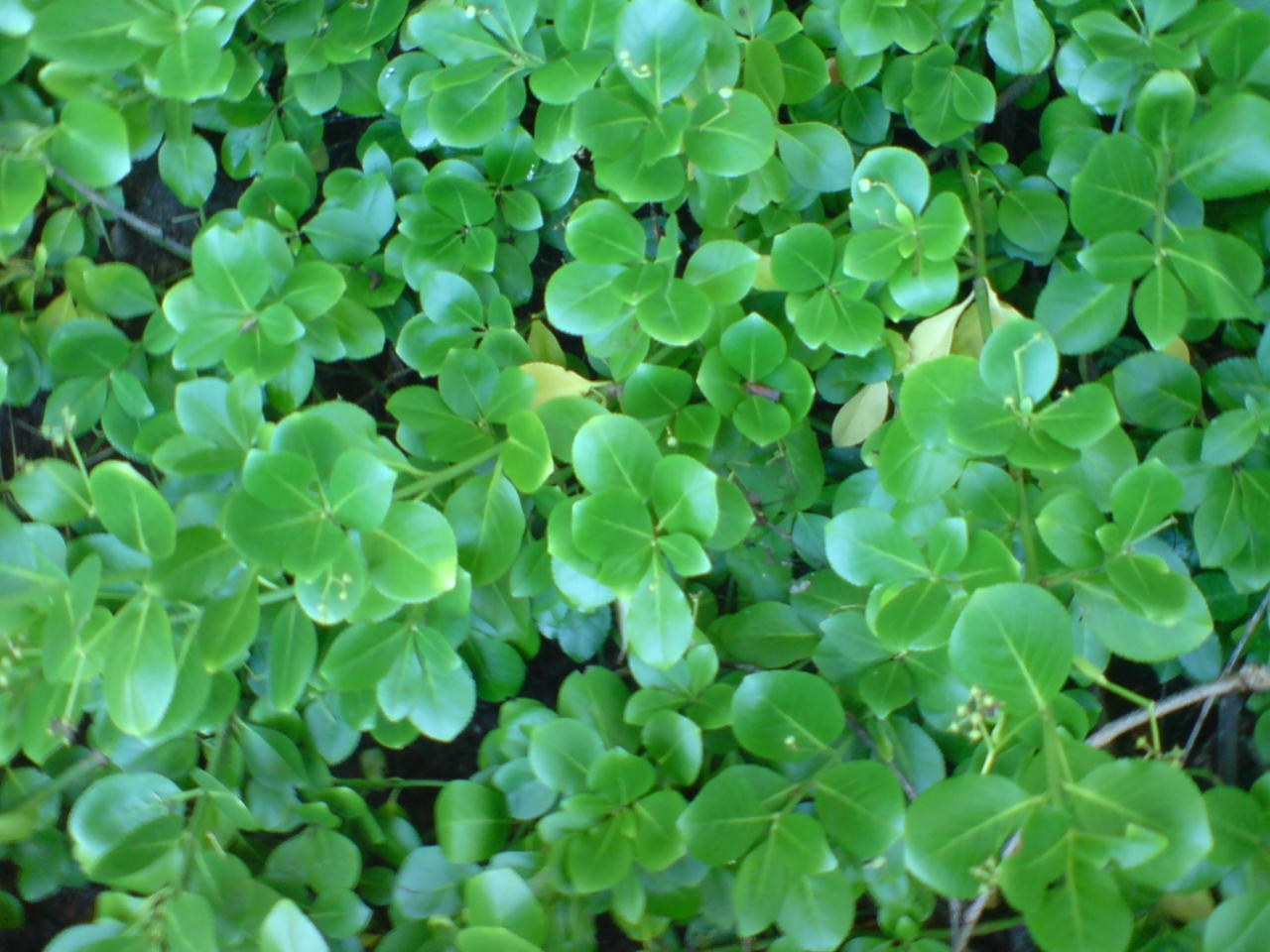
- Leaves: Opposite, glossy, leathery, evergreen, oval, dark green (sometimes variegated)
- Stems: Slender, trailing, rooting where they touch the soil
- Habit: Low, mat-forming ground cover, generally 4-8 in tall but spreading widely
- Bloom time: Mainly spring, with sporadic flowers later
Care & growing
Periwinkle is exceptionally easy and tolerant of difficult sites.
- Light: Partial to full shade; tolerates sun with adequate moisture
- Water: Moderate; established plants tolerate dry shade well
- Soil: Adaptable to most soils; prefers moist, well-drained, humus-rich ground
- Temperature: Hardy, V. minor in USDA zones 4-9
- Feeding: Rarely needed; thrives on neglect
- Propagation: Extremely easy by division or rooted stem cuttings
Shear plants in spring to keep them dense and tidy. Because it spreads aggressively, site it where its vigor is welcome or contain it to prevent escape into natural areas.
Habitat & origin
Vinca minor and Vinca major are native to Europe, northwest Africa, and southwest Asia, where they grow in woodlands, hedgerows, and shaded banks. Their tolerance of shade and poor soil suits them to forest-floor conditions.
They have been planted worldwide as ground cover and have naturalized and become invasive in parts of North America and elsewhere, where they form dense mats in woodlands and displace native plants. They are commonly grown to cover shady slopes and areas under trees.
Frequently asked questions
Is periwinkle invasive?
Yes, Vinca minor and especially Vinca major can spread aggressively and are considered invasive in some regions, so plant them where their spread is contained.
Will periwinkle grow in shade?
Yes, periwinkle is one of the best evergreen ground covers for partial to full shade, including dry shade under trees.
How do I keep periwinkle from taking over?
Shear or mow it to control spread, install edging or barriers, and pull or dig escaping runners before they root widely.
What do the flowers look like?
They are flat, five-lobed, pinwheel-shaped blooms, usually blue-violet but sometimes white or purple, appearing mainly in spring.
Periwinkle guides
In-depth guides for identifying, growing, and caring for Periwinkle.
How to Care for Periwinkle
Grow Vinca minor as an easy evergreen groundcover for shade, with glossy foliage and violet-blue spring flowers.
Periwinkle Identification Guide
Identify periwinkle (Vinca) by its trailing evergreen stems, glossy opposite leaves, and five-lobed pinwheel flowers in blue-violet. Includes how to separate Vinca minor from Vinca major.