Persimmon Tree Identification Guide
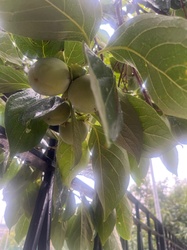
Identify persimmon trees (Diospyros) by their blocky checkered bark, glossy oval leaves, and round orange fruit with a distinctive four-lobed leafy cap.
Read the full Persimmon Tree encyclopedia entry →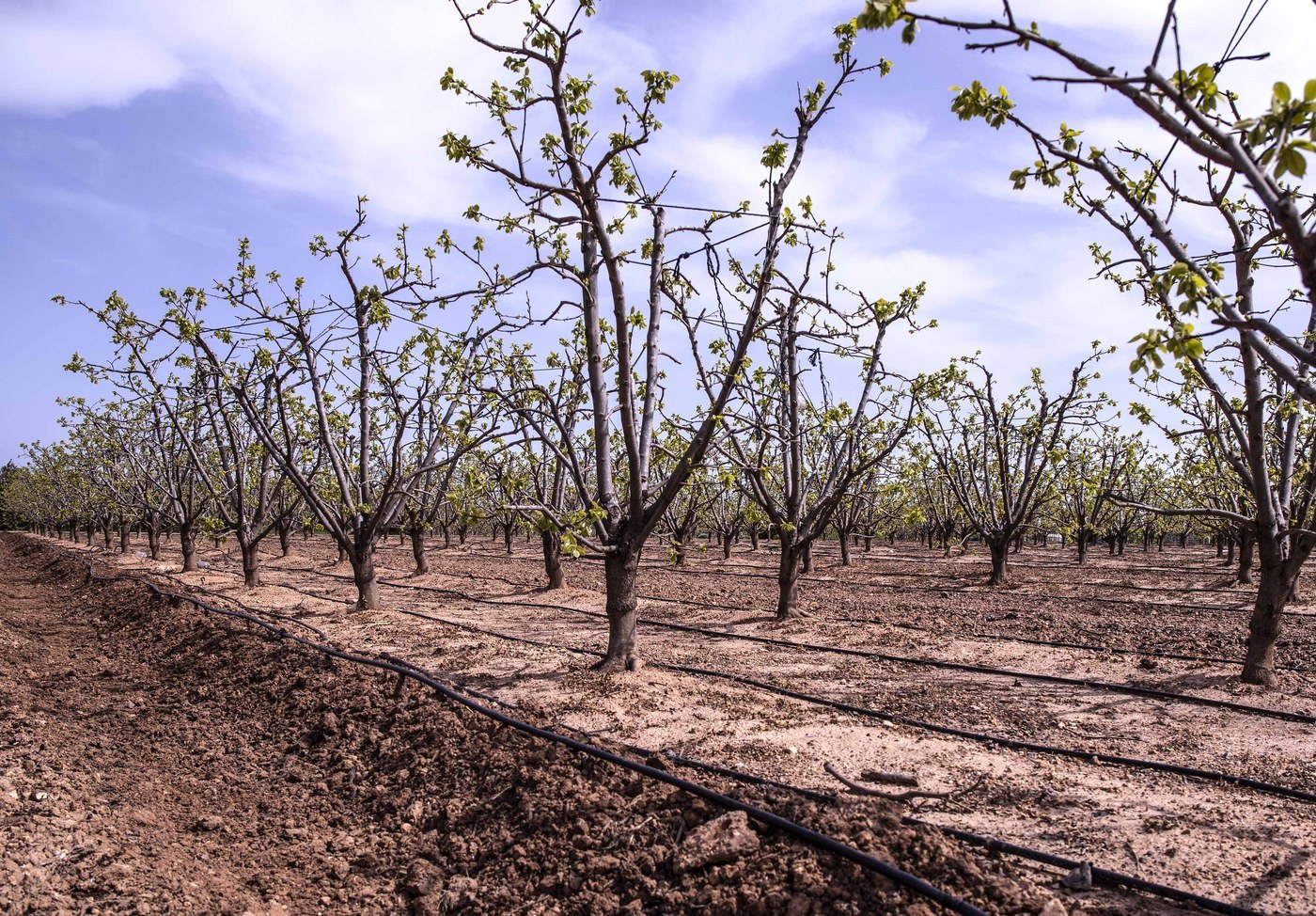
Key Identifying Features
Persimmons (Diospyros species, chiefly Asian D. kaki and American D. virginiana) are deciduous trees known for their glossy oval leaves, brilliant fall color, and bright orange round fruit topped by a persistent four-lobed leafy calyx. American persimmon has distinctive blocky, deeply checkered (alligator-skin) bark. Fruit often hangs on bare branches after leaf-fall, a striking ID feature.
Leaves & Stems
- Leaves are alternate, simple, oval to elliptical, 7-18 cm, with smooth (untoothed) margins and a glossy dark green upper surface, paler below.
- Foliage turns yellow, orange, and red in autumn.
- American persimmon bark is dark gray-brown, broken into thick square blocks like alligator hide; Asian persimmon bark is less dramatically checkered.
Flowers & Fruit
- Flowers are small, bell-shaped, creamy-yellow to greenish, often inconspicuous, appearing in late spring; trees are usually dioecious (separate male and female).
- Fruit is a round to slightly flattened berry, bright orange to reddish, 2-8 cm (Asian kaki much larger than the small American fruit).
- A key trait: the fruit is capped by a prominent persistent green-brown four-lobed calyx (leafy star).
- Unripe fruit is intensely astringent, becoming soft and sweet when fully ripe.
How to Tell It Apart from Look-Alikes
- Tomato/other orange fruits: persimmon hangs on a woody tree and bears the distinctive four-lobed leafy cap.
- Black gum/tupelo (Nyssa): similar glossy untoothed leaves and great fall color, but lacks the orange capped fruit and checkered blocky bark.
- Asian (kaki) vs American (virginiana): kaki has large fruit and bigger leaves; American has small fruit, smaller leaves, and pronounced alligator-block bark.
- The orange berry + four-lobed calyx + (in American) checkered bark is unmistakable.
Where You'll Find It
American persimmon is native to the eastern and central United States, found in woods, old fields, fencerows, and roadsides. Asian/kaki persimmon is cultivated in gardens and orchards in warm-temperate regions worldwide. Both prefer full sun and tolerate a range of soils; the fruit often persists on bare winter branches.
Quick ID Checklist
- Deciduous tree with glossy, smooth-edged oval leaves
- Brilliant orange/red fall color
- Blocky, checkered 'alligator' bark (American persimmon)
- Round orange fruit with a persistent four-lobed leafy cap
- Fruit astringent until soft-ripe; often hangs after leaf drop
Frequently asked questions
What is the leafy thing on top of a persimmon?
It is the persistent calyx, a green-brown four-lobed star-shaped cap left from the flower. This prominent leafy cap on a round orange fruit is one of the surest ways to identify a persimmon.
How do I recognize an American persimmon in the wild?
Look for the distinctive bark, which is dark and broken into thick square blocks like alligator skin, plus glossy oval untoothed leaves and small orange capped fruit that often persists on bare branches into winter.
Why is my persimmon mouth-puckeringly bitter?
Astringent persimmon varieties are full of tannins when firm and must be allowed to ripen until very soft to become sweet. Eating them firm causes a strong puckering, drying sensation; this astringency is normal.
How do Asian and American persimmons differ?
Asian (kaki) persimmons have large fruit and bigger leaves and are usually orchard-grown, while American persimmons have small fruit, smaller leaves, and very pronounced blocky checkered bark, growing wild across the eastern US.
Persimmon Tree identified by the community
Recent Persimmon Tree specimens identified with Plant Identifier.