Philodendron Identification Guide
Identify Philodendrons by their aroid leaf traits, smooth petioles, cataphylls on new growth, and the difference between vining and self-heading types.
Read the full Philodendron encyclopedia entry →
Key Identifying Features
Philodendron is a large genus of tropical aroids (family Araceae) with hundreds of species. Across the genus, look for:
- Glossy, often heart-shaped leaves that emerge from a cataphyll (a papery sheath)
- A smooth, rounded petiole (leaf stalk) — usually not grooved like pothos
- Aerial roots at the nodes for climbing
- New leaves frequently emerge reddish, bronze, or pink before turning green
Leaves & Stems
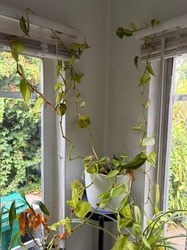
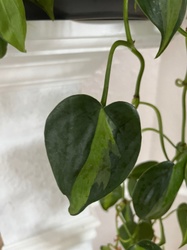
Leaf shape varies enormously, but most philodendrons share a soft, somewhat thin, matte-to-glossy texture with a pronounced drip tip. Vining types like P. hederaceum (Heartleaf) have heart-shaped leaves on slender trailing stems; self-heading types like P. bipinnatifidum / P. selloum form a large rosette of deeply lobed, split leaves. A key diagnostic is the cataphyll: a sheath that protects each new leaf and then withers or persists (unlike Monstera/pothos in detail).
The petiole is typically smooth and round in cross-section, an important way to separate philodendron from pothos (whose petiole is grooved/indented). Stems produce aerial roots at nodes.
Flowers & Fruit
As aroids, philodendrons bloom with a spathe-and-spadix inflorescence: a hood-like spathe (often green, white, or maroon) surrounding a fleshy spadix bearing tiny flowers. Flowering is uncommon indoors but, when it occurs, confirms membership in the aroid family. Fruits are small berries on the spadix, rarely seen in cultivation.
How to Tell It Apart from Look-Alikes
- Pothos (Epipremnum aureum): leaves are thicker and waxier, new growth unfurls from an existing leaf (no cataphyll), and the petiole is grooved. Philodendron leaves are softer, emerge from a cataphyll, and have a smooth petiole.
- Monstera: aroid relative, but mature leaves develop fenestrations (holes/splits) and large size; many philodendrons stay unsplit.
- Syngonium (Arrowhead): arrow-shaped leaves with a distinct cataphyll too, but usually paler, more arrowhead-shaped, and softer.
Use the cataphyll on new growth + smooth round petiole + reddish new leaves trio to land on Philodendron.
Where You'll Find It
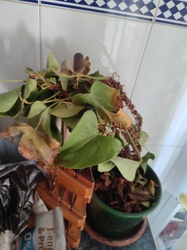
Native to tropical Central and South America, philodendrons are among the most popular houseplants worldwide — trailing from shelves, climbing moss poles, or sitting as large floor specimens. Outdoors they grow in USDA zones 9-11. They tolerate low to bright indirect light, which makes them very forgiving indoors.
Quick ID Checklist
- New leaves emerge from a papery cataphyll sheath
- Smooth, rounded petiole (not grooved like pothos)
- Aerial roots at the nodes
- New growth often red, bronze, or pink
- Either vining (heart-shaped leaves) or self-heading (split leaves)
Frequently asked questions
How do I tell a Philodendron from a Pothos?
Check the new growth and petiole. Philodendron new leaves unfurl from a papery cataphyll sheath and have a smooth, round petiole, while pothos has a grooved petiole and new leaves emerge from an existing leaf with no cataphyll.
Why do new Philodendron leaves come out reddish or pink?
Many philodendrons produce new leaves in bronze, red, or pink tones that mature to green as chlorophyll develops. It is a normal and often attractive feature of the genus.
What is the difference between vining and self-heading philodendrons?
Vining types, like Heartleaf Philodendron, trail or climb with heart-shaped leaves. Self-heading types, like P. selloum, stay in one spot and form a large clump of big, deeply lobed leaves.
Philodendron identified by the community
Recent Philodendron specimens identified with Plant Identifier.