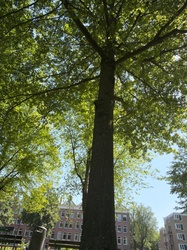
Pin Oak Identification Guide
Identify pin oak by its deeply U-notched bristle-tipped leaves, pyramidal form, and distinctive downward-sweeping lower branches.
Read the full Pin Oak encyclopedia entry →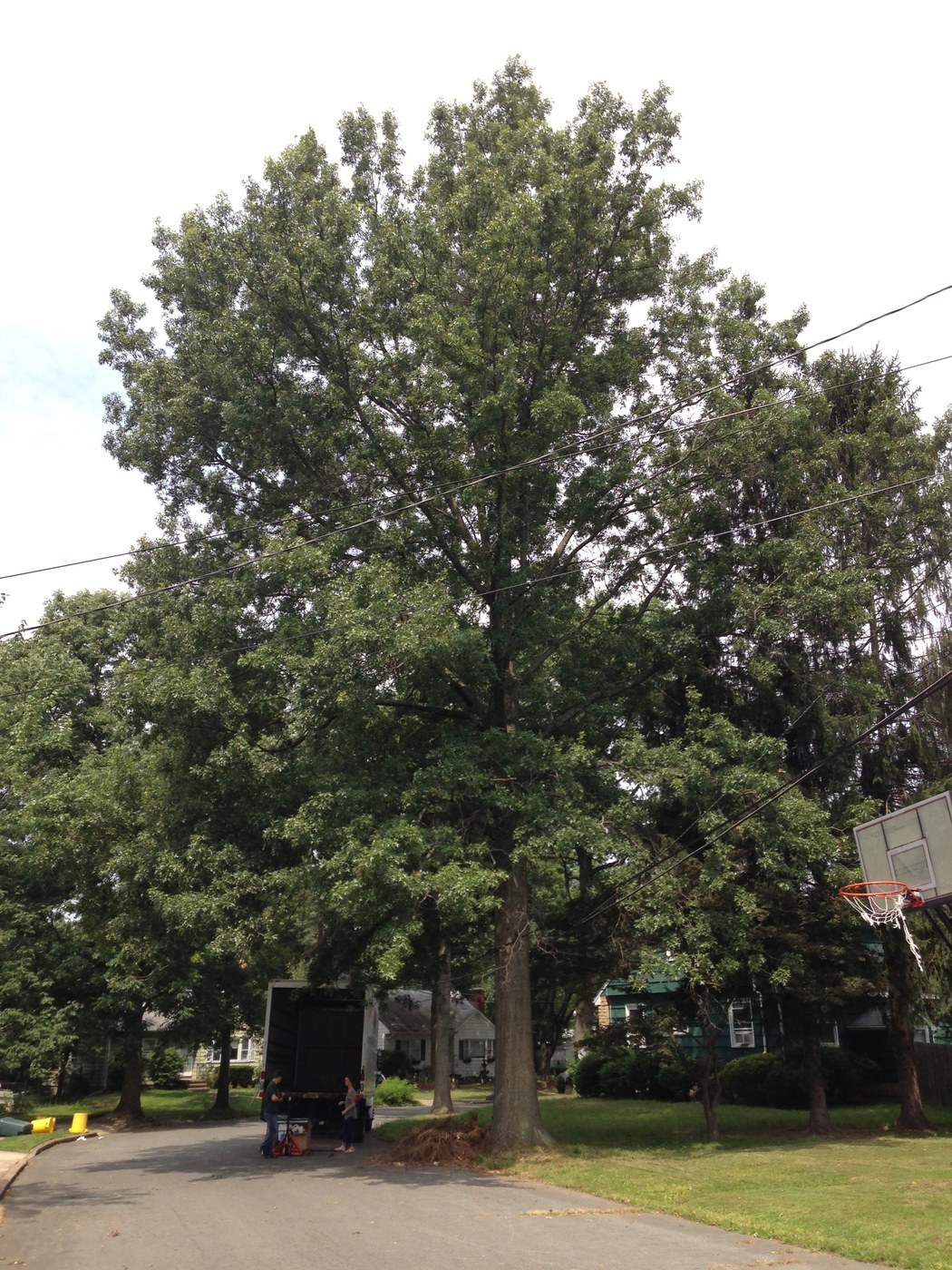
Key Identifying Features
Pin oak (Quercus palustris) is a fast-growing member of the red oak group, popular as a street and landscape tree. Its name may come from the many short pin-like dead twigs along the trunk and branches.
- Deeply cut leaves with U-shaped sinuses and bristle-tipped lobes
- A distinctly pyramidal crown when young
- Lower branches droop downward, middle branches horizontal, upper branches ascending
- Small, nearly round, flat-capped acorns
Leaves & Stems
Leaves are 8-15 cm long with 5-7 lobes separated by deep, wide, rounded (U-shaped) sinuses that cut nearly to the midrib. Each lobe ends in several sharp bristle tips, marking it as a red oak. The leaf surface is glossy dark green above and paler below, with small tufts of pale hairs in the vein axils underneath. Foliage turns scarlet to russet-bronze in autumn and often clings into winter (marcescent) on young trees.
The namesake feature is the abundance of thin, short, dead pin-like twigs persisting on the inner branches and lower trunk. Bark is smooth and gray-brown when young, developing shallow ridges with age.
Flowers & Fruit
Yellow-green catkins appear in spring. Acorns are small (about 1 cm), nearly round, light brown often with darker stripes, capped by a thin, shallow saucer-like cup. Like other red oaks, acorns take two seasons to mature and are quite bitter.
How to Tell It Apart from Look-Alikes
- Northern red oak: Larger leaves with shallower sinuses and larger acorns; lacks the drooping lower limbs and persistent pin twigs.
- Scarlet oak: Very similar deeply cut bristle-tipped leaves, but acorns have a deeper cup with concentric rings, and lower branches do not droop as strongly.
- Black oak: Leaves thicker and more variable, with a deeper, scaly acorn cup.
The drooping lower branches plus tiny saucer-capped round acorns are the best combined tells.
Where You'll Find It
Native to the eastern and central U.S. floodplains and bottomlands (the species name palustris means "of marshes"). It tolerates wet, poorly drained, acidic soils, which makes it a common choice for parks, parking lots, and streets, though it suffers chlorosis on alkaline soils.
Quick ID Checklist
- Deeply cut leaves, U-shaped sinuses, bristle-tipped lobes
- Pyramidal crown with drooping lower branches
- Many short dead pin-like twigs on inner branches
- Small, round, flat shallow-capped acorns
- Scarlet to bronze fall color, leaves often persisting
Frequently asked questions
How do I tell pin oak from scarlet oak?
Check the acorn cup. Pin oak acorns sit in a thin, shallow saucer, while scarlet oak acorns have a deeper bowl with concentric rings. Pin oak also has strongly drooping lower branches.
Why are the lower branches drooping?
It is a natural growth habit of pin oak. Lower limbs sweep downward, middle limbs are horizontal, and upper limbs angle upward, giving a layered look.
What are the pin-like twigs?
Pin oak retains many short, thin dead twigs along its trunk and inner branches, which is one source of the name and a helpful winter ID clue.
Is pin oak in the red or white oak group?
It is a red oak, indicated by the bristle tips on the leaf lobes and acorns that take two years to mature.
Pin Oak identified by the community
Recent Pin Oak specimens identified with Plant Identifier.