Pin Oak
Quercus palustris
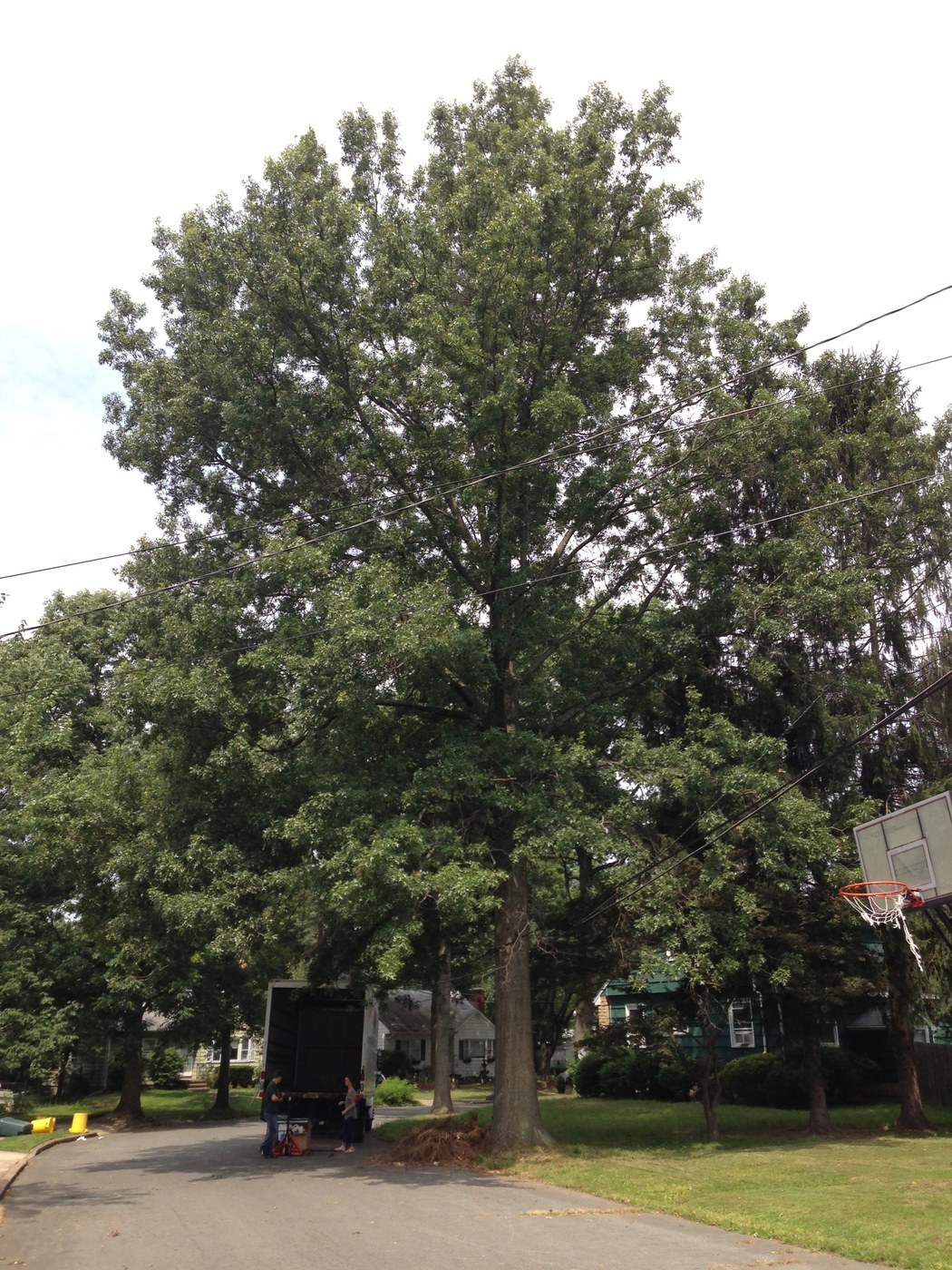
Pin oak is a fast-growing deciduous oak known for its distinctive layered branching, deeply lobed bristle-tipped leaves, and brilliant red fall color, making it a popular street and park tree.
- Light
- Full sun
- Water
- Moderate; tolerates wet soil
- Difficulty
- Easy
Got a plant like this?
Identify any plant from a photo, free.
Overview
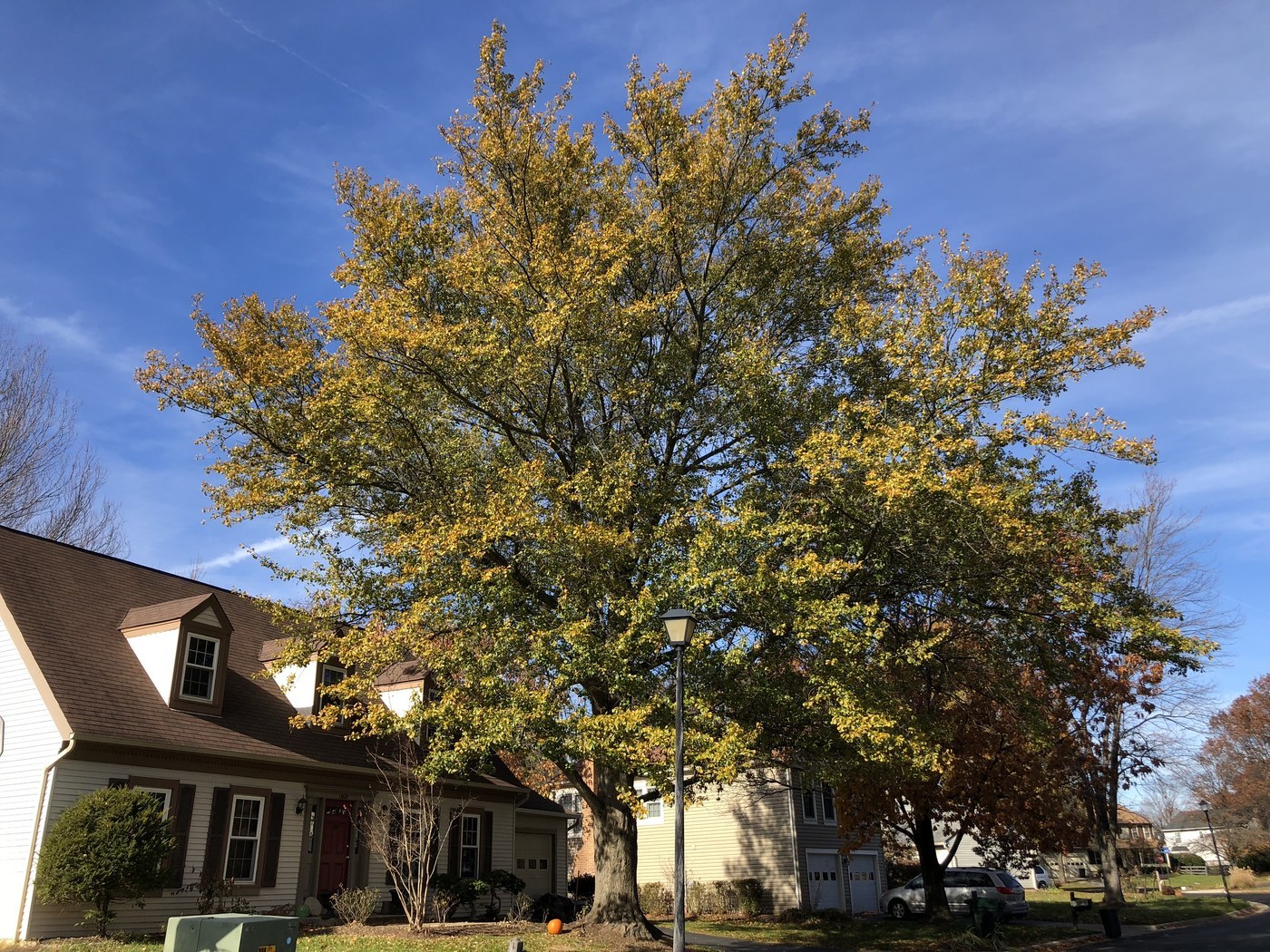
Pin oak (Quercus palustris) is a member of the red oak group native to eastern and central North America. Its species name palustris means "of marshes," reflecting its tolerance of wet bottomland soils.
It is one of the most commonly planted oaks for streets and parks because it grows quickly, transplants easily, and develops a neat, pyramidal shape when young.
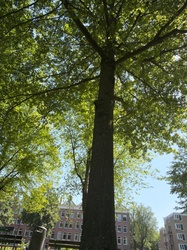
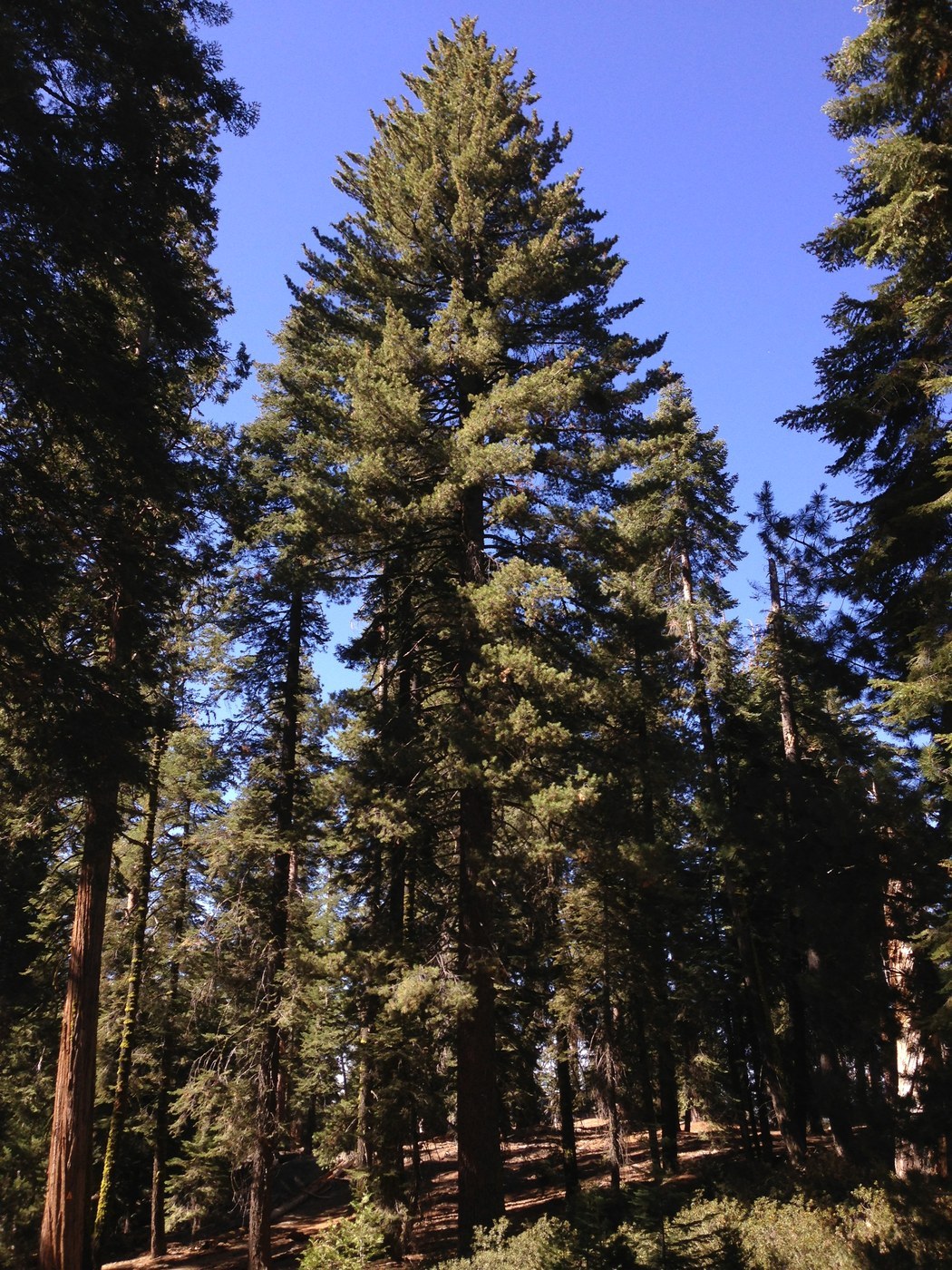
A signature trait is its tiered branching: upper limbs angle upward, middle limbs stand horizontal, and lower limbs droop toward the ground.
How to identify it
A medium-large deciduous oak with a distinctive branching pattern.
- Leaves: glossy green, 5-16 cm, with 5-7 deeply cut lobes separated by wide U-shaped sinuses; tips bristle-pointed; turn russet to bright red in fall
- Branching: ascending upper branches, horizontal middle branches, and downward-sweeping lower branches — a key ID feature
- Acorns: small, nearly round, ~1.5 cm, with a thin shallow cap; striped
- Bark: smooth gray-brown when young, developing shallow ridges with age
- Size: 18-22 m tall with a pyramidal to oval crown
Care & growing
An easy, adaptable shade tree, with one important caveat about soil pH.
- Light: full sun
- Water: moderate; tolerates periodically wet and poorly drained soils better than most oaks
- Soil: prefers moist, acidic soil — alkaline soils cause iron chlorosis (yellowing leaves)
- Temperature: hardy in USDA zones 4-8
- Feeding: usually unnecessary in acidic soil; correct chlorosis with iron and pH adjustment
- Propagation: from acorns sown in fall; transplants more readily than most oaks due to fibrous roots
Habitat & origin
Native to the eastern and north-central United States and adjacent Canada, ranging from the East Coast west to the Great Plains. In the wild it favors wet bottomlands, floodplains, and poorly drained clay flats.
Widely planted far beyond its native range as a street, lawn, and park tree, valued for fast establishment and reliable fall color.
Frequently asked questions
Why are my pin oak's leaves turning yellow?
Most often it's iron chlorosis caused by alkaline soil. Pin oak needs acidic soil to absorb iron; raise availability by lowering soil pH or applying chelated iron.
How do I tell pin oak from other red oaks?
Look for its tiered branching — upswept top, horizontal middle, drooping lower limbs — plus deeply cut leaves with wide sinuses and small round acorns.
Does pin oak grow fast?
Yes. It is one of the faster-growing oaks, often adding 0.6 m or more per year when young, which is why it's popular for landscaping.
Why does it keep dead lower branches?
Pin oak naturally retains its lowest drooping branches longer than many trees; these can be pruned for clearance, though they help give the tree its characteristic look.
Pin Oak guides
In-depth guides for identifying, growing, and caring for Pin Oak.
How to Care for Pin Oak
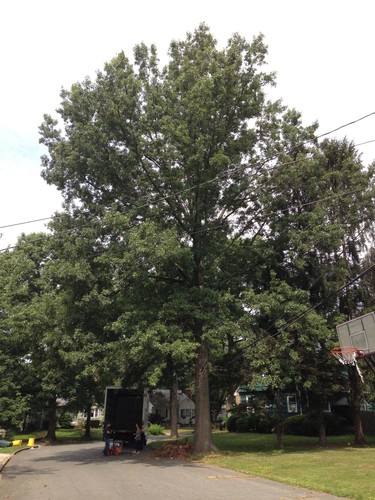
Grow a fast, pyramidal Pin Oak in full sun and acidic, moisture-retentive soil, with rich fall color and tolerance for wet ground.
Pin Oak Identification Guide
Identify pin oak by its deeply U-notched bristle-tipped leaves, pyramidal form, and distinctive downward-sweeping lower branches.
Pin Oak identified by the community
Real specimens identified with Plant Identifier.