
Pineapple Guava Identification Guide
Identifying feijoa (pineapple guava) by its silver-backed leaves, showy red-and-white flowers, and green egg-shaped fruit.
Read the full Pineapple Guava encyclopedia entry →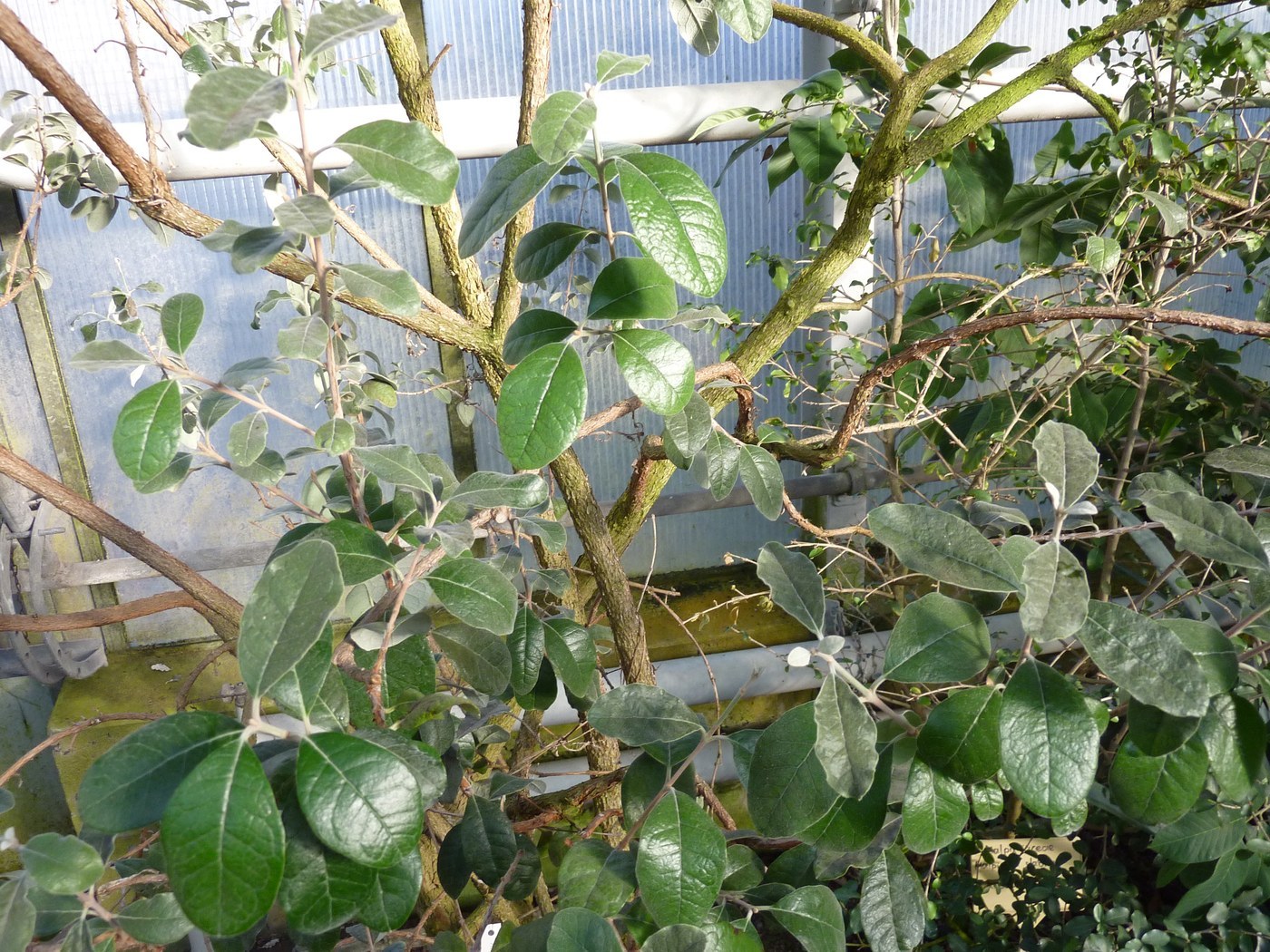
Key Identifying Features
Pineapple guava or feijoa (Acca sellowiana, formerly Feijoa sellowiana) is an evergreen shrub or small tree in the myrtle family, grown for its showy flowers and green, aromatic fruit. The two standout ID traits are the leaves that are glossy green above and silvery-white beneath, and the unusual red-and-white flowers with showy stamens.
- Evergreen shrub/small tree, 1–5 m tall, dense and bushy
- Leaves dark green above, felted silver-gray below
- Egg-shaped green fruit that stays green when ripe
Leaves & Stems
Leaves are opposite, oval, leathery, 4–7 cm long, glossy deep green on top and conspicuously silvery-white and softly hairy underneath — flip a leaf and the pale, fuzzy underside is an instant tell. Young stems and the leaf undersides share this whitish, downy felt. The bark is pale gray and the overall habit is rounded and twiggy.
Flowers & Fruit
Flowers are striking: each has four fleshy petals, white outside and deep purple-red inside, surrounding a dramatic brush of long crimson stamens tipped with yellow pollen. They appear in late spring to early summer. The fruit is an oval to oblong berry 3–7 cm long, with a waxy, dull-green skin that remains green even when ripe, often with a slight bluish bloom. Inside is granular, jelly-like cream-colored pulp. Ripe fruit usually drops to the ground.
How to Tell It Apart from Look-Alikes
- True guava (Psidium guajava): leaves are green on both sides with prominent sunken veins; flowers are all-white; fruit turns yellow. Feijoa fruit stays green and the leaf is silver beneath.
- Olive (Olea europaea): also silver-backed leaves, but olive leaves are narrow and lance-shaped and it bears small olives, not green egg-shaped berries.
- Other myrtles: lack the big red-and-white powderpuff flower.
- The silver leaf underside + red-and-white flower + green oval fruit combo is conclusive.
Where You'll Find It
Native to the highlands of southern Brazil, Uruguay, and northern Argentina. Widely grown in New Zealand, California, the Mediterranean, and mild-temperate gardens (hardy to about USDA zone 8). Popular as an ornamental hedge and landscaping shrub, so it's common in gardens.
Quick ID Checklist
- Bushy evergreen with opposite leathery leaves
- Leaf glossy green above, silver-felted below
- Red-and-white flowers with long crimson stamens
- Green egg-shaped fruit that stays green when ripe
- Granular pulp; ripe fruit drops
- Mild-temperate climates
Frequently asked questions
What is the quickest way to identify pineapple guava?
Flip a leaf over — feijoa leaves are glossy green on top and distinctly silvery-white and fuzzy underneath, unlike true guava, which is green on both sides.
Does the fruit turn yellow when ripe?
No. Pineapple guava fruit stays green even when fully ripe; the best sign of ripeness is when the fruit softens slightly and drops to the ground on its own.
How is it different from true guava?
True guava (Psidium) has leaves green on both sides, all-white flowers, and yellow fruit, while feijoa has silver-backed leaves, red-and-white flowers, and green fruit.
What do the flowers look like?
Each flower has four fleshy petals that are white on the outside and deep purple-red on the inside, surrounding a showy brush of long crimson stamens tipped with yellow pollen, appearing in late spring to early summer.