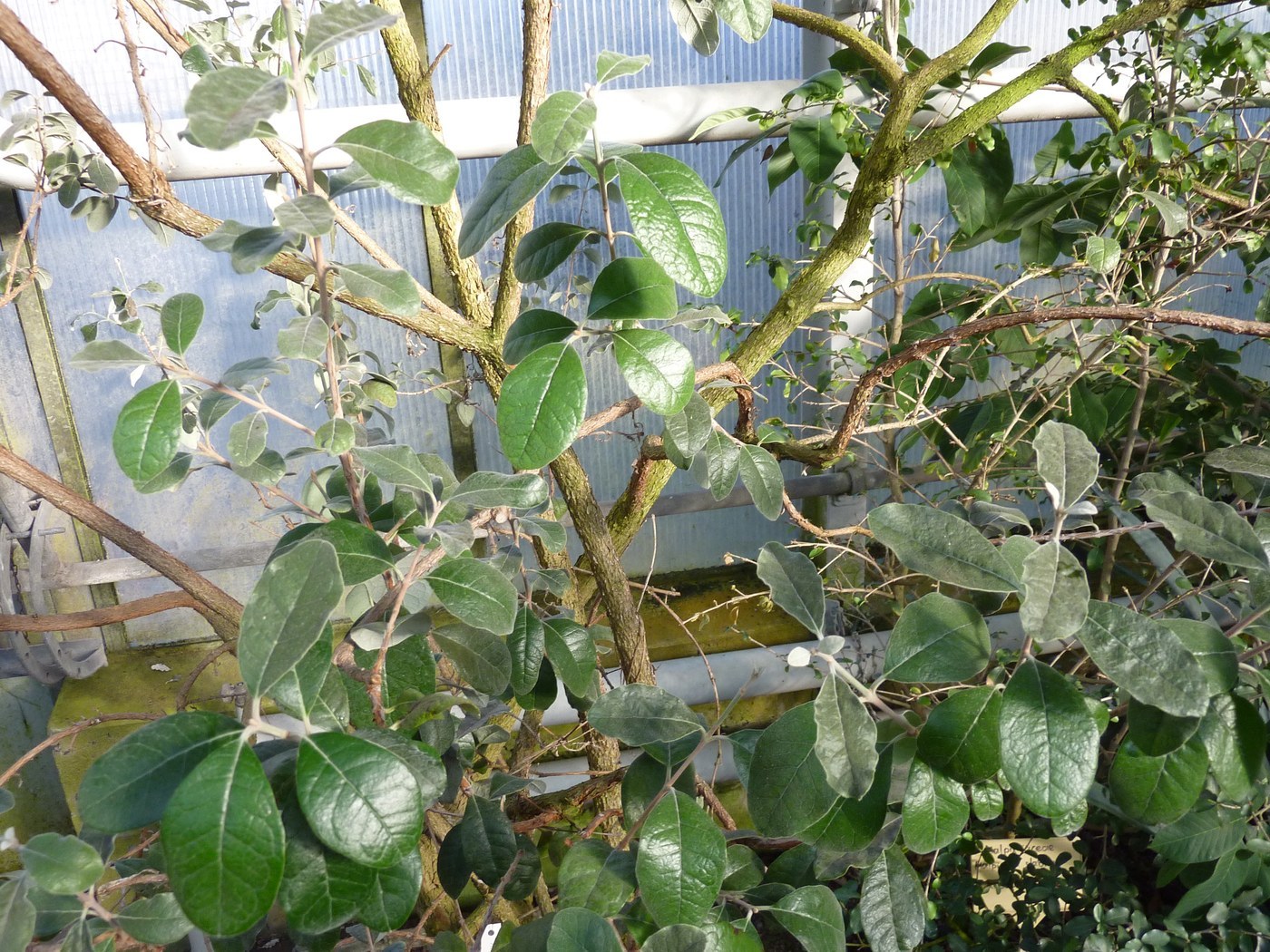
Pineapple Guava
Feijoa sellowiana
Pineapple guava (feijoa) is a fruiting evergreen shrub with showy red-stamened flowers and aromatic green fruit. It is hardy, drought-tolerant, and ornamental.
- Light
- Full sun to part shade
- Water
- Moderate; drought-tolerant once established
- Difficulty
- Easy
Got a plant like this?
Identify any plant from a photo, free.
Overview
Pineapple guava, or feijoa (Feijoa sellowiana, also classified as Acca sellowiana), is a fruiting evergreen shrub or small tree in the myrtle family. It is grown both as a fruiting plant and as a handsome, low-maintenance ornamental.
The striking flowers have fleshy white-and-magenta petals surrounding a burst of long red stamens. The egg-shaped green fruit ripens in fall.
Feijoa is more cold-hardy than most subtropical fruiting shrubs, drought-tolerant once established, and tolerant of pruning, making it useful as a hedge, screen, or specimen plant.
How to identify it
- Fruit: Oval, gray-green, 1.5–3 in long, with granular pulp and a perfumed aroma
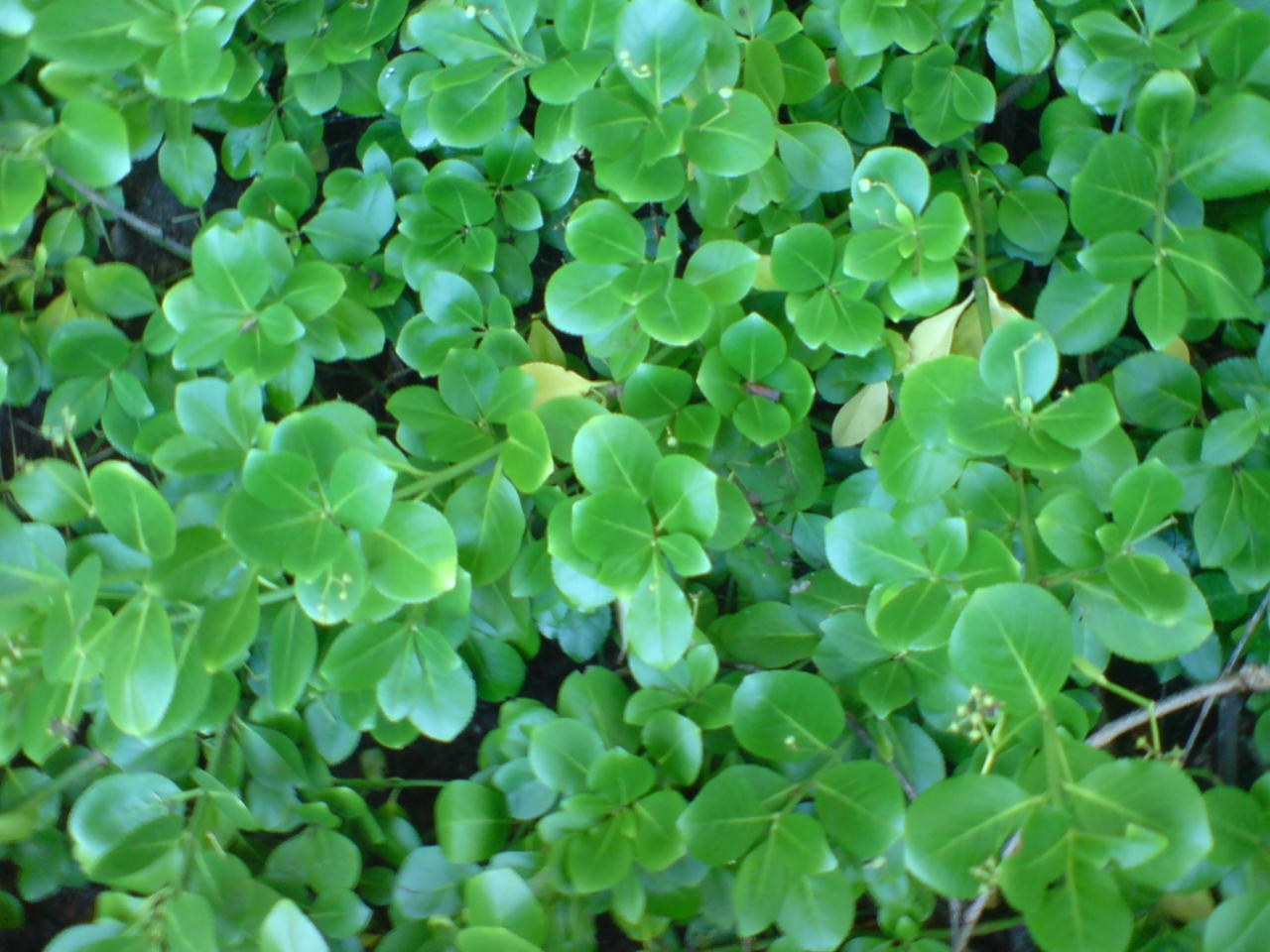
- Leaves: Opposite, leathery, glossy green above with silvery-fuzzy undersides
- Flowers: Showy, with thick white-to-pink petals and a prominent tuft of crimson stamens
- Size: Typically 6–15 ft tall and wide; can be pruned as a shrub, hedge, or small tree
- Habit: Dense, rounded evergreen with attractive pale bark
Care & growing
Light: Full sun produces the best flowering and fruiting; tolerates partial shade with reduced yields.
Water: Moderate watering; drought-tolerant once established, though consistent moisture improves fruit size.
Soil: Adaptable, prefers well-draining, slightly acidic soil but tolerates a range of types.
Temperature: Hardy to about 12–15°F (USDA zones 8–11), among the hardiest subtropical fruiting shrubs.
Feeding: Light feeding with a balanced fertilizer in spring; avoid excess nitrogen.
Propagation: From seed (variable) or cuttings and grafting for named cultivars. Some cultivars need a pollinator partner, while others are self-fertile.
Habitat & origin
Feijoa is native to the highlands of southern Brazil, northern Argentina, Uruguay, and Paraguay, where it grows in cool subtropical woodland and grassland.
It is now widely cultivated in New Zealand, Australia, California, the Mediterranean, and other mild-temperate to subtropical regions, both as a fruiting plant and as a versatile ornamental hedge.
Frequently asked questions
Do I need two pineapple guava plants to get fruit?
Some cultivars are self-fertile, but many set far more fruit with cross-pollination from a second variety. Planting two improves yields in most cases.
How cold-hardy is pineapple guava?
It is one of the hardier subtropical fruiting shrubs, tolerating temperatures down to roughly 12–15°F once established, making it suitable for USDA zones 8 and warmer.
How do I identify pineapple guava?
Look for opposite leathery leaves that are glossy green above and silvery-fuzzy beneath, plus showy flowers with thick white-and-pink petals and a tuft of crimson stamens, followed by oval gray-green fruit.
Can pineapple guava be grown as a hedge?
Yes. Its dense, rounded evergreen form and tolerance of pruning make it well suited to hedges and screens as well as standalone specimens.
Pineapple Guava guides
In-depth guides for identifying, growing, and caring for Pineapple Guava.
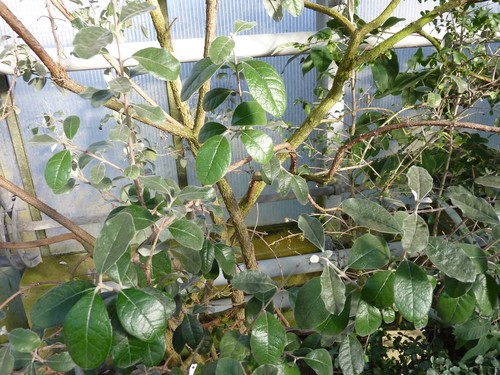
How to Care for Pineapple Guava
Grow Feijoa sellowiana, a handsome evergreen shrub with silvery leaves and showy flowers, in full sun to part shade with modest water.
Pineapple Guava Identification Guide
Identifying feijoa (pineapple guava) by its silver-backed leaves, showy red-and-white flowers, and green egg-shaped fruit.