
How to Care for Pink Princess Philodendron
Grow a vibrant Pink Princess Philodendron with bright indirect light, steady moisture, and simple tricks to keep the pink variegation bold.
Read the full Pink Princess Philodendron encyclopedia entry →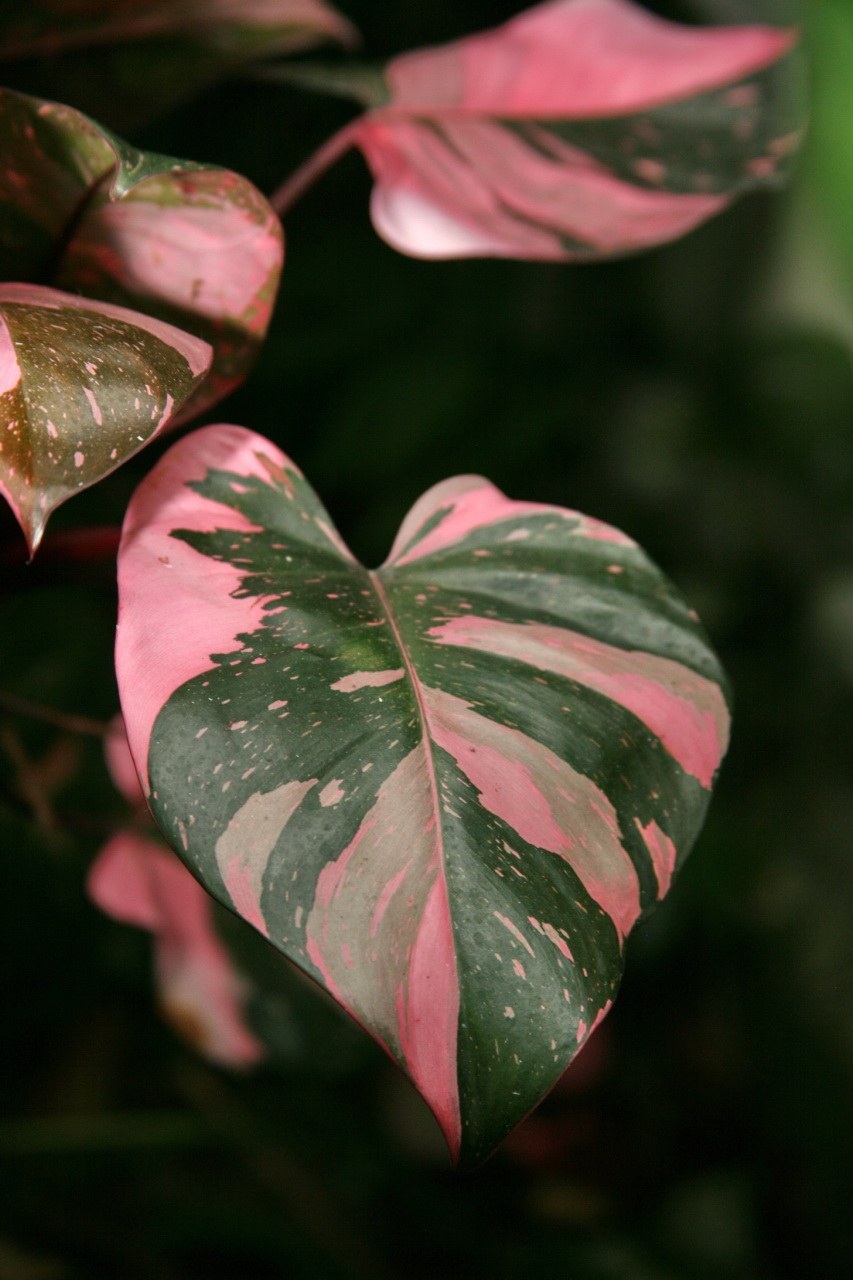
The Pink Princess Philodendron (Philodendron erubescens 'Pink Princess') is a climbing aroid prized for its dark, almost black-green leaves splashed with bubblegum-pink variegation. It is a moderate-difficulty plant: easy to keep alive, but a little fussy about holding onto its coveted pink.
Light
Give it bright, indirect light for at least 6-8 hours a day. Strong, diffused light is the single biggest factor in producing and maintaining pink variegation; in low light the plant reverts to mostly green and stems stretch (etiolate) with long gaps between leaves. An east-facing window, or a few feet back from a south or west window behind a sheer curtain, is ideal. Avoid harsh midday direct sun, which scorches the delicate pink patches. A grow light on a 12-hour timer works well where natural light is limited.
Water
Water when the top 2-3 cm of soil feels dry. Then water thoroughly until it drains from the bottom, and empty the saucer so roots never sit in standing water. This plant likes evenly moist but never soggy soil; overwatering is the most common cause of yellowing leaves and root rot. Let the surface dry slightly between waterings and cut back in winter when growth slows.
Soil & Potting
Use a chunky, airy aroid mix that drains fast while holding some moisture. A good blend is roughly one part quality potting soil, one part orchid bark, one part perlite, plus a handful of coco coir. Always plant in a container with drainage holes. The loose mix keeps the thick roots oxygenated and reduces rot risk.
Humidity & Temperature
Pink Princess enjoys warmth and humidity. Keep temperatures between 18-29 C (65-85 F) and protect it from cold drafts and windows below 13 C (55 F). Aim for 50-60 percent humidity or higher; a pebble tray, nearby humidifier, or grouping with other plants all help. Higher humidity supports larger leaves and smoother new growth.
Feeding
During spring and summer, feed every 3-4 weeks with a balanced liquid houseplant fertilizer diluted to half strength. Steady, gentle feeding fuels the vigorous new growth where fresh variegation appears. Stop or greatly reduce feeding in late fall and winter when the plant rests. Flush the soil with plain water every couple of months to prevent fertilizer salt buildup.
Propagation
Propagate from stem cuttings in spring or summer. Cut just below a node, keeping at least one leaf and ideally an aerial root, and try to include a node that shows some pink so the new plant carries variegation. Root the cutting in water, damp sphagnum moss, or a light propagation mix; roots usually appear in 3-6 weeks. Once roots reach a few centimeters, pot up into aroid mix. Avoid propagating from fully white or fully green sections, as all-white cuttings cannot sustain themselves and all-green ones stay green.
Repotting / Pruning
Repot every 1-2 years, or when roots circle the pot or poke through drainage holes, moving up just one pot size in spring. Provide a moss pole or trellis, since this is a climber and grows larger, better-variegated leaves when it can climb. Prune to control size and to encourage branching: cutting back above a node with pink often pushes new pink growth. If a stem reverts to all green with no pink, prune back to a node that still shows variegation.
Common Problems & Pests
Watch for aphids, mealybugs, spider mites, and fungus gnats. Treat infestations by wiping leaves and applying insecticidal soap or neem oil, and let soil dry more to discourage gnats. Yellowing leaves usually signal overwatering; crispy brown edges point to low humidity or underwatering; brown scorched patches on pink areas mean too much direct sun. Loss of pink and long, leggy stems mean the plant needs more light.
Seasonal Care Tips
In spring and summer, keep up regular watering, feeding, and bright light to drive robust growth. In fall and winter, reduce watering, pause fertilizer, and move the plant closer to a bright window or add supplemental lighting to preserve variegation through the darker months. Guard against cold drafts and dry indoor heating air in winter by maintaining humidity.
Frequently asked questions
Why is my Pink Princess losing its pink variegation?
Insufficient light is the usual cause. Move it to a brighter spot with strong indirect light or add a grow light, and prune reverted all-green stems back to a node that still shows pink to encourage variegated growth.
How often should I water a Pink Princess Philodendron?
Water when the top 2-3 cm of soil is dry, roughly weekly in the growing season and less in winter. Always let excess drain away and never leave the pot sitting in water.
Does the Pink Princess need a moss pole?
It is a climber, so a moss pole or trellis is very beneficial. Climbing encourages larger leaves and often better variegation, though the plant will still grow without support.
What should I do about an all-white leaf?
Fully white leaves have no chlorophyll and cannot produce energy, so they eventually die back. It is fine to leave them until they fade, but avoid propagating from all-white sections since they can't survive on their own.