Pink Princess Philodendron
Philodendron erubescens 'Pink Princess'
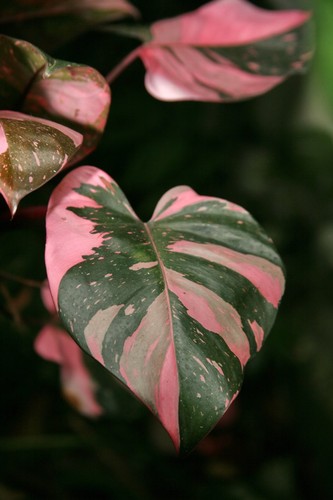
Pink Princess Philodendron is a collector's vining aroid prized for dark green leaves splashed with bubblegum-pink variegation. Each leaf is unique, and bright light is needed to keep the pink coming.
- Light
- Bright indirect light
- Water
- Water when top 2-3 cm dry
- Difficulty
- Moderate
Got a plant like this?
Identify any plant from a photo, free.
Overview
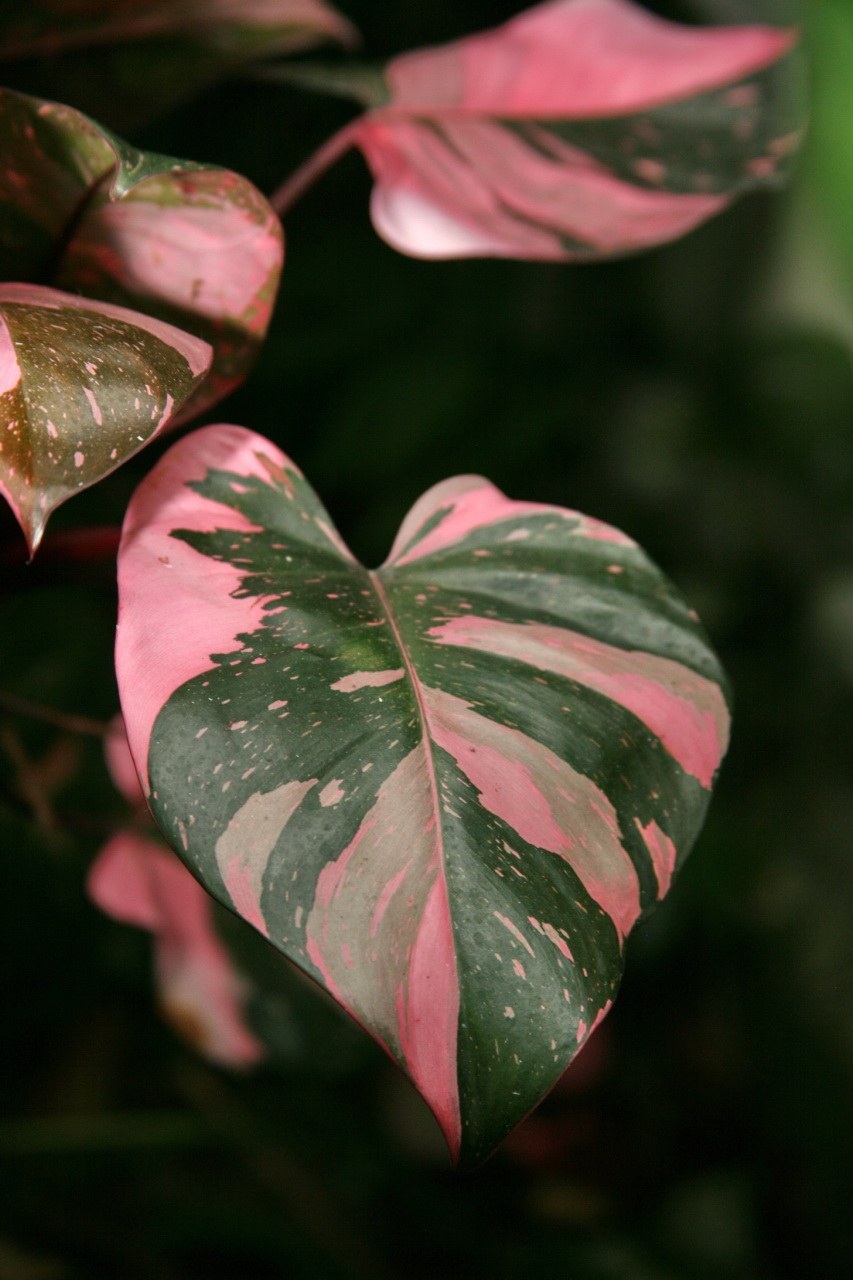
Pink Princess Philodendron is a variegated cultivar of Philodendron erubescens, instantly recognizable by its dark, almost black-green leaves marbled with vivid pink. The pink is a chimeric mutation lacking chlorophyll.
It is a climbing aroid that benefits from support, and each new leaf emerges with a different pattern, making no two plants alike. The contrast between the deep foliage and pink splashes has made it enormously popular with collectors.
Because the variegation is unstable, it requires bright light and occasional pruning to keep the pink balanced rather than reverting to green or going fully pink.
How to identify it
Recognize it by:
- Arrow-shaped, deep green to near-black leaves with bubblegum-pink variegated sections
- Reddish stems and petioles typical of Philodendron erubescens
- A climbing/vining habit with aerial roots
- Highly variable variegation, from a few flecks to large pink blocks, often as marbling or half-moons
- Note: do not confuse with cheaper, all-pink Pink Congo, whose pink is artificially induced and fades
Care & growing
Rewarding with the right light.
- Light: Bright indirect light is essential to produce and keep pink variegation; too little reverts it to green
- Water: Water when the top 2 to 3 cm of soil is dry; avoid soggy soil
- Soil: Chunky, well-draining aroid mix with bark, perlite, and peat or coir
- Temperature: Warm, 18 to 27 C (65 to 80 F); enjoys higher humidity
- Feeding: Balanced fertilizer monthly during spring and summer
- Propagation: Stem cuttings with a node and some pink-plus-green tissue; provide a moss pole. Prune to manage the balance of pink and green
Habitat & origin
A cultivated selection of Philodendron erubescens, which is native to the rainforests of Colombia and other parts of tropical South America.
The Pink Princess does not exist as a stable wild plant; it is propagated and grown indoors by hobbyists and nurseries worldwide in warm, humid, brightly lit conditions.
Frequently asked questions
How do I get more pink on my Pink Princess?
Give it plenty of bright, indirect light and prune leggy all-green growth. Adequate light triggers more variegation, though results vary leaf to leaf.
What is the difference between Pink Princess and Pink Congo?
Pink Princess has stable, natural pink variegation, while Pink Congo's solid pink is chemically induced and fades to green after several months. Buy a genuine Pink Princess.
My leaf is almost entirely pink, is that good?
An all-pink leaf cannot photosynthesize and will eventually die. Some green is needed; prune back fully pink growth to keep the plant healthy.
Pink Princess Philodendron guides
In-depth guides for identifying, growing, and caring for Pink Princess Philodendron.
How to Care for Pink Princess Philodendron
Grow a vibrant Pink Princess Philodendron with bright indirect light, steady moisture, and simple tricks to keep the pink variegation bold.
Pink Princess Philodendron Identification Guide
Identify the Pink Princess Philodendron (Philodendron erubescens 'Pink Princess') by its dark olive-to-black leaves splashed with bubblegum-pink variegation.