
How to Care for Pink Trumpet Tree
Grow the spectacular Pink Trumpet Tree (Handroanthus impetiginosus) in full sun with well-drained soil for its cascade of pink spring blooms.
Read the full Pink Trumpet Tree encyclopedia entry →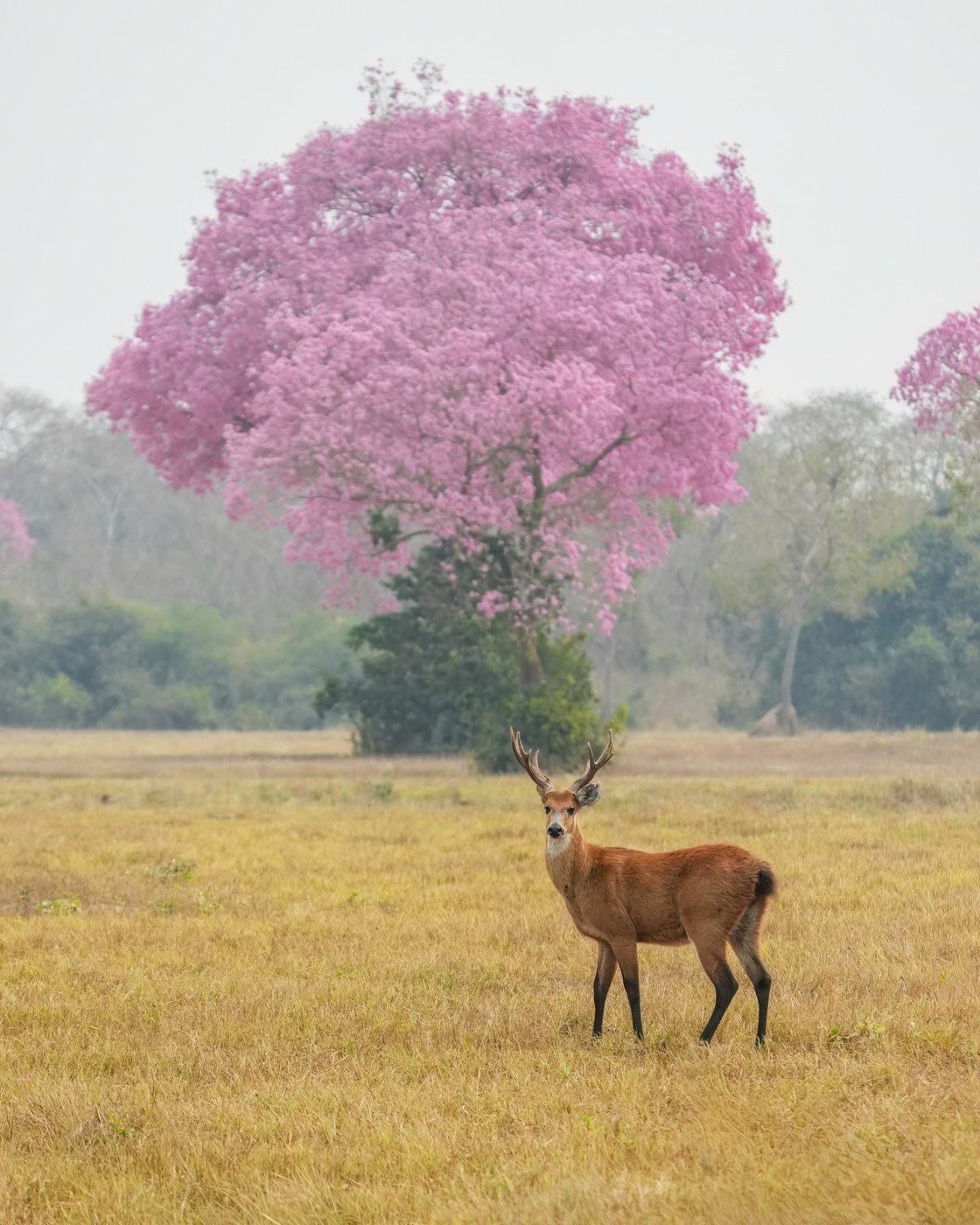
The Pink Trumpet Tree (Handroanthus impetiginosus) is a striking flowering tree that erupts in masses of pink to magenta trumpet-shaped blooms, often on bare branches before the leaves emerge. It is an easy, low-maintenance ornamental for warm climates, valued as a showy specimen or street tree that becomes drought-tolerant once established.
Light
Plant the Pink Trumpet Tree in full sun. It needs at least six to eight hours of direct light for the strongest structure and the most prolific flowering. In shade the canopy grows sparse and bloom is greatly reduced, so choose an open site with plenty of overhead room for the tree to spread.
Water
Water moderately, especially while the tree is young and establishing its roots, keeping the soil consistently but not constantly moist through the first couple of growing seasons. Once established, the tree becomes notably drought-tolerant and needs only occasional deep watering during prolonged dry spells. Avoid waterlogged soil, which the roots will not tolerate, and let the surface dry between deep soakings.
Soil & Potting
Give it deep, well-drained soil. This tree adapts to a range of soils, including sandy and loamy types, provided drainage is good, and it dislikes heavy, waterlogged ground. Slightly acidic to neutral soil suits it well. When planting, dig a wide hole, loosen the surrounding soil, and set the tree at the same depth it grew in its container to encourage strong root establishment.
Humidity & Temperature
This is a warm-climate, frost-sensitive tree native to tropical and subtropical regions. It thrives in heat and tolerates a range of humidity, but young trees in particular can be damaged or killed by frost, so it is best suited to mild, freeze-free areas. In marginal climates, plant it in a sheltered, sunny spot and protect young trees from cold snaps.
Feeding
Feed lightly to moderately. Apply a balanced, slow-release tree fertilizer in spring as growth begins, and avoid excessive nitrogen, which favors leafy growth over flowers. Young trees benefit from feeding to speed establishment, while mature specimens in reasonable soil need little supplemental feeding to bloom well.
Propagation
The Pink Trumpet Tree is most often grown from seed, which germinates readily when fresh, or propagated from semi-hardwood cuttings taken during the growing season. Seed-grown trees can vary in flower color and habit, while cuttings preserve the traits of a favored parent tree. Young plants establish quickly in warm conditions.
Repotting / Pruning
Prune the tree while young to establish a strong central leader and a well-spaced branch framework, and do major pruning after the flowering flush. Remove dead, crossing, or crowded branches to keep the canopy open and healthy. The tree needs little routine pruning once its shape is set. If grown in a large container while small, move it up a size in spring as roots fill the pot, though it ultimately performs best in the ground.
Common Problems & Pests
The Pink Trumpet Tree is relatively trouble-free and pest-resistant. The main risks are cold damage to young trees and root rot in poorly drained or overwatered soil. Occasional sap-feeding insects such as scale or aphids may appear but rarely cause serious harm and can be managed with horticultural oil or insecticidal soap. Sparse flowering usually points to insufficient sun or an overly young tree that has not reached blooming maturity.
Seasonal Care Tips
In late winter to spring, enjoy the dramatic bloom, apply the annual feeding, and do structural pruning after flowering. Through the warm growing season, water young trees regularly and let established trees rely largely on rainfall. In fall, taper watering as growth slows. In winter, protect young or container trees from frost in marginal climates, keeping them in a sheltered, sunny location.
Frequently asked questions
Why isn't my Pink Trumpet Tree flowering?
The usual reasons are too little sun, an overly young tree that hasn't matured, or excess nitrogen fertilizer. Ensure full sun and be patient, as young trees need a few years to bloom well.
How much cold can a Pink Trumpet Tree take?
It is frost-sensitive, especially when young. It suits mild, freeze-free climates; in marginal areas plant it in a sheltered, sunny spot and protect young trees during cold snaps.
How much water does a Pink Trumpet Tree need?
Water young trees moderately and consistently while they establish. Once established, they are drought-tolerant and need only occasional deep watering during long dry spells. Avoid waterlogged soil.
When should I prune a Pink Trumpet Tree?
Do major pruning just after the flowering flush. Prune young trees to build a strong central leader and open framework; mature trees need little routine pruning.