
Pink Trumpet Tree Identification Guide
Identify the pink trumpet tree (Tabebuia / Handroanthus impetiginosus) by its leafless flush of pink trumpet flowers, palmately compound leaves, and long slender pods.
Read the full Pink Trumpet Tree encyclopedia entry →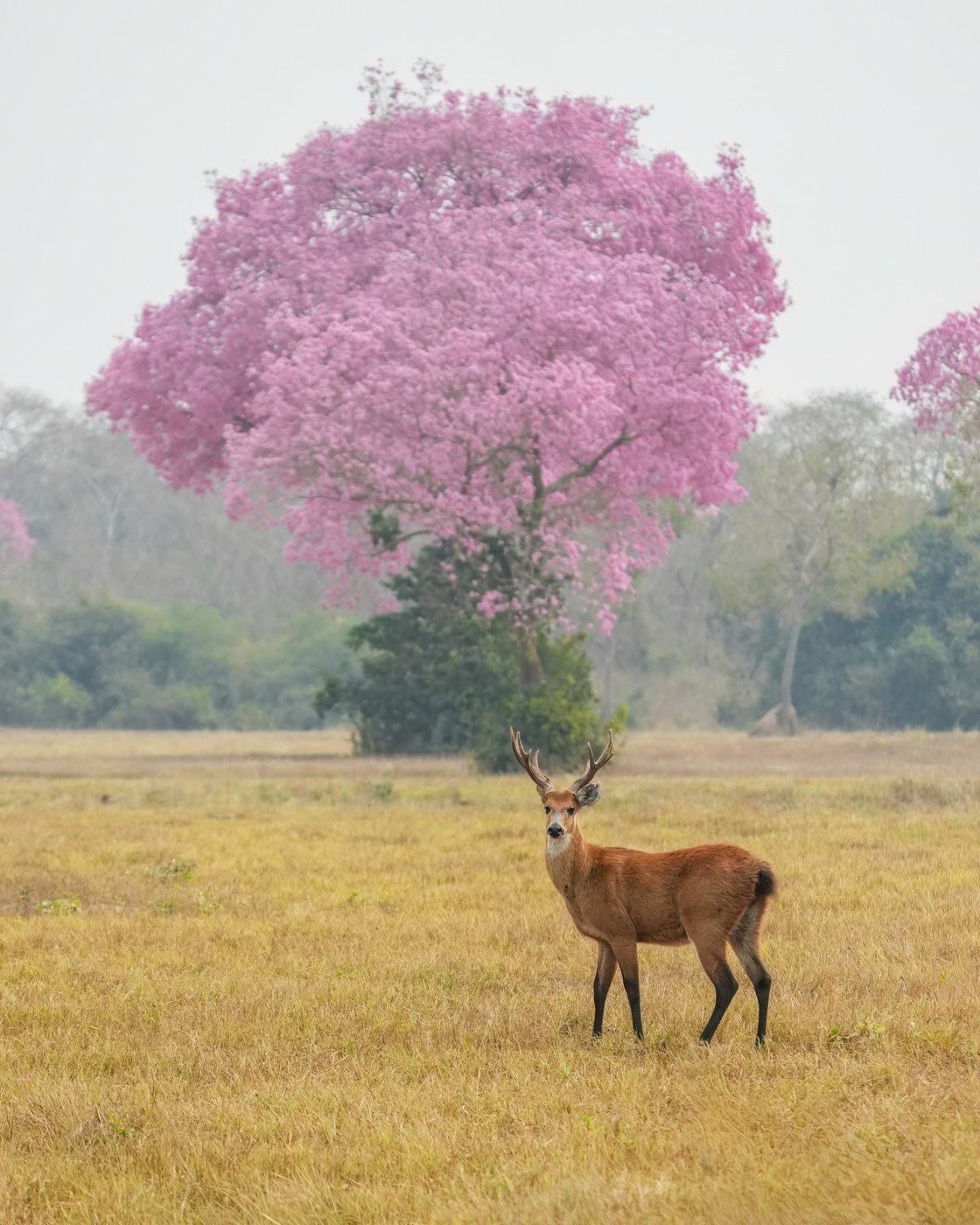
Key Identifying Features
The pink trumpet tree (Handroanthus impetiginosus, formerly Tabebuia impetiginosa; also pink ipê or pink poui) is famous for bursting into masses of pink-to-magenta trumpet flowers while nearly leafless, creating a cloud of color on bare branches in late winter or spring.
- Trumpet-shaped flowers in shades of rose-pink to magenta with yellow throats
- Flowering on bare or nearly bare branches before leaves return
- Palmately compound leaves with 5 (sometimes 3-7) leaflets, like a hand
- Long, narrow bean-like seed pods
Leaves & Stems
Leaves are opposite and palmately compound, with usually five leaflets radiating from a central point (digitate, like fingers of a hand). Leaflets are oval with pointed tips, 2-6 in long, finely toothed, and somewhat leathery, often with fine star-shaped hairs. The tree is deciduous to semi-deciduous, dropping leaves before its flower display. Bark is gray and becomes fissured; the wood (ipê) is famously dense and hard.
Flowers & Fruit
The spring (or late dry-season) bloom is the showstopper: clusters of tubular, flaring five-lobed flowers 2-3 in long, deep pink to lavender-pink with a paler or yellow throat, often with crinkled lobe edges. After flowering, the tree produces long, slender, cylindrical capsules (pods) 6-12 in long that split lengthwise to release flat, papery winged seeds. Fresh leaves typically flush as or after the flowers fade.
How to Tell It Apart from Look-Alikes
- Yellow trumpet tree (Handroanthus chrysotrichus/H. ochraceus): identical trumpet form and palmate leaves but golden-yellow flowers - color is the instant tell.
- Pink tabebuia (Tabebuia rosea / rosy trumpet): very similar pink flowers; rosea tends to be a larger tree with leaves more present at bloom and lighter, pinker color, while impetiginosus blooms more starkly on bare wood with deeper magenta.
- Crape myrtle: has crinkled flowers but simple opposite leaves and smooth mottled bark, not palmate leaves or trumpet shape.
- Jacaranda: trumpet flowers too, but purple-blue and fern-like bipinnate leaves.
The palmate 5-leaflet leaves + pink trumpet flowers on bare branches + long slender pods confirm pink trumpet tree.
Where You'll Find It
Native to Mexico, Central and South America, it is planted widely as a street and ornamental tree in warm, frost-free to light-frost regions (USDA zones 9b-11), including the southern US, the tropics, and subtropics. It tolerates drought and blooms most spectacularly after a dry spell.
Quick ID Checklist
- Pink-to-magenta trumpet flowers with yellow throats
- Blooms on bare or nearly bare branches
- Palmately compound leaves with ~5 leaflets
- Long, slender pod capsules with winged seeds
- Warm, frost-free or near-frost-free climate
- Gray fissured bark; deciduous habit
Frequently asked questions
Why does the pink trumpet tree flower with no leaves?
It is deciduous and times its bloom for late winter or spring, dropping or holding back its leaves so the flowers cover bare branches. This leafless flush is one of its most reliable identification features.
How do I tell pink and yellow trumpet trees apart?
By flower color. Both are Handroanthus with palmately compound leaves and trumpet flowers, but pink trumpet tree blooms rose-pink to magenta, while yellow trumpet tree blooms golden-yellow.
Is the pink trumpet tree the same as ipe wood?
Yes. Handroanthus impetiginosus is the source of ipê, a very dense, durable hardwood used for decking. The same species is grown ornamentally for its pink flowers.
What do the seed pods look like?
Long, narrow, cylindrical capsules 6 to 12 inches long that split open lengthwise to release flat, papery winged seeds that scatter on the wind.