How to Care for Pitcher Plant
Grow tropical Nepenthes Pitcher Plant with filtered light, mineral-free water, and high humidity for lush hanging pitchers in this care guide.
Read the full Pitcher Plant encyclopedia entry →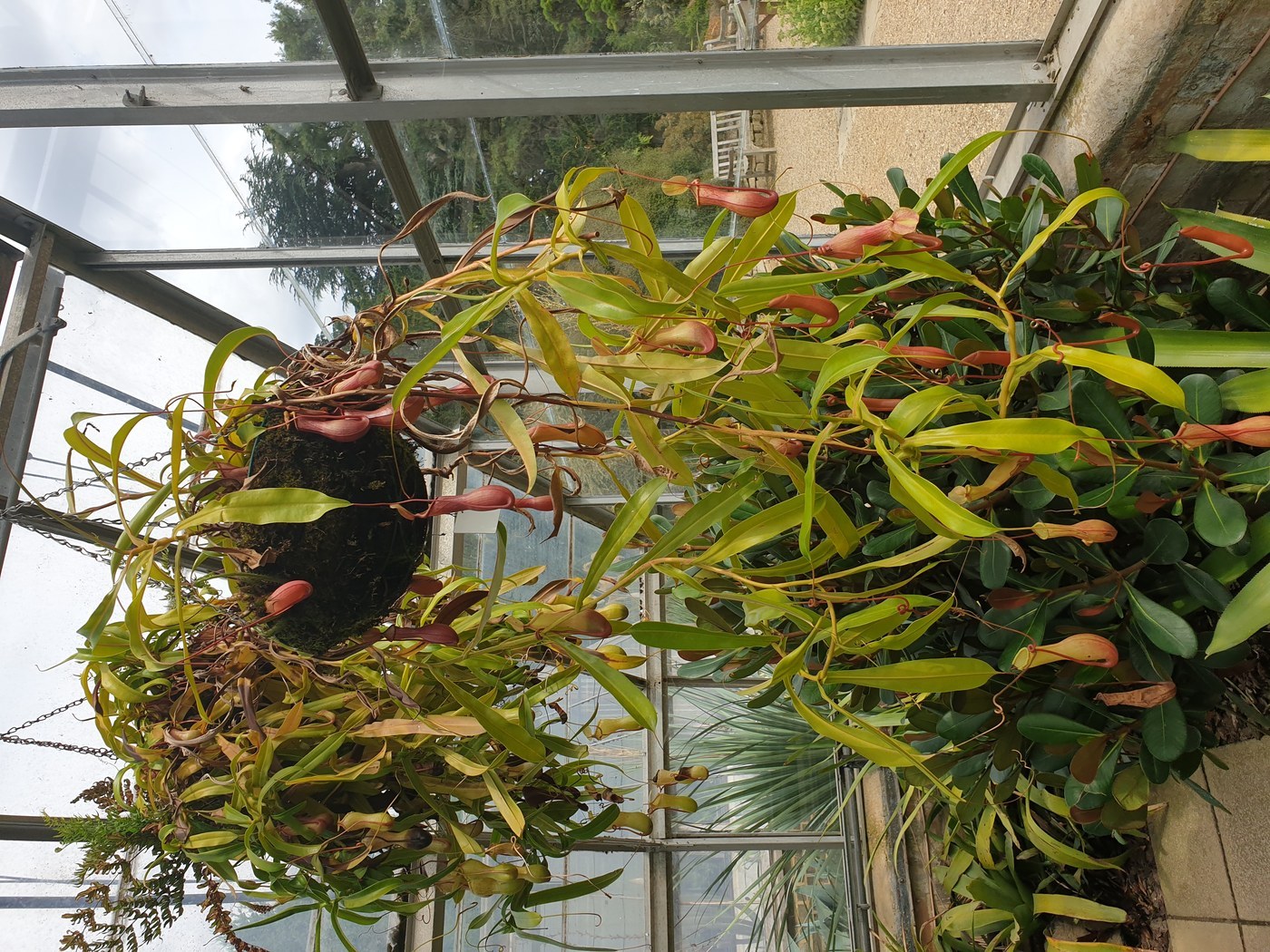
The tropical Pitcher Plant (Nepenthes alata) is a striking climbing plant that produces dangling, jug-shaped pitchers at the tips of its leaves. It is a demanding, hard-difficulty plant whose success hinges on mineral-free water, warmth, and high humidity, but it is a rewarding specimen for a bright bathroom, terrarium, or hanging basket.
Light
Provide bright, indirect to filtered light. Nepenthes wants plenty of brightness to form pitchers, but harsh, unfiltered direct sun through glass can scorch the foliage and dry the pitchers. A spot near an east window, a bright shaded window, or under a grow light works well. If the plant grows lush leaves but few pitchers, it usually needs more light and higher humidity.
Water
Keep the growing medium consistently moist, never soggy and never bone dry, using only rainwater, distilled water, or reverse-osmosis water. Nepenthes are highly sensitive to the minerals and salts in tap water, which build up and damage the roots. Water from the top and let it drain; unlike some carnivorous plants, most Nepenthes should not sit in a constant tray of standing water. You can add a little water to the pitchers if they are dry, but they usually maintain their own fluid.
Soil & Potting
Never use ordinary potting soil, which is too rich and mineral-heavy. Use a loose, airy, low-nutrient carnivorous mix such as long-fibered sphagnum moss, or a blend of sphagnum, perlite, and orchid bark or coir. The mix must drain freely while staying moist. Plastic pots or net baskets hold moisture and suit the trailing, epiphytic habit; hanging baskets show the pitchers off beautifully.
Humidity & Temperature
High humidity is critical, ideally 60 percent or more, especially for pitcher formation; a terrarium, greenhouse, or humid bathroom is ideal. In dry air the plant may stop making pitchers or the pitcher tips brown. Warmth is equally important: Nepenthes alata is a lowland-to-intermediate type that likes warm days around 75-85 degrees F (24-29 C) and nights that stay comfortably warm, generally above 60 degrees F (16 C). Protect it from cold drafts and never let it get chilled.
Feeding
Do not add fertilizer to the soil, which can burn the sensitive roots. Nepenthes obtains nutrients through its pitchers. Plants kept outdoors will catch what they need on their own; indoor plants generally do fine without feeding. If desired, experienced growers occasionally add a very dilute foliar orchid feed sprayed lightly on the leaves, but this is optional and easy to overdo, so it is safest to leave feeding alone.
Propagation
Nepenthes is propagated mainly by stem cuttings. Take a cutting with a few nodes, keep it in warm, very humid conditions in damp sphagnum moss, and it will root over several weeks; a covered propagation box helps hold humidity. The plants can also be grown from seed, which is slow, and larger specimens sometimes produce basal offshoots that can be separated once rooted.
Repotting / Pruning
Repot every year or two in spring using fresh carnivorous mix, as the moss breaks down and can compact over time. Handle the roots gently, as they are delicate. Prune long, leggy vines to encourage branching and a fuller plant; cuttings from pruning can be rooted. Trim away spent, browned pitchers and dead leaves to keep the plant tidy, since older pitchers naturally die back over time.
Common Problems & Pests
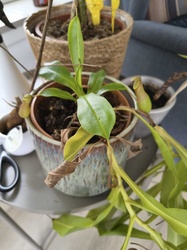
Lack of pitchers is the most common complaint and usually points to low humidity, insufficient light, or mineral-laden water. Brown, crisping pitchers or leaf tips signal dry air or water quality problems. Using tap water is a frequent cause of slow decline due to mineral buildup, so switch to distilled or rainwater. Watch for mealybugs, scale, aphids, and spider mites, which can appear in dry indoor conditions; treat gently with insecticidal soap. Root rot can occur if the mix is kept waterlogged and airless.
Seasonal Care Tips
Growth and pitcher production peak in the warm, humid months of spring and summer; keep conditions warm and humid year round for this tropical species. In winter, indoor heating dries the air, so run a humidifier or keep the plant in a terrarium, and reduce watering slightly while still never letting the medium dry out. Consistent warmth and humidity through the seasons are the surest path to abundant pitchers.
Frequently asked questions
Why won't my Pitcher Plant make pitchers?
Missing pitchers almost always mean humidity is too low, light is insufficient, or the water contains too many minerals. Raise humidity to 60 percent or more, give brighter filtered light, and use only distilled or rainwater.
What water should I use for a Nepenthes Pitcher Plant?
Only rainwater, distilled, or reverse-osmosis water. Nepenthes are very sensitive to the minerals and salts in tap water, which accumulate and slowly damage the roots. Keep the medium moist but not waterlogged.
What soil does a Pitcher Plant need?
Never regular potting soil. Use a low-nutrient carnivorous mix such as long-fibered sphagnum moss, or sphagnum blended with perlite and orchid bark or coir, in a pot that stays moist yet drains freely.
Do I need to fertilize my Pitcher Plant?
No. Fertilizer in the soil can burn its sensitive roots. Nepenthes gathers nutrients through its pitchers, and indoor plants generally do fine with no feeding at all.
Pitcher Plant identified by the community
Recent Pitcher Plant specimens identified with Plant Identifier.