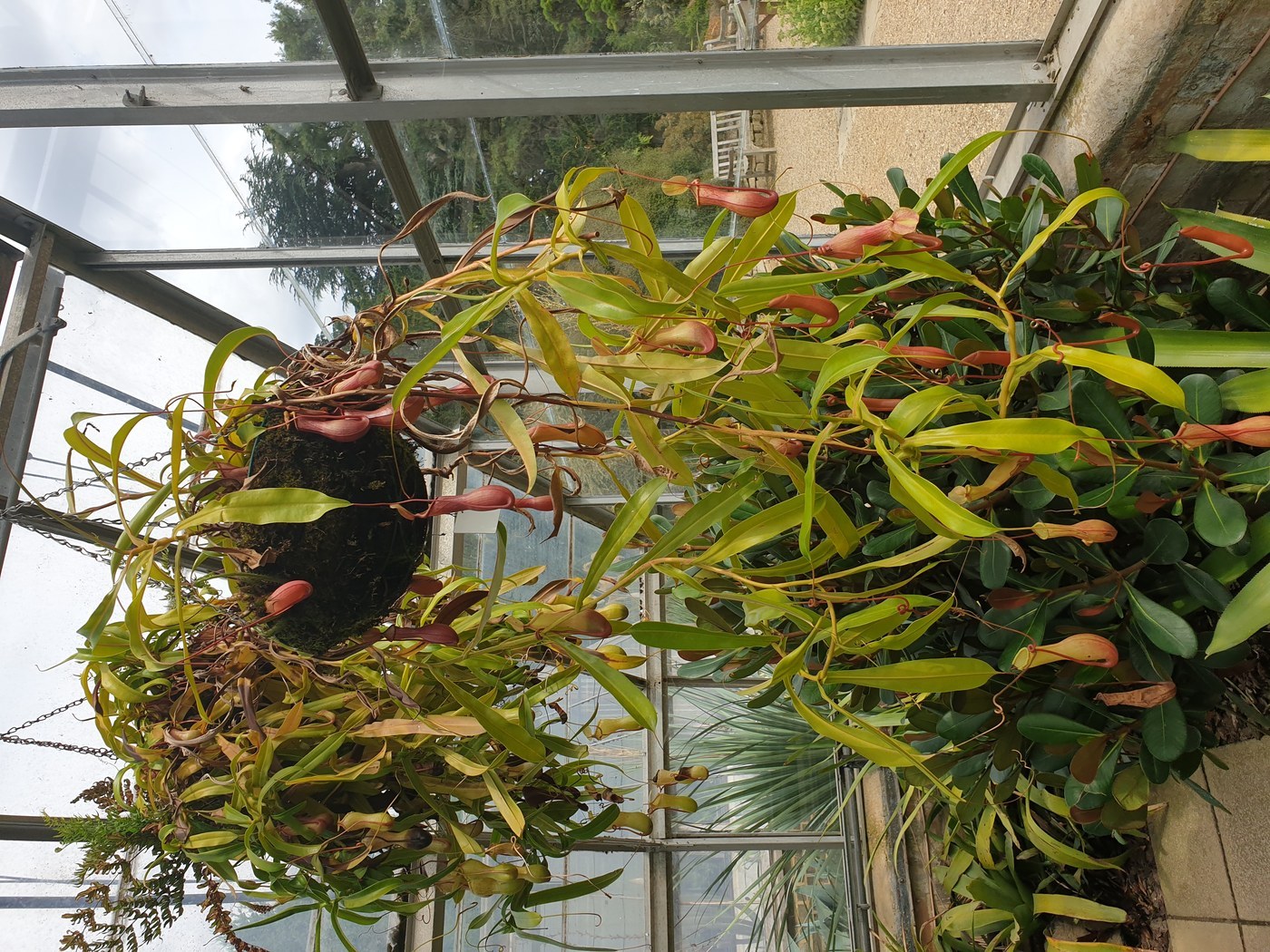
Pitcher Plant
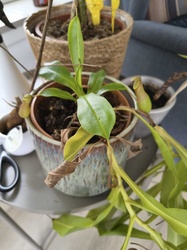
Nepenthes alata
A carnivorous plant whose leaves form hanging, fluid-filled pitchers that lure, trap, and digest insects. Tropical Nepenthes species dangle their colorful 'monkey cups' from vining stems.
- Light
- Bright indirect to filtered light
- Water
- Keep moist with rain or distilled water
- Difficulty
- Hard
Got a plant like this?
Identify any plant from a photo, free.
Overview
Pitcher plants are carnivorous plants whose leaves are modified into pitfall traps — hollow, fluid-filled 'pitchers' that attract, drown, and digest insects to supplement nutrients in poor soils. The name commonly refers to the tropical genus Nepenthes (sometimes nicknamed 'monkey cups'), though the term also covers the North American Sarracenia.
Nepenthes are tropical climbers that dangle colorful, lidded pitchers from the tips of their leaves. They are dramatic, fascinating plants but require specific conditions — mineral-free water and high humidity — to thrive.
How to identify it
- Pitchers: Hollow, jug-shaped traps with a lid (operculum) and a slippery rim (peristome), filled with digestive fluid
- Coloration: Often green flushed with red, purple, or speckled markings
- Habit: Vining or rosette-forming, depending on species
- Leaves: Pitchers form at the tips of tendril-like extensions of the leaves
- Trap type: Passive pitfall trap that lures insects to the slippery rim
Care & growing
Light: Bright, filtered or indirect light; many tolerate some gentle sun.
Water: Use only rainwater, distilled, or reverse-osmosis water — tap minerals are harmful. Keep the soil moist but not waterlogged.
Soil: Nutrient-poor, mineral-free mix (sphagnum moss with perlite); never use regular fertilized potting soil.
Humidity & temp: High humidity (50–70%+) and warmth suit tropical Nepenthes.
Feeding: Don't fertilize the soil; the plant catches its own insects. Occasional insects are optional indoors.
Propagation: Stem cuttings (Nepenthes) or division.
Habitat & origin
Tropical Nepenthes pitcher plants are native to Southeast Asia, Madagascar, and northern Australia, growing in nutrient-poor, humid jungle and highland habitats where they climb or sprawl.
They are grown worldwide by carnivorous-plant enthusiasts, often in greenhouses, terrariums, or hanging baskets that provide the humidity and clean water they need.
Frequently asked questions
Why isn't my pitcher plant making pitchers?
Usually low humidity, insufficient light, or mineral-laden water. Provide bright light, high humidity, and water only with rain or distilled water.
Should I fill the pitchers with water or feed them?
No need. Pitchers make their own fluid and catch their own insects. Don't pour tap water in or overfeed them.
What water should I use?
Only rainwater, distilled, or reverse-osmosis water. Tap and mineral water can harm carnivorous plants over time.
Pitcher Plant guides
In-depth guides for identifying, growing, and caring for Pitcher Plant.
How to Care for Pitcher Plant
Grow tropical Nepenthes Pitcher Plant with filtered light, mineral-free water, and high humidity for lush hanging pitchers in this care guide.
Pitcher Plant Identification Guide
Identify carnivorous pitcher plants by their modified tubular leaves that form fluid-filled traps for catching insects.
Pitcher Plant identified by the community
Real specimens identified with Plant Identifier.