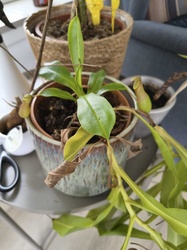
Pitcher Plant Identification Guide
Identify carnivorous pitcher plants by their modified tubular leaves that form fluid-filled traps for catching insects.
Read the full Pitcher Plant encyclopedia entry →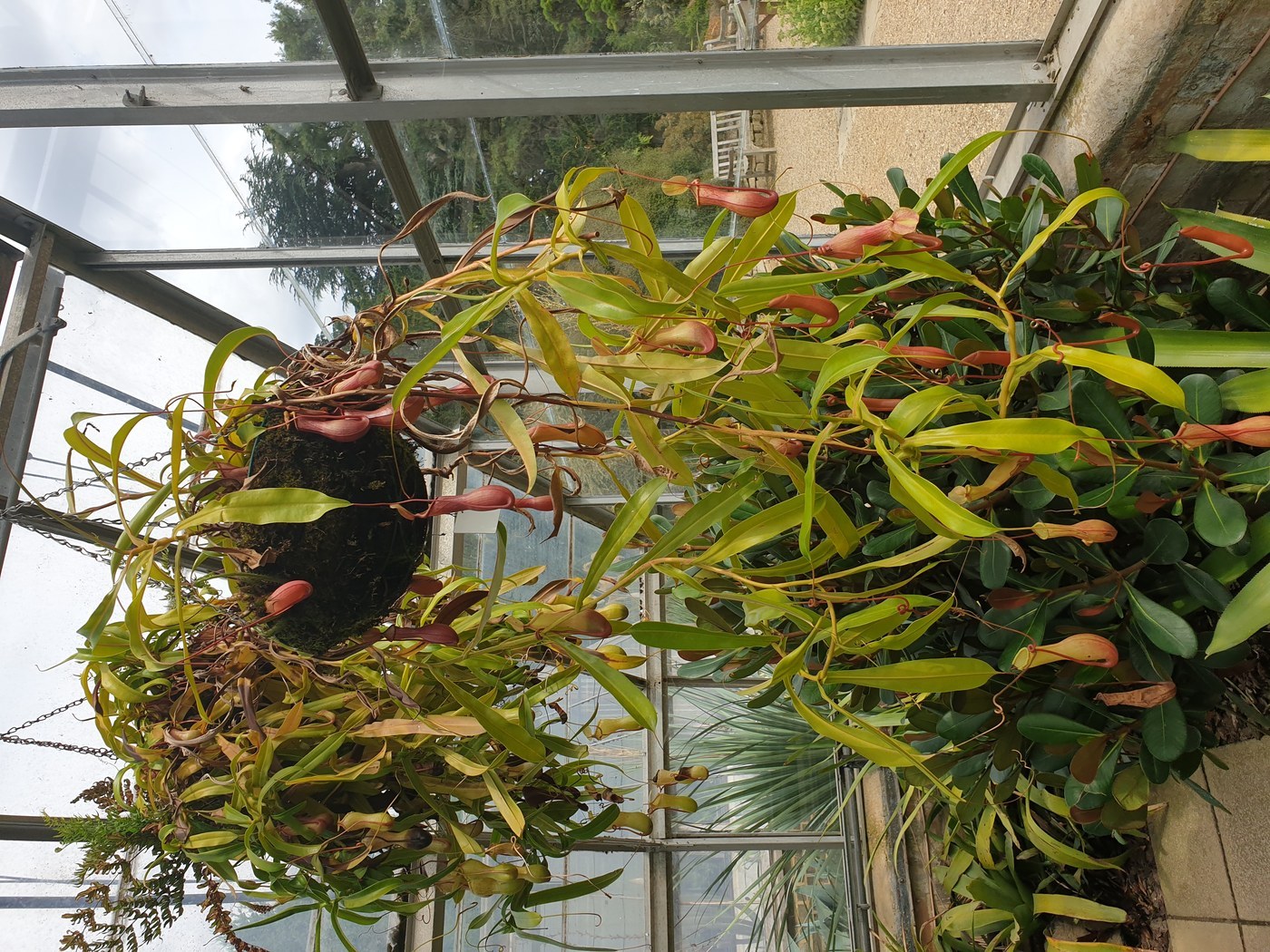
Key Identifying Features
Pitcher plants are carnivorous plants whose leaves form hollow, fluid-filled tubes (pitchers) to trap and digest insects. Across the main groups, identify them by:
- Tubular or jug-shaped 'pitchers' with a fluid pool inside
- A lid (operculum) and a slippery rim (peristome) at the mouth
- Often colorful red, purple, or veined markings that attract prey
- Rosette or vining growth depending on the group
Leaves & Stems
The pitcher is a modified leaf. Two major types you'll encounter:
- Tropical Nepenthes: produce dangling pitchers on tendrils at the leaf tips, hanging from vining or rosette stems; pitchers are jug-like with a prominent lid and waxy interior.
- North American Sarracenia: form upright, trumpet-shaped tubes rising directly from a ground rosette, often brightly veined with red.
- Other groups: Darlingtonia (cobra lily) has a hooded, snake-like pitcher; Cephalotus has small ground pitchers.
All share a slippery rim and downward-pointing hairs or waxy walls that prevent trapped insects from climbing out, and a digestive fluid pool at the base.
Flowers & Fruit
Flowers are held well above or away from the pitchers (to avoid trapping pollinators). Sarracenia has nodding, umbrella-like flowers in spring; Nepenthes produces small flowers on tall spikes and is dioecious (separate male/female plants). Seed capsules follow pollination.
How to Tell It Apart from Look-Alikes
- Venus flytrap: carnivorous but uses snapping hinged traps, not fluid-filled tubes.
- Sundews (Drosera): catch prey with sticky tentacle hairs, no pitcher.
- Bladderworts/non-carnivorous tubular plants: lack the pitcher-with-lid structure.
The hollow tube + lid + slippery rim + insect-filled fluid is unique to pitcher plants.
Where You'll Find It
Sarracenia grow in boggy, nutrient-poor wetlands of North America; Nepenthes in tropical Southeast Asia, Madagascar, and Australasia. They thrive in wet, low-nutrient, acidic conditions and supplement nutrition by catching insects. As houseplants they need bright light, distilled/rain water, and no fertilizer in the soil. You will find them in bogs, specialty nurseries, and terrariums.
Quick ID Checklist
- Tubular/jug-shaped pitcher leaves
- Lid and slippery rim at the mouth
- Fluid pool inside the trap
- Red/purple veining or coloration
- Trapped insects often visible
- Flowers held away from the traps
Frequently asked questions
What is the difference between Nepenthes and Sarracenia pitcher plants?
Nepenthes are tropical vines with pitchers dangling from leaf-tip tendrils, while Sarracenia are North American bog plants with upright trumpet-shaped pitchers rising from a ground rosette.
How does a pitcher plant catch insects?
Insects are lured by nectar and color to the slippery rim, then fall into a fluid pool where downward hairs or waxy walls prevent escape, and enzymes break them down.
How is a pitcher plant different from a Venus flytrap?
Both are carnivorous, but pitcher plants use passive fluid-filled tube traps, while the Venus flytrap uses fast-snapping hinged leaf lobes.
Why are the flowers held away from the pitchers?
Holding flowers high or apart prevents the plant from trapping the very pollinators it needs, balancing pollination with prey capture.
Pitcher Plant identified by the community
Recent Pitcher Plant specimens identified with Plant Identifier.